Robin Dy23 Diesel Engine Troubleshooting
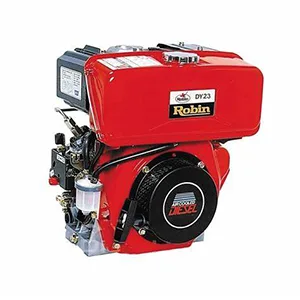
If your Robin Dy23 is coughing, smoking, or refusing to start, you are not alone. This small diesel powers generators, pumps, and tillers all over the world. Robin Dy23 Diesel Engine Troubleshooting does not require a mechanic's degree.
You just need a methodical approach and the right specs.
Manufacturer specifications indicate that a healthy Dy23 produces compression between 350 and 450 psi. Below 250 psi, the engine will not fire regardless of fuel delivery. Let's walk through the exact sequence that will get you running again.
Quick Answer
Troubleshoot a Robin Dy23 in three steps. Check compression first. Then test the glow plug system.
Finally, verify fuel delivery from tank to injector. These three systems account for roughly 80 percent of all no-start conditions on this engine.
Why the Dy23 Is Worth Fixing Yourself
The Robin Dy23 is a mechanical diesel. There is no ECU, no sensor array, no electronic governor. You get a single-cylinder, air-cooled engine with splash lubrication and a centrifugal governor.
That simplicity makes it one of the most DIY-friendly small diesels available.
Parts are still easy to find as of 2026. Major suppliers stock injector nozzles, glow plugs, fuel lift pumps, and gasket sets. A compression gauge and a multimeter will pay for themselves on the first repair.
Image source: Web (Bing) / intramarsur.com (Web image (fair-use with source credit))
A shop will charge hundreds to diagnose what you can test in your driveway in under an hour. The learning curve is shallow. The reward is real.
The Big Four: Mapping Symptoms to Root Causes
The Dy23 has a limited set of failure modes. Match your symptom to the correct branch and you will land on the right fix quickly.
| Symptom | Most Likely Cause | Secondary Cause |
|---|---|---|
| No start, cranks freely | Low compression or no glow | No fuel to injector |
| Hard start when cold | Glow plug failure | Decompressor stuck engaged |
| White smoke at startup | Late injection timing | Cool cylinder temperature |
| Black smoke under load | Overfueling | Clogged air filter |
| Surging at idle | Governor linkage binding | Fuel supply restriction |
| Low power, stalls | Valve clearance too tight | Injection pump wear |
Compression release problems are unique to this engine. A stuck decompressor cable makes the engine spin fast with zero compression. If it cranks easily but never fires, check the decompressor first.
No Start / Hard Start (Cold or Hot)
If the engine cranks but won't fire, check compression first. A cold diesel needs heat from compression to ignite the fuel. Weak glow plugs and low compression produce nothing but white smoke or silence.
Start with a cold compression test. Remove the glow plug and install a diesel compression gauge. Crank the engine through at least five revolutions.
The gauge should read 350 psi or higher. Below 250 psi, the engine will not start without external heat or starting fluid.
If compression is good, test the glow plug. Disconnect the wire and measure resistance from the plug tip to the engine block. You need 0.5 to 2.0 ohms. An open circuit means the plug is dead.
A short circuit means it is grounded internally. Replace it either way.
The Dy23 uses a pre-heat system that runs the glow plug for 10 to 20 seconds before cranking. If the relay or timer is faulty, the plug never heats. Verify 12 volts at the glow plug terminal during the pre-heat cycle.
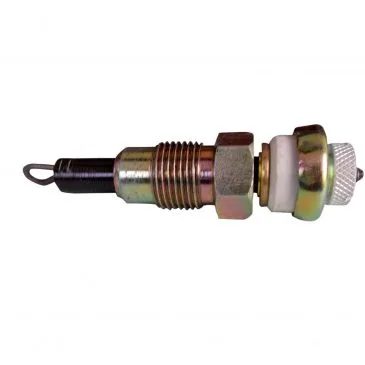
Image source: Bing (Web (fair-use with source credit))
If compression and glow are both good, check fuel delivery. Crack the injector line at the injector and crank the engine. Fuel should pulse out of the fitting. If it does not, bleed the fuel system.
Air in the lines is common after a filter change or when the engine runs out of fuel.
If the engine cranks fast with no resistance, the decompressor is stuck engaged. The Dy23 has a mechanical compression release that opens an exhaust valve slightly during cranking. If the cable or lever does not release, the engine loses all compression. Adjust or replace the decompressor cable first.
Runs Rough, Surges, or Smokes Badly
If the engine runs but smokes excessively, identify the color first. Black smoke means too much fuel relative to air. Check the air filter and the fuel injection pump delivery. White or blue smoke means unburned fuel or oil.
This points to late injection timing, low compression, or worn valve guides.
Surging at idle is almost always a governor issue. The mechanical governor uses flyweights and a spring to regulate speed. If the linkage binds or the spring weakens, the engine hunts up and down. Inspect the governor arm and throttle linkage for free movement.
Lubricate pivot points with light oil and check for worn bushings.
Intermittent rough running that comes and goes is often an injector problem. The injector nozzle on the Dy23 is a pintle-type design. Carbon buildup causes the needle to stick over time. This creates a poor spray pattern and uneven firing.
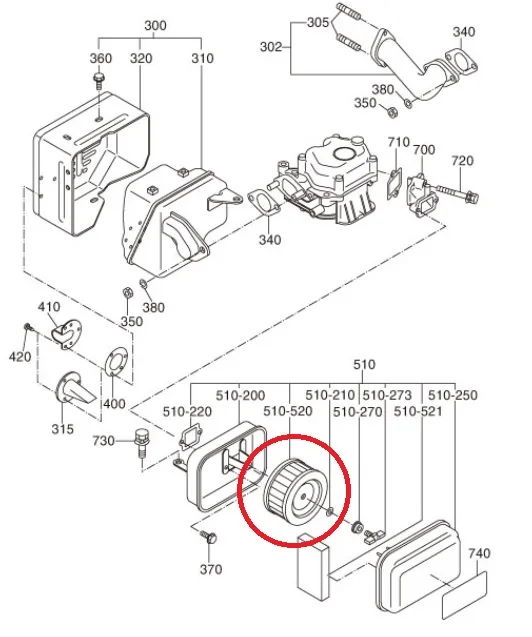
Image source: Web (Bing) / technidiscount.com (Web image (fair-use with source credit))
Remove the injector and connect it to the fuel line. Crank the engine and watch the spray pattern. You need a fine mist, not a solid stream or a drip.
If the pattern is poor, replace the nozzle. Rebuilding these small injectors is rarely worth the effort.
If the engine surges under load, check the fuel supply. A clogged filter or a weak lift pump starves the engine when demand increases. Replace the fuel filter and test the lift pump output. Per small engine fuel system guidance from the University of Minnesota Extension, a diaphragm pump on an engine this size should deliver a steady flow with no air bubbles.
Find their general guidance at extension.umn.edu.
Low Power or Stalls Under Load
If the engine starts fine but loses power under load, check valve clearance first. The Dy23 needs specific cold valve clearances. Intake at 0.15 mm. Exhaust at 0.20 mm.
If clearances close up from normal wear, the valves will not seal at operating temperature. This kills compression and power.
Set the engine to top dead center on the compression stroke. Insert a feeler gauge between the valve stem and the rocker arm. Adjust the locknut until you feel light drag on the gauge.
Tighten the locknut and recheck.
If valve clearance is correct, check injection timing. The Dy23 uses timing marks on the flywheel and the injection pump flange. A misalignment of even a few degrees reduces power and causes hard starting. Consult the service manual for the exact timing specification for your model variant.
A restricted exhaust system also causes low power. The muffler can collect carbon deposits over time. If the engine feels choked, remove the muffler and test run it briefly. If power returns, you found the restriction.
Replace or clean the muffler.
If everything else checks out, suspect injection pump wear. The internal plunger and barrel in the Bosch-type pump wear over thousands of hours. Replace the pump assembly. Rebuilding a worn pump is generally not cost-effective compared to a new unit.
Common Mistakes That Waste Time and Money
Replacing parts without testing. Many owners throw a new injector, glow plug, and fuel filter at the engine hoping something sticks. That approach costs more and solves nothing. Test first.
Replace second.
Misadjusting the governor linkage. The Dy23 governor is sensitive. A half-turn on the adjustment screw changes idle speed by hundreds of rpm. Mark your original position before making any changes.
Better yet, follow the service manual procedure exactly.
Using starting fluid on a glow plug engine. Ether ignites before the glow plug reaches temperature. This can blow the glow plug tip into the cylinder. It can also crack the piston ring land.
Do not use starting fluid on a Dy23 unless you have confirmed the glow plug is disconnected.
Ignoring the decompressor cable. A stretched or misadjusted cable causes hard starting even with good compression. Adjust the cable so the decompressor releases fully after the first half-turn of the crankshaft.
When to Walk Away: Signs the Engine Is Beyond DIY
The cylinder head is cracked. This shows as coolant in the oil or compression leaking from the head gasket area. Welding a cracked diesel head rarely works. Replacement heads are expensive and may be hard to find.
The crankshaft or connecting rod is bent. You will hear a knocking sound that gets worse under load. The cost of splitting the case and replacing parts often exceeds the value of the engine.
The cylinder bore is worn beyond spec. If you measure more than 0.010 inches of taper or out-of-round, the engine needs a rebore and oversized piston. This job requires a machine shop and specialty tools.
The flywheel key is sheared. This causes the timing to shift randomly. If the engine backfired or stopped suddenly, check the key before assuming other problems. A sheared key is an easy fix but often gets overlooked.
Quick-Reference Decision Table
| Symptom | First Check | Second Check | Fix |
|---|---|---|---|
| No start, cranks fast | Decompressor cable | Compression test | Adjust cable or rebuild head |
| No start, cranks normal | Compression test | Glow plug resistance | Rebuild head or replace glow plug |
| Hard start cold | Glow plug circuit | Fuel system bleed | Replace glow plug or prime fuel |
| White smoke | Injection timing | Glow plug function | Retime pump or replace glow plug |
| Black smoke | Air filter | Injector spray pattern | Replace filter or nozzle |
| Surging idle | Governor linkage | Fuel filter | Lubricate linkage or replace filter |
| Low power | Valve clearance | Injection timing | Adjust valves or retime pump |
| Knocking under load | Fuel quality | Timing and injector | Drain fuel or retime pump |
Frequently Asked Questions
What compression should a Robin Dy23 have?
A healthy Dy23 reads 350 to 450 psi on a cold compression test. Below 250 psi, the engine will not start without external heat. Below 200 psi, the engine needs a complete top-end rebuild.
How do I bleed air from a Dy23 fuel system?
Crack the injector line fitting at the injector. Crank the engine until fuel pulses out of the fitting with no bubbles. Tighten the fitting while the engine is cranking.
The engine should start immediately after.
Can I use starting fluid on a Robin Dy23?
No. Starting fluid ignites before the glow plug reaches temperature. It can blow the glow plug tip into the cylinder.
It can also crack piston rings. Use a block heater or new glow plugs instead.
What oil does a Robin Dy23 take?
Use a diesel-rated oil in 15W-40 or 10W-30 viscosity. The Dy23 holds approximately 1.1 liters. Change the oil every 100 hours or once per season.
Do not use gasoline engine oil.
Why does my Dy23 smoke white when cold?
White smoke at startup means unburned fuel. The most likely causes are weak glow plugs, late injection timing, or low compression. Test glow plugs first.
They are the easiest and cheapest fix.
How do I adjust the valves on a Dy23?
Set the engine to top dead center on the compression stroke. Intake clearance is 0.15 mm. Exhaust clearance is 0.20 mm.
Use a feeler gauge and adjust the locknut. Recheck after tightening.

Similar Posts