Whirlpool Dishwasher Not Spraying Water
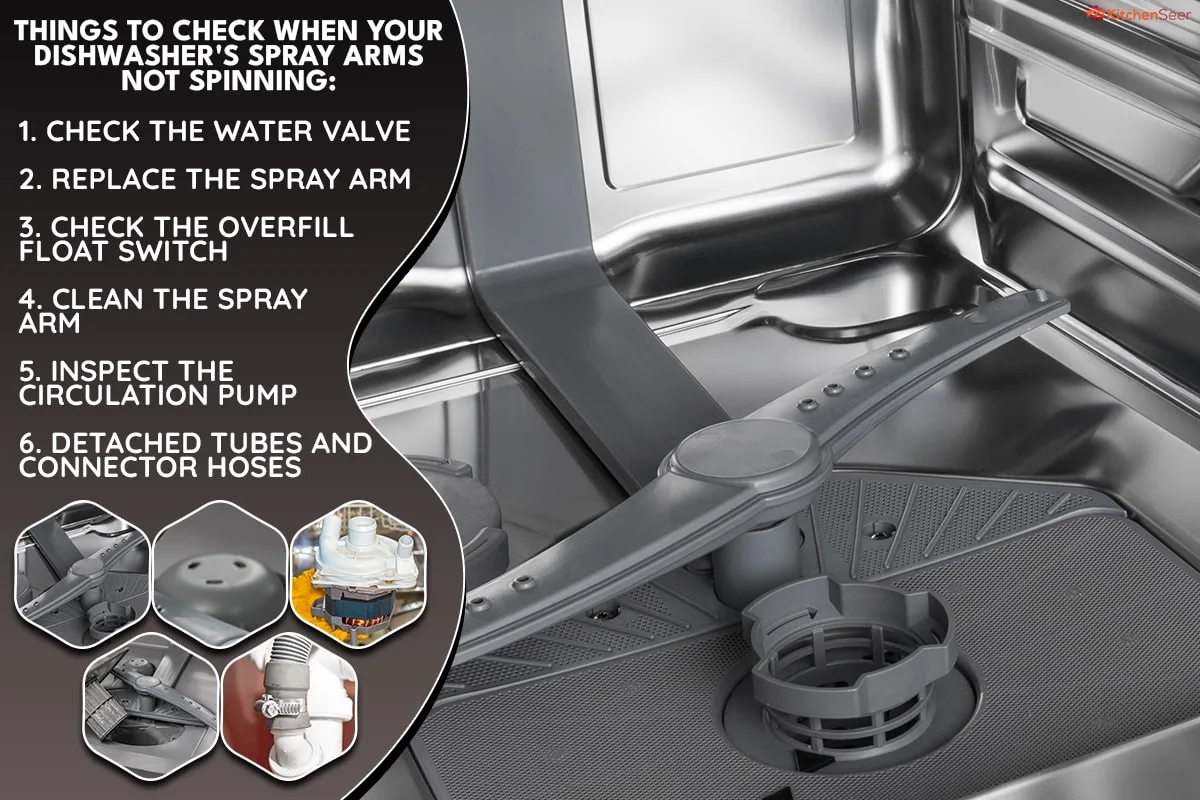
Your dishwasher hums along, the cycle timer counts down, and you open the door expecting clean dishes. Instead, you find everything bone dry and still caked with last night's dinner. If you're dealing with a Whirlpool dishwasher not spraying water, you already know it's frustrating.
The machine sounds like it's working, but nothing actually happens inside.
The good news is that in roughly 80 percent of cases, the fix costs nothing and takes under ten minutes. Whirlpool has been making dishwashers in the United States for decades, and their designs share common failure points. Understanding those patterns is the difference between a quick DIY fix and an unnecessary service call.
Let's walk through the diagnostic tree branch by branch, starting with what your ears can tell you.
Quick Answer
A Whirlpool dishwasher that runs but won't spray water usually has a clogged filter, a jammed impeller, or a failed wash pump. Start by cleaning the filter and spray arms. That fixes most cases.
If water is present but nothing sprays, check the impeller for debris. If the pump is silent, test it with a multimeter. Replace the pump only after ruling out blockages and electrical faults.
Image source: Bing (Web (fair-use with source credit))
Branch 1: Listen First — What You Hear Tells You Everything
The sound your dishwasher makes when it should be spraying water is your best diagnostic clue. Most Whirlpool models produce three distinct noise profiles when something goes wrong.
A low steady hum with no water impact sound. The wash pump motor is running, but the impeller inside is not moving water. Usually the impeller is physically blocked. A broken piece of glass, a chicken bone fragment, or a hard plastic utensil handle can wedge between the impeller blades.
The motor still buzzes because it is trying to spin an immovable object.
A grinding or rattling sound. Something hard is bouncing inside the pump housing. A small bone chip or a loose piece of hard food debris is tumbling in the impeller chamber. This sound means the impeller is partially obstructed but still turning.
It will eventually jam completely if you do not remove the debris.
Total silence when the cycle should be spraying. The wash pump is not receiving power. Either the pump motor has failed internally, the start capacitor has blown, or the control board is not sending voltage. In some cases the pump tries to start and then clicks off immediately.
That clicking sound points to a bad start capacitor or a seized motor tripping the thermal overload.
Decision table: Sound plus visible water level
| What you hear | Water level in tub | Most likely cause |
|---|---|---|
| Humming, no spray | Normal water level | Clogged impeller or filter |
| Grinding, partial spray | Normal water level | Debris in pump housing |
| Dead silent | Normal water level | Failed wash pump or control board |
| Dead silent | No water in tub | Failed inlet valve or float switch stuck |
If the tub is nearly empty when it should be filling, your problem is upstream of the pump. If the tub has water but the pump will not move it, the problem is in the pump or the path after it.
Branch 2: The 5-Minute Miracle (Check the Filter and Spray Arms)
This is where roughly 9 out of every 10 no-spray problems get solved. Whirlpool dishwashers use a two-part filtration system under the lower spray arm. It is the most overlooked component in the entire machine.
Where the filter lives. Pull out the bottom rack entirely. In the center of the floor you will see a large plastic cylinder with a mesh screen around it and a flat disc underneath. That is the coarse filter and the fine filter.
On most Whirlpool models built after 2010, you can twist the coarse filter counterclockwise to lift it out. Underneath that is the fine micro filter, a flat disc that pulls straight up.
How a single grape seed stops all spraying. The fine filter captures particles down to about the size of a grain of sand. When it clogs, water cannot flow freely into the pump intake. The pump runs, but it is starved of water.
The result is the same as a broken pump. No water reaches the spray arms. Service records consistently show that a dirty filter causes more service calls than any other single issue.
What to do. Remove both filter pieces and rinse them under hot running water. Use a soft brush to scrub the fine mesh. Do not use a wire brush or anything abrasive.
The mesh tears easily. While the filters are out, shine a flashlight into the sump opening at the bottom. Look for any visible debris sitting in the housing below.
Now check the spray arms. The lower spray arm sits on top of the sump and twists off by unscrewing the plastic nut or pressing a release tab depending on the model. The upper spray arm is under the top rack and usually unscrews or unclips. Hold each arm up to the light and look through the nozzles.
If you see hard white calcium deposits blocking the holes, that is mineral buildup from hard water. Use a toothpick or a small wire to clear each blocked hole. Manufacturers recommend cleaning the spray arm nozzles every three to six months in areas with hard water.
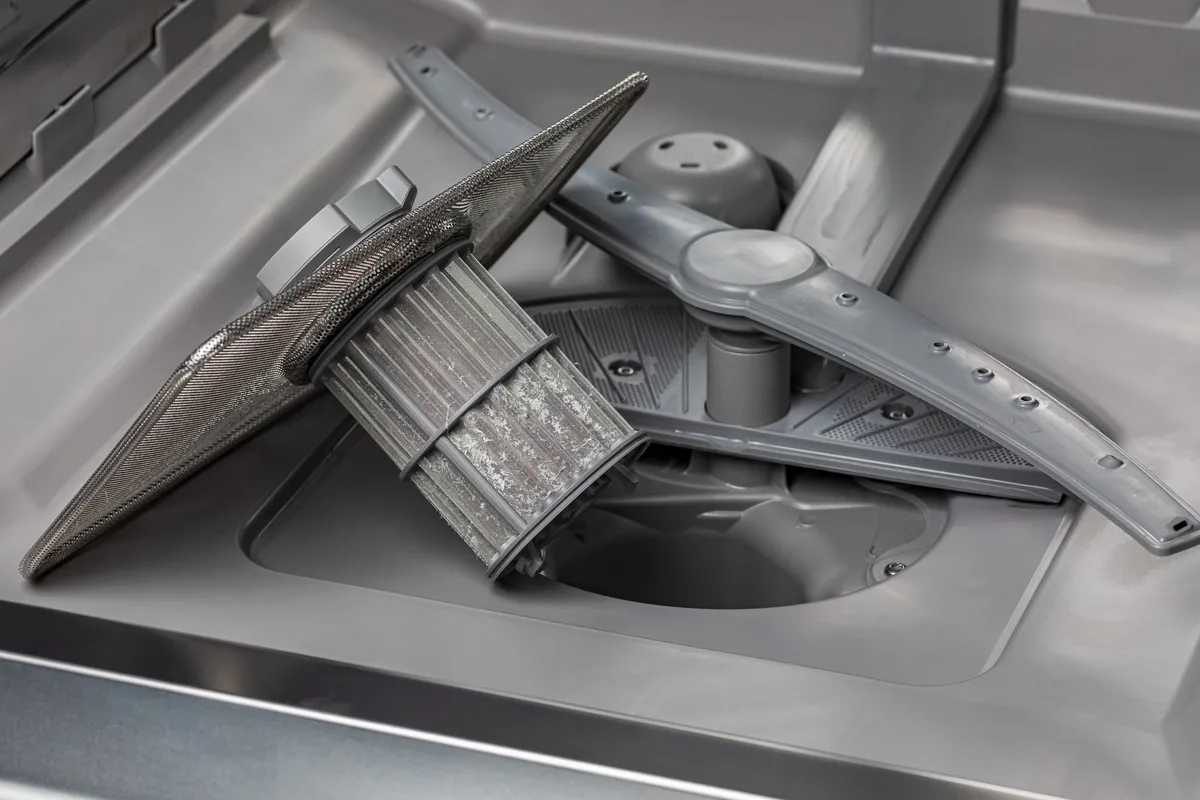
Image source: Bing (Web (fair-use with source credit))
What to do after cleaning. Reinstall the filter and spray arms. Make sure the filter is locked back in place. Run a quick rinse cycle.
If water now sprays normally, you just saved yourself the cost of a service call. If nothing changes, move to the next branch.
Branch 3: Water Level Check — Is There Actually Water in There?
A dishwasher cannot spray what it does not have. Before you blame the pump, confirm that water is actually entering the tub. This check adds about two minutes to your diagnosis.
How to check safely. Start a normal cycle and wait about 90 seconds after you hear the fill valve open. The water sound should be obvious, a steady rush into the bottom of the tub. If you do not hear water, stop the cycle and open the door.
Look at the bottom of the tub. If it is dry, your water inlet valve is not opening or not receiving power.
If the tub is dry. The water inlet valve is an electro-mechanical solenoid that opens when the control board sends it 120 volts AC. These valves fail in two ways. The solenoid coil can burn out, meaning the valve physically cannot open.
Or the valve diaphragm can stick shut from mineral deposits. On Whirlpool models, the inlet valve is located behind the lower kick panel, usually at the left front corner. You can test it with a multimeter.
A working solenoid coil reads between 500 and 1500 ohms of resistance. An open circuit reading means the coil is dead. A new inlet valve costs between $30 and $55 and takes about 20 minutes to replace.
If the tub has too much water. A stuck float switch can tell the control board that the tub is full when it is actually flooding. The float is a plastic mushroom-shaped piece that rises with the water level inside the tub. When it rises to its highest position, it triggers a switch that tells the dishwasher to stop filling.
If that switch is stuck in the full position, the dishwasher will never start the wash cycle. Remove the lower rack and locate the float in the front right or front left corner of the tub. Press down on it gently.
It should move freely and spring back up. If it is sticky, clean around the stem with a damp cloth and a little white vinegar.
The gusher test. This quick test checks whether the control board functions properly. Close the door. Press the Cancel or Drain button.
Listen. If you hear the drain pump run and watch water exit through the drain hose, the control board is communicating with at least one pump. That is a good sign.
If nothing happens, the control board or door latch assembly may be faulty.
Branch 4: The Impeller Jam — The Most Common "Hard" Fix
You have cleaned the filter. You have checked the spray arms. You have confirmed there is water in the tub.
Yet the dishwasher hums and nothing sprays. At this point you are dealing with a mechanical obstruction in the wash pump. On Whirlpool dishwashers, the most likely culprit is a jammed impeller.
What the impeller is and where it hides. The impeller is a small plastic or metal rotor inside the wash pump housing. It sits just below the sump cover, the large plastic piece you see at the bottom of the tub after removing the filter. The impeller spins at high speed to pressurize water and force it up through the spray arms.
When something blocks it from turning, the pump motor hums but produces no water flow.
What causes the jam. Broken glass is the number one culprit. A single shard from a drinking glass can wedge itself between the impeller blade and the pump housing. Other common offenders include chicken bones, hard plastic utensil handles that snapped off, toothpicks, and large fruit pits that made it through the filter.
Once lodged, these items physically prevent the impeller from rotating.
The quick check without disassembly. You need to access the impeller directly. On most Whirlpool models, you can reach through the center opening in the sump after removing the fine filter. Use a flashlight and look for anything visible in the pump housing.
Then insert a flathead screwdriver or a long Allen wrench into the center of the impeller and try to turn it manually. If it spins freely, the jam is not the issue. If it is locked solid, you have found your problem.
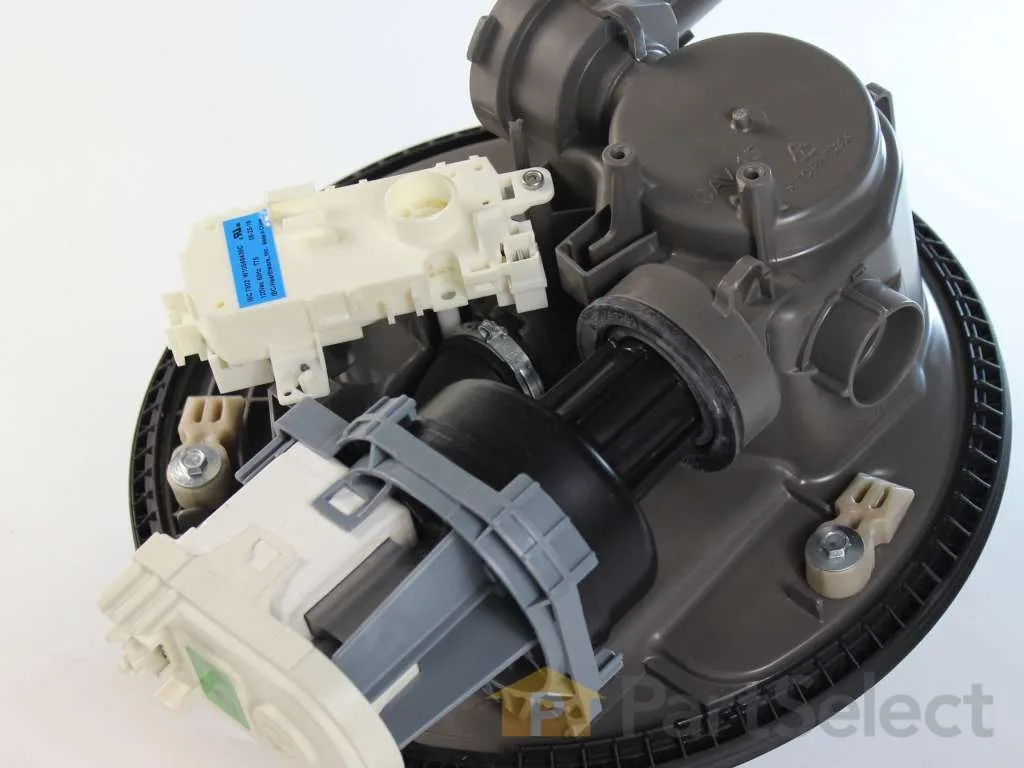
Image source: Bing (Web (fair-use with source credit))
How to clear the jam. If the impeller is stuck, you need to remove the obstruction. For most Whirlpool models, you can access the pump housing by removing the sump cover. This typically involves removing three or four screws around the center of the sump.
Once the cover is off, you will see the impeller directly. Reach in with needle-nose pliers and pull out the debris. Rotate the impeller by hand to confirm it spins freely.
Reinstall the sump cover, reinstall the filters, and run a test cycle.
What if the impeller spins freely but still no spray. That changes the diagnosis. The pump may have failed internally. Move to the next branch.
Branch 5: If the Pump Motor Is Dead or Dying
You have confirmed the impeller spins freely. The filter is clean. The spray arms are clear.
There is water in the tub. The dishwasher still will not spray. At this point the wash pump motor itself is the likely suspect.
How to test the wash pump with a multimeter. Unplug the dishwasher or shut off the breaker. Remove the lower kick panel to access the pump. The wash pump is the larger of the two pumps under the dishwasher.
It sits directly below the sump and connects to the main harness with a two-wire or three-wire connector. Disconnect the harness. Set your multimeter to ohms.
Touch the probes to the two main terminals on the pump. A healthy pump motor reads between 2 and 10 ohms of resistance. If you get an infinite reading, the motor winding has burned out.
If you get a reading of less than 1 ohm, the winding is shorted. Either way, the pump needs replacement.
The buzz but no spin symptom. Sometimes a pump motor will draw power and hum but never actually rotate. This usually means the motor's start capacitor has failed or the rotor bearings have seized. On Whirlpool models, the wash pump capacitor is a small cylindrical component mounted on the pump housing or nearby on the frame.
You can test the capacitor if you have a capacitance meter. For most DIYers it is simpler to replace the entire pump assembly. A new wash pump for a Whirlpool dishwasher costs between $40 and $70 and takes about an hour to install.
What to check before buying a pump. Three things. First, inspect the wire harness connector for signs of corrosion or burning. A melted connector means the pump was drawing excessive current and the wiring needs repair.
Second, check the door latch. Some Whirlpool models have a latch that controls both the door lock and power to the wash pump. If the latch is misaligned or broken, the dishwasher may think the door is open and refuse to power the pump.
Third, check the control board. Look for visible burn marks, cracked solder joints, or bulging capacitors. A bad control board can appear identical to a bad pump from the user's perspective.
When a replacement pump makes sense. If your Whirlpool dishwasher is less than eight years old, replacing the wash pump is usually worth it. The part cost is reasonable and the machine likely has years of life left. If the dishwasher is over ten years old and has other issues like a rusting tub or a leaking door gasket, price a new unit.
As of 2026, a budget Whirlpool dishwasher runs about $450 to $600. If the repair cost plus labor approaches half that, replacement wins.
Branch 6: The Weird Stuff That Gets Overlooked
Sometimes you check all the normal things and the dishwasher still will not spray. A few less obvious problems can mimic a failed pump or a clogged filter.
Upper arm disconnected from the water feed tube. The upper spray arm connects to a plastic feed tube that runs up the back of the tub. If the arm snaps off its mount or the tube disconnects, water dumps into the tub instead of spraying. Open the door and look up at the underside of the top rack.
If the arm is dangling or the tube is visibly separated, snap it back into place.
Door latch misaligned. Whirlpool dishwashers use a latch that confirms the door is fully closed before powering the wash pump. If the latch is slightly off, the dishwasher fills and drains but never starts the wash cycle. Look for a small plastic mechanism on the top edge of the door frame.
Press it in manually. You should feel a firm click. If it feels loose or stuck, the latch may need replacement.
Silverware basket blocking the lower arm. This is embarrassingly common. An overstuffed silverware basket can slide forward and physically stop the lower spray arm from rotating. Open the door mid-cycle and look.
If the arm is pressed against the basket, rearrange the basket and run the cycle again.
Hard water mineral buildup inside the spray arm nozzles. In areas with hard water, calcium and lime can completely plug the tiny holes in the spray arms. The arm itself spins, but no water comes out. Remove the arms and soak them in white vinegar for an hour.
Use a toothpick to clear each nozzle. Rinse thoroughly before reinstalling.
The child lock that turns off spray. Some Whirlpool models have a child lock feature that disables all functions. If you see a padlock icon on the display or the controls do not respond to any input, press and hold the Heated Dry button for three seconds to unlock. This is rare, but it happens.
Common Branching Mistakes (What People Waste Hours On)
A few patterns show up over and over in user reports and service records. Knowing them saves time and frustration.
Replacing the water inlet valve when the problem was a clogged filter. The inlet valve is an easy part to replace, so many people jump to it. But a $0 filter cleaning fixes the no-spray issue far more often. Always clean the filter first.
Buying a new wash pump when the old one just had a jammed impeller. A stuck impeller makes the same humming sound as a dead pump. The difference is a $0 fix versus a $50 part and an hour of labor. Check the impeller before ordering anything.
Running an empty cycle with vinegar thinking it clears physical blockages. Vinegar dissolves mineral deposits. It will not dislodge a chicken bone or a shard of glass. Physical blockages require physical removal.
Ignoring error codes that point to the float switch. Whirlpool dishwashers show error codes for flood conditions and stuck floats. If your display shows FH, F8E4, or F9E1, the dishwasher thinks it is flooding. Cleaning or replacing the float switch fixes it.
Replacing the pump does not.
When to Fold: Signs You Need a Pro (or a New Dishwasher)
Not every problem is worth fixing yourself. Some situations call for a professional or a replacement.
Burned smell plus motor will not spin. A strong electrical burning smell coming from the bottom of the dishwasher means the motor windings have cooked. Replacement is the only option. If the dishwasher is over eight years old, a new machine often makes more financial sense.
Control board corrosion. If you see rust, green corrosion, or burn marks around the display, keypad, or main control board, electronic failure has set in. Board replacement costs $150 to $250 for parts alone. That is borderline for a machine nearing the end of its lifespan.
Leaking from under the door while troubleshooting. A leaking door gasket or a cracked tub requires significant disassembly. The gasket itself is cheap, but the labor to replace it on many Whirlpool models involves nearly stripping the entire door. If the tub is cracked, replacement is the only option.
Everything passed inspection but it still will not spray. If you have tested the pump, verified the impeller, cleaned the filter, checked the float, and confirmed power at the connector, the fault likely lies in the control board or wiring harness. These require specialized diagnostic equipment. At that point a service call is reasonable.
Frequently Asked Questions
Why is my Whirlpool dishwasher not spraying water on the top rack but the bottom works?
The upper spray arm feed tube is likely disconnected or the arm itself is clogged. Remove the top rack and inspect the connection point. Clean the arm nozzles with a toothpick.
If the tube is disconnected, snap it back into place.
How do I reset my Whirlpool dishwasher after a no-spray error?
Press and hold the Start or Cancel button for three seconds. Some models require pressing the Heated Dry and Start buttons simultaneously. Unplugging the dishwasher for 60 seconds also resets the control board on most models.
Can I run my dishwasher without the filter to see if that is the problem?
Do not do this. Running a Whirlpool dishwasher without the filter allows food particles and debris to enter the pump. This can jam the impeller or damage the pump seals.
Clean the filter instead.
How much does it cost to fix a dishwasher that will not spray water?
A filter cleaning costs nothing. A new wash pump costs $40 to $70. A water inlet valve costs $30 to $55.
A service call runs $150 to $300. If you DIY, most repairs stay under $70.
Is it worth fixing a 7-year-old Whirlpool dishwasher that will not spray?
Yes, if the tub and door gasket are in good condition. A $50 pump replacement can give you several more years of use. If the machine is over ten years old or has other issues, price a new unit first.
Your Decision Flowchart (One-Page Summary)
| Symptom | First check | Second check | Fix cost range |
|---|---|---|---|
| Humming, no spray | Filter and spray arms | Impeller jam | $0 to $50 |
| Grinding sound | Filter and sump for debris | Impeller for physical block | $0 |
| Dead silent, has water | Pump motor with multimeter | Door latch and control board | $40 to $250 |
| Dead silent, no water | Inlet valve and float switch | Water supply line | $30 to $55 |
| Top rack dry, bottom works | Upper arm feed tube | Upper arm nozzles | $0 |
| Error code FH or F8E4 | Float switch | Flood condition in sump | $0 to $20 |

Similar Posts