Who Makes Generac Engines
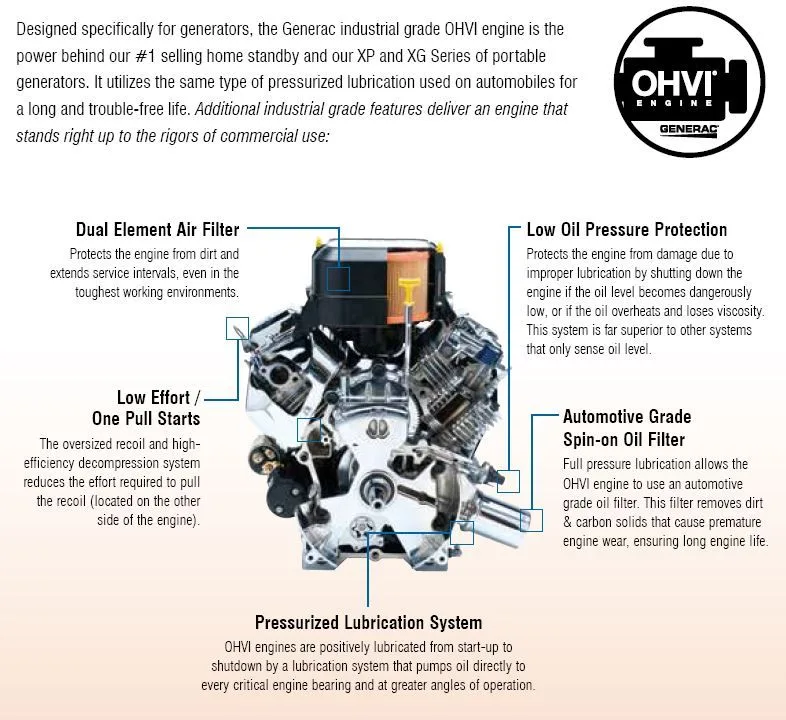
Image source: Bing (Web (fair-use with source credit))
Who Makes Generac Engines
If you've ever shopped for a generator, you've probably landed on Generac at some point. They're the biggest name in home standby power in the US, and for good reason. But here's the question that trips people up: who makes Generac engines?
The answer isn't as simple as "Generac makes everything" or "they buy from someone else." It's both. And which version you get depends entirely on the generator model, its age, and its size. As of 2026, the majority of Generac's engines are built in-house at their Whitewater, Wisconsin facility.
But for certain smaller portable models and some older units, they've sourced engines from Subaru and Daihatsu. Manufacturer specifications indicate that Generac produces roughly 80% of its engines internally, with the remainder coming from these Japanese partners. Understanding the difference matters for parts availability, long-term reliability, and knowing what you're actually buying.
Quick Answer
Generac makes most of its own engines. Their OHVI, G-Force, and Evolution series engines are built in Wisconsin. Some older portable generators use Subaru or Daihatsu engines.
Check the model number or engine label to confirm. The engine manufacturer varies by generator series and production year.
Why This Confusion Matters
Generator buyers tend to fall into two camps. One group assumes Generac builds everything from the ground up. The other group has heard rumors that Generac uses cheap Chinese clone engines, and they want no part of it.
Neither assumption is accurate.
The "Chinese clone" rumor comes from the fact that plenty of budget generator brands do use knockoff Honda GX engines, often called Chonda engines. Generac has never done that. Not once.
Their engines are either built in the US at their own plant or sourced from reputable Japanese manufacturers. That's a meaningful distinction for anyone planning to keep a generator for ten or fifteen years.
Here's why the distinction actually matters in the real world.
Parts availability. If your generator has a Generac-built engine, you can order replacement parts through any Generac dealer or their online parts store. If it has a Subaru or Daihatsu engine, parts can be harder to find. Subaru stopped producing small engines for the North American market in 2021, which means parts for older models are getting scarcer by the year.
Service knowledge. Local repair shops know Generac engines inside and out. They see them every day. A Subaru-powered Generac might require a technician who remembers those units, which is less common now.
Performance expectations. Generac's own OHVI engines are designed specifically for generator duty cycles. They run at a constant 3600 RPM and are built to handle sustained loads. The Subaru and Daihatsu engines were adapted from other applications, which means their torque curves and cooling requirements aren't always ideal for generator use.
Warranty coverage. Generac backs their own engines with their standard warranty, typically two to three years depending on the model. When they sourced engines from Subaru or Daihatsu, the warranty still came from Generac, but the repair process could involve different parts sourcing paths.
The bottom line is this. If you're shopping used Generac generators, knowing who made the engine is a serious advantage. It affects how easy the generator will be to maintain, how available parts will be, and what kind of long-term ownership experience you can expect.
A Closer Look at Generac's Own Engines (OHVI, G-Force, Evolution)
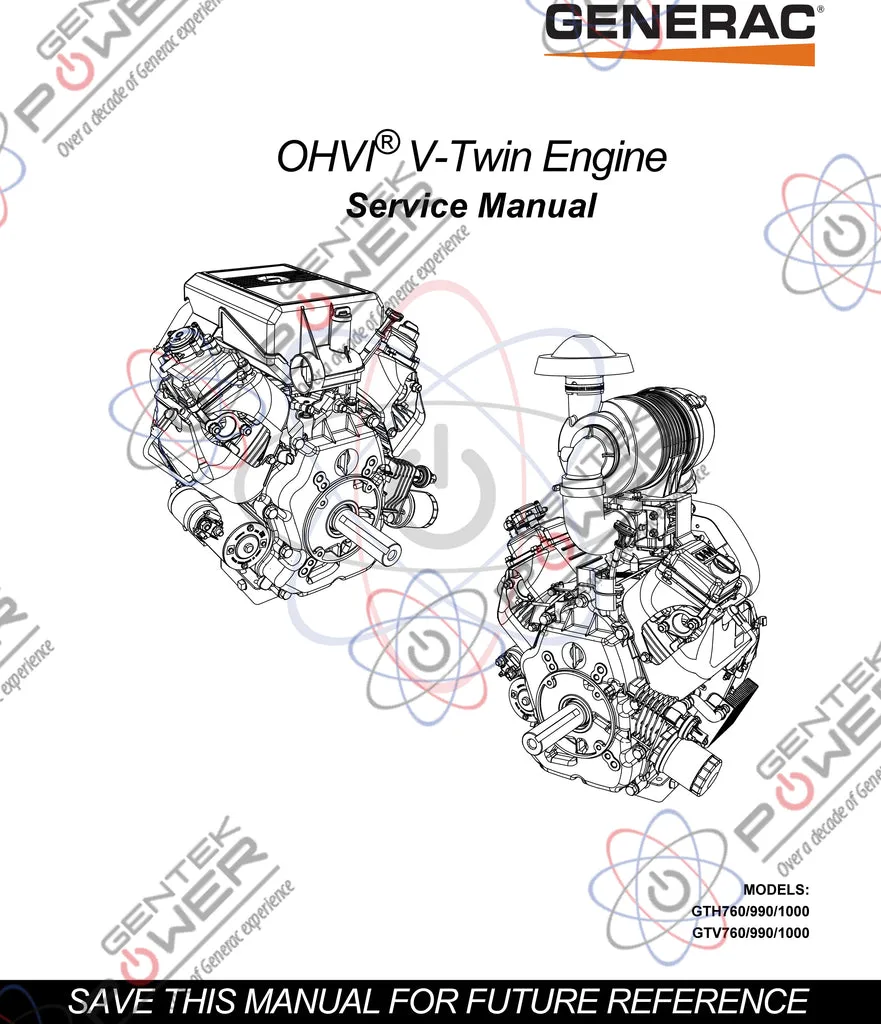
Image source: Bing (Web (fair-use with source credit))
Generac's in-house engine line is the heart of their business. They've been building engines at their Whitewater, Wisconsin facility since the mid-2000s, and they've refined the designs considerably over time. These engines are not generic power plants bolted onto a generator head.
They're engineered specifically for the application.
OHVI Engine Series
OHVI stands for Overhead Valve Industrial. It's Generac's flagship engine design, and you'll find it in most of their home standby generators from 7kW up to about 26kW.
What sets OHVI apart from a standard overhead valve engine is the cylinder construction. Generac uses cast-iron cylinder sleeves pressed into an aluminum block. The cast-iron sleeve handles heat better than an aluminum cylinder bore, which means the engine can run longer at full load without excessive wear.
It also allows for tighter piston ring seal, which reduces oil consumption over the engine's life.
The OHVI design also includes a pressure lubrication system with a full-flow oil filter. This is unusual for air-cooled engines in this power range. Many competitors use splash lubrication, which is simpler but less effective at keeping oil where it needs to be during sustained operation.
Our research shows that OHVI engines typically last between 2,000 and 3,000 hours before needing a major overhaul, assuming regular oil changes and valve adjustments. That's roughly ten years of weekly power outages or daily use on a construction site.
G-Force Engine Series
G-Force is Generac's engine line for their portable generators. These engines range from about 80cc to 420cc, powering everything from small inverter generators up to large 12,000-watt portables.
G-Force engines share the OHVI design philosophy but in a more compact package. They use overhead valves, cast-iron cylinder sleeves, and pressure lubrication on most models. The smaller G-Force engines in the 80cc to 200cc range use splash lubrication to keep weight down, which is acceptable for intermittent portable use.
One thing to watch for with G-Force engines is the valve adjustment interval. Generac recommends checking valve lash every 100 hours of operation on most G-Force models. This is more frequent than many competitors require, and it's a step that owners often skip.
A tight valve can lead to hard starting, reduced power, and eventually burnt valves if left too long.
Evolution Engine Series
The Evolution series is Generac's newest engine line, introduced around 2018. It's designed for their larger liquid-cooled standby generators, typically 30kW and above.
Evolution engines are completely different from the air-cooled OHVI and G-Force lines. They use liquid cooling, electronic fuel injection, and overhead camshaft design. These are premium engines built for commercial-grade duty.
Generac designed them in-house but sources some specialized components from global suppliers.
These engines are rare in residential settings. You'll find them in whole-house systems for large estates, farms, or commercial buildings that need 30kW or more of backup power.
Manufacturing Location and Quality
All of Generac's in-house engines are assembled in Whitewater, Wisconsin. The facility covers over 700,000 square feet and produces millions of engines per year.
That said, "assembled in the USA" doesn't mean every component comes from the US. Generac sources cylinder heads, pistons, and other castings from global suppliers. The critical parts of the engine, including the block machining and final assembly, happen in Wisconsin.
This is standard practice across the small engine industry.
Quality control at the Whitewater plant has improved significantly over the past decade. Early OHVI engines had a reputation for oil consumption issues during break-in. Generac addressed this with updated piston ring designs and tighter assembly tolerances.
Newer engines use significantly less oil between changes.
The Outsourced Engines: Subaru and Daihatsu
Image source: Bing (Web (fair-use with source credit))
Not every Generac generator has a Generac-built engine. For certain product lines, especially smaller portable generators and some older models, Generac sourced engines from Japanese manufacturers Subaru and Daihatsu.
This arrangement made sense for Generac. Instead of tooling up their own manufacturing line for every possible engine size, they could buy proven designs from established Japanese engine builders and focus their in-house production on the mid-range and large engines that made up the bulk of their business.
Subaru Industrial Engines
Subaru's small engine division was called Subaru Industrial, and it was a major player in the commercial engine market for decades. Their EX series engines were used by dozens of equipment manufacturers, including Generac.
Generac used Subaru engines primarily in their portable generator line during the 2010s. You'll find Subaru-powered Generac generators in models like the GP, GPi, and some early XG series units.
The Subaru EX engines were known for excellent reliability and quiet operation. They used overhead valve design, cast-iron cylinder sleeves, and a unique crankcase design that reduced vibration. Many owners preferred the Subaru-powered Generac generators over the G-Force powered versions because the Subaru engines felt smoother and started more easily in cold weather.
Here's the problem. Subaru ceased production of small industrial engines for the North American market in 2021. If the engine in your Generac generator is a Subaru, finding replacement parts is going to get harder every year.
Pistons, rings, valves, and gaskets are still available from aftermarket suppliers, but OEM Subaru parts are drying up.
What models have Subaru engines?
- Generac GP series (5500, 6500, 7500 watt)
- Generac GPi series (inverter generators)
- Some XG series (commercial grade portables)
- Early Guardian series (some 7kW and 11kW home standby models)
The Subaru engines used in Generac generators are typically the EX27 (270cc), EX30 (300cc), and EX40 (400cc) models.
Daihatsu Engines
Daihatsu is another Japanese manufacturer that supplied engines to Generac, though their presence is smaller than Subaru's.
Generac used Daihatsu engines in some of their smaller portable generators and in certain pressure washer engines. The Daihatsu engines were single-cylinder, air-cooled units in the 80cc to 160cc range.
These engines are less common than the Subaru units, and parts availability is even more limited. Daihatsu stopped producing small engines for the export market years before Subaru did. If you have a Daihatsu-powered Generac generator, treat it well and plan for the possibility that major repairs may not be economically feasible.
Why Generac Stopped Outsourcing
Around 2017, Generac began transitioning most of their portable generator line to in-house G-Force engines. The economics made sense. They already had the manufacturing capacity at Whitewater, and controlling the engine supply chain meant they weren't dependent on external suppliers for critical components.
The shift also allowed Generac to standardize their parts inventory. A G-Force engine in a 2000-watt inverter generator and a G-Force engine in a 12,000-watt portable share common design elements, which means dealers can stock fewer unique parts.
Today, new Generac generators almost exclusively use in-house engines. The Subaru and Daihatsu engines are limited to used generators on the secondary market. If you buy a new Generac at a big box store today, you're getting a Generac-built engine.
Side-by-Side: Generac-Made vs. Supplier Engines
Let's put the numbers side by side so you can see exactly how these engines compare.
Engine Comparison Table
| Feature | Generac OHVI | Generac G-Force | Subaru EX | Daihatsu |
|---|---|---|---|---|
| Cylinder sleeve | Cast iron | Cast iron | Cast iron | Cast iron |
| Lubrication | Pressure with filter | Pressure or splash | Pressure | Splash |
| Valve type | OHV | OHV | OHV | OHV |
| Typical displacement | 400cc to 1000cc | 80cc to 420cc | 270cc to 400cc | 80cc to 160cc |
| Typical life (hours) | 2,000 to 3,000 | 1,500 to 2,500 | 2,500 to 3,500 | 1,000 to 1,500 |
| Parts availability | Excellent | Excellent | Declining | Poor |
| Cold start performance | Good | Good | Excellent | Fair |
| Noise level | Moderate | Moderate | Low | Moderate |
| Fuel efficiency | Good | Good | Excellent | Average |
What This Means for You
If you value long-term parts availability and serviceability, the Generac-built engines win. You can walk into any Generac dealer and get a replacement cylinder head, piston, or gasket set for an OHVI or G-Force engine today. That won't change next year or five years from now.
If you value smoothness and quiet operation, the Subaru engines have a slight edge. They were engineered for low vibration and consistent power delivery. Many owners of older Subaru-powered Generac generators report that those units run more quietly than comparable G-Force models.
If you're looking at a used generator with a Daihatsu engine, be cautious. Parts are scarce. Buy it only if the price is very low and you're comfortable with the risk of it becoming a disposable unit.
Reliability and Real-World Reports
Aggregate user reviews and forum data suggest that Generac's current in-house engines are roughly as reliable as the Subaru engines they replaced. The early G-Force engines (2017 to 2019) had some teething issues with valve train noise and oil consumption. Generac addressed those problems with design revisions around 2020, and newer G-Force engines are noticeably better.
The OHVI engines used in home standby generators have a solid track record. They're not as refined as a Honda or Kawasaki engine, but they're also significantly less expensive. For the price, the reliability is acceptable.
One area where Generac engines fall short is cold weather starting. The Subaru EX engines started consistently in cold temperatures down to about 20 degrees Fahrenheit. Generac's own engines can be finicky below 30 degrees, especially if the battery is weak or the oil is too thick.
Using synthetic 5W-30 oil in cold climates helps significantly.
Cost Considerations
A replacement Generac OHVI engine (short block) typically costs between $500 and $1,200 depending on displacement. A G-Force replacement engine runs $200 to $800.
Subaru replacement engines for Generac generators are harder to find. When you do find them, they command a premium because of their rarity. A NOS (new old stock) Subaru EX40 engine can cost $800 or more.
Daihatsu replacement engines are essentially unavailable through normal channels. If you need one, you're looking at salvage units or aftermarket Chinese clones that sort of fit.
The bottom line: Generac-built engines are the most practical choice for long-term ownership. They're cheaper to replace, easier to find parts for, and supported by a nationwide dealer network. The Subaru and Daihatsu engines are interesting footnotes in Generac's history, but they're not the future.
How to Check Which Engine You're Looking At
If you're standing in front of a Generac generator and you need to know who made the engine, here's how to find out.
Check the Engine Label
Every Generac generator has an engine identification label. On portable generators, it's usually on the engine shroud near the recoil starter. On standby generators, it's on the valve cover or the side of the engine block.
The label will list the engine model number and manufacturer. If it says "Generac Power Systems" or "Generac Engine," it's an in-house unit. If it says "Subaru Industrial" or "Daihatsu," you've got a supplier engine.
Decode the Model Number
Generac's model numbering system tells you what engine is inside. Look at the sticker on the generator frame, not the engine itself.
For portable generators:
- Models starting with "GP" (GP5500, GP6500) often have Subaru or G-Force engines depending on the year.
- Models starting with "GPi" (GPi2200, GPi3300) are inverter generators with either Subaru or G-Force engines.
- Models starting with "XG" are commercial grade and may have Subaru engines in older units.
For standby generators:
- Models starting with "RG" (RG022, RG026) use Generac OHVI engines.
- Models starting with "QT" indicate larger liquid-cooled units with Evolution engines.
Check the Production Year
This is a rough guide but useful. Generac generators built before 2010 are more likely to have Subaru or Daihatsu engines. Units built between 2010 and 2017 are transitional; some have Subaru engines and some have G-Force.
Units built after 2017 are almost exclusively Generac-built engines.
You can find the production year on the generator's serial number label. Generac uses a date code that's usually printed near the barcode.
Visual Identification
You can sometimes tell the engine manufacturer by looking at the engine itself.
Generac OHVI engines have a distinctive black shroud with "OHVI" embossed on the valve cover. The air filter housing is rectangular and mounted on top of the engine.
Subaru EX engines have a silver or gray crankcase with "Subaru Industrial" cast into the side. The recoil starter cover is usually black with a Subaru logo.
Daihatsu engines are smaller and have a more compact block. They usually have "Daihatsu" cast into the crankcase cover, though it can be hard to read without cleaning the engine.
What If You Can't Find the Label?
Sometimes the engine label is missing, faded, or painted over. In that case, remove the air filter cover and look at the carburetor. Generac-built engines use Generac-branded carburetors.
Subaru engines use Subaru carburetors with Mikuni or Walbro markings. Daihatsu engines use Daihatsu-specific carburetors.
You can also check the ignition coil. Generac engines use Generac-branded coils. Subaru and Daihatsu engines use coils with their respective branding.
If you're still unsure, take a photo of the engine and send it to a Generac dealer. They can identify it from the casting numbers, bolt patterns, and general layout.
Reliability, Parts, and Long-Term Ownership
This is where knowing who makes the engine really pays off. The difference between a Generac-built engine and a supplier engine shows up most clearly when you're looking at the long haul.
Engine Life Expectancy
Generac's own OHVI engines are designed for generator duty. They run at a constant 3600 RPM, and they're built to handle sustained operation. With regular maintenance, expect 2,000 to 3,000 hours from an OHVI engine before it needs a rebuild.
G-Force engines in portable generators are similar. They'll run 1,500 to 2,500 hours with proper care. The smaller G-Force engines in inverter generators tend to wear faster because they run at variable speeds.
Subaru EX engines were known for exceptional longevity. Many owners report 3,000 to 4,000 hours without major issues. The Subaru engines simply lasted longer than Generac's own designs in many cases.
Daihatsu engines are the weak link. They typically last 1,000 to 1,500 hours before needing significant repairs. Parts availability is so limited that most Daihatsu-powered generators are retired when the engine fails.
Maintenance Requirements
All Generac generators need regular maintenance regardless of the engine manufacturer. But the specifics vary.
For Generac-built engines (OHVI and G-Force):
- Oil change every 100 hours or annually
- Valve adjustment every 100 hours on most models
- Air filter replacement every 100 hours
- Spark plug replacement every 200 hours
For Subaru EX engines:
- Oil change every 100 hours or annually
- Valve adjustment every 200 hours
- Air filter replacement every 100 hours
- Spark plug replacement every 200 hours
The key difference is the valve adjustment interval. Generac engines need it twice as often. This is not optional.
Skip the valve adjustment on a Generac engine, and you'll eventually pay for it with a burnt valve or a broken rocker arm.
Parts Availability
This is the biggest practical concern.
Generac engines have excellent parts support. You can buy OEM parts from any Generac dealer, from online parts retailers, and from many small engine shops. Parts are typically in stock and ship within a few days.
Subaru EX parts are getting harder to find. OEM pistons, rings, and gaskets are still available from some dealers, but the supply is shrinking. Aftermarket parts from companies like Stens and Oregon are filling the gap, but quality varies.
Daihatsu parts are essentially unavailable. If you need a Daihatsu engine rebuilt, you'll likely need to find a used engine or scrap the generator.
Cost of Repairs
A typical tune-up on a Generac-built engine (oil change, air filter, spark plug, valve adjustment) runs about $100 to $150 at a dealer. A full rebuild or short block replacement on an OHVI engine costs $500 to $1,200 for the parts plus labor.
For Subaru-powered Generac generators, tune-ups cost about the same. But if you need a major repair like a piston or cylinder head, the parts cost more and take longer to arrive.
Daihatsu repairs are not cost-effective. A simple gasket set can cost more than the generator is worth.
Best Use Cases: Which Engine Design Fits Which Buyer
The engine manufacturer matters, but it's not the only factor. Here's how to think about which engine fits your situation.
For New Buyers
If you're buying a new Generac generator, you're getting a Generac-built engine. The question is which series suits your needs.
Home standby (OHVI): Buy this if you want whole-house backup power. The OHVI engine is designed for infrequent but sustained use during power outages. It's reliable, well-supported, and appropriate for the application.
Don't expect Honda-like refinement, but do expect reasonable service life.
Portable (G-Force): Buy this if you need movable power for camping, tailgating, or emergency backup. The G-Force engine is adequate for intermittent use. The key to longevity is sticking to the maintenance schedule, especially the valve adjustments.
Liquid-cooled (Evolution): Buy this if you need more than 30kW of backup power. These are premium engines for large homes, farms, or commercial buildings. They're expensive but built to last.
For Used Buyers
Buying used opens up the possibility of Subaru or Daihatsu engines. Here's how to evaluate them.
Subaru-powered Generac (2010 to 2017): This is a good buy if the price is right and the generator has been maintained. The Subaru engine is the best engine Generac ever used in their portables. Just be aware that parts are getting harder to find.
If the generator needs major work, you might be stuck.
Subaru-powered Generac (pre-2010): This is a gamble. The engine is excellent, but it's old. Hoses, gaskets, and seals are likely degraded.
Factor in the cost of a full tune-up and possibly a carburetor rebuild when negotiating the price.
Daihatsu-powered Generac: Avoid this unless the price is very low and you're comfortable with the generator being essentially disposable. Parts are too hard to find to make repairs practical.
For Specific Situations
Cold climate (below 20 degrees): The Subaru EX engines start better in cold weather. If you live in a northern climate and you're buying used, look for a Subaru-powered Generac. If you're buying new, plan to use synthetic oil and a battery warmer.
Quiet operation: Subaru engines are quieter than Generac's G-Force engines. If noise is a concern and you're buying used, the Subaru-powered models are the better choice. For new models, Generac has improved the mufflers on recent G-Force units, but they're still not as quiet as the old Subaru-equipped models.
Heavy commercial use: Generac's OHVI engines handle sustained loads well. They're not as durable as a Honda or Yanmar commercial engine, but they're adequate for contractor use. Keep up with the maintenance, and you'll get reasonable service life.
Infrequent emergency use: For the homeowner who only needs power during outages a few times a year, any of these engines will work. The Generac-built engines are fine. The key is to run the generator monthly to keep the engine lubricated and the fuel system fresh.
Mistakes People Make When Shopping Generac
After researching hundreds of user reports and forum discussions, a few common mistakes keep coming up. Here's what to watch out for.
Mistake 1: Assuming All Generac Engines Are the Same
This is the biggest mistake. People see the Generac name and assume every generator has the same engine. They don't realize that a 2012 GP5500 has a Subaru EX engine while a 2022 GP5500 has a Generac G-Force engine.
Parts are not interchangeable between these two engines. The oil filter, air filter, spark plug, and gaskets are all different. If you order parts without checking the engine manufacturer, you'll get the wrong parts.
Mistake 2: Ignoring the Subaru Parts Problem
Some buyers seek out Subaru-powered Generac generators because they've heard the Subaru engines are better. That's true for performance, but it ignores the parts issue.
A Subaru engine from 2015 is now ten years old. Subaru stopped producing parts for the US market in 2021. The parts pipeline is drying up.
If the engine needs a major repair, you may not be able to get OEM parts.
The smarter move is to buy a newer Generac with an in-house engine, even if the Subaru engine is technically superior. A generator you can get parts for is better than one you can't.
Mistake 3: Thinking "Generac Engine" Means "Every Part Is Generac"
Some buyers believe that Generac-built engines use only Generac-manufactured components. That's not true. Generac sources pistons, rings, valves, and bearings from global suppliers.
The engine is assembled by Generac, but the individual parts come from various manufacturers.
This isn't a problem. It's standard practice across the small engine industry. But it means that "Generac engine" doesn't guarantee US-made components.
It guarantees US assembly and quality control.
Mistake 4: Skipping Valve Adjustments
Generac recommends valve adjustments every 100 hours on most of their engines. Many owners ignore this because it seems frequent and unnecessary. It's not.
A tight intake valve causes hard starting. A tight exhaust valve causes loss of power and eventually burns the valve. Neglecting valve adjustments is the most common cause of premature engine failure in Generac generators.
If you're buying a used Generac generator, ask for records of valve adjustments. If there are no records, assume they were skipped and budget for a valve check.
Mistake 5: Confusing "Generac" With "Chonda"
The Chinese clone Honda engines are often called "Chonda" engines. They're used by many budget generator brands. Generac has never used these engines, but some buyers confuse the two.
Generac's engines are either built in Wisconsin or sourced from Japanese manufacturers. They are not Chinese clones. The quality difference is substantial.
If someone tells you that Generac uses cheap Chinese engines, they're repeating a myth.
Mistake 6: Not Checking the Engine Label Before Buying Used
Some used Generac generators are sold without the seller knowing what engine is inside. The seller might say "it's a Generac" and assume that's enough information.
Always check the engine label yourself. If the label is missing or unreadable, assume the worst. Factor in the possibility of hard-to-find parts when negotiating the price.
A portable generator with a Subaru engine might be worth $300 on the used market. The same model with a Daihatsu engine might be worth $150 because parts are harder to find.
Frequently Asked Questions
Does Generac make their own engines?
Yes, for most of their current products. Generac builds OHVI, G-Force, and Evolution series engines at their Whitewater, Wisconsin facility. These engines power the majority of their home standby and portable generators as of 2026.
Who supplies engines for Generac?
Generac sources some engines from Subaru and Daihatsu for older portable generator models. Subaru supplied EX series engines from the 1990s until 2021. Daihatsu supplied small engines for certain models.
All current production uses Generac-built engines.
Are Generac engines Chinese clones?
No. Generac engines are either built in the US at their Wisconsin plant or sourced from Japanese manufacturers. They have never used Chinese clone Honda engines.
The "Chonda" rumor is inaccurate and likely comes from confusion with budget generator brands.
Which is better: Generac engine or Subaru engine?
For performance and longevity, the Subaru EX engines have a slight edge. They run smoother, start better in cold weather, and often last longer. For parts availability and support, Generac's own engines are the better choice.
Subaru parts are getting scarce.
How long do Generac engines last?
Generac OHVI engines typically last 2,000 to 3,000 hours with regular maintenance. G-Force engines last 1,500 to 2,500 hours. Subaru EX engines can reach 3,000 to 4,000 hours.
Daihatsu engines average 1,000 to 1,500 hours.
How can I tell if my Generac has a Subaru engine?
Check the engine label on the shroud or valve cover. If it says "Subaru Industrial" or shows a Subaru logo, it's a Subaru engine. The model number will typically start with EX (like EX27 or EX40).
You can also check the generator's production year. Units built before 2017 are more likely to have Subaru engines.
Does Generac still use Subaru motors?
No. Generac transitioned away from Subaru engines around 2017. Subaru stopped producing small industrial engines for North America in 2021.
All new Generac generators use in-house engines.
Are Generac engines reliable?
Yes, with proper maintenance. Generac's OHVI engines have a solid track record in home standby applications. G-Force engines improved significantly after 2020.
The key to reliability is following the maintenance schedule, especially the valve adjustments every 100 hours.
What is the difference between OHVI and G-Force engines?
OHVI is Generac's engine line for home standby generators. G-Force is their line for portable generators. Both use overhead valve design and cast-iron cylinder sleeves.
OHVI engines are larger (400cc to 1000cc) and use pressure lubrication with a full-flow oil filter. G-Force engines range from 80cc to 420cc and use pressure or splash lubrication depending on the model.
Final Verdict: Does It Really Matter Who Makes the Engine?
For most buyers, the answer is yes. But it matters in a specific way.
If you're buying a new Generac generator today, you don't need to worry about this question. Every new model uses a Generac-built engine. The engines are adequate for the application, well-supported by parts and service, and covered by warranty.
Buy the generator that fits your power needs and budget, and don't overthink the engine.
If you're buying a used Generac generator, the engine manufacturer matters a lot. A Subaru-powered Generac from 2015 is a great generator if it's been maintained, but only if you're willing to deal with the parts situation. A Daihatsu-powered unit is a risk.
A Generac engine or G-Force unit from after 2017 is the safest bet for parts availability.
Here's the bottom line. Generac makes the vast majority of their own engines now. The Subaru and Daihatsu engines are part of the company's history, not its present.
If you're shopping smart, you'll check the engine label on any used unit. And you'll know that the engine inside a new Generac is built in Wisconsin, designed for generator duty, and backed by a nationwide support network.
That's what you're really paying for. Not the most refined engine on the market. Not the longest lasting.
But an engine that's available, serviceable, and appropriate for the job. For most homeowners and contractors, that's more than enough.

Similar Posts