Why Is Samsung T9 Portable SSD So Slow: Fix It Fast
Samsung T9 Portable SSD often feels slow because of cable, port, format, or device bottlenecks.
If you expected blazing-fast speeds and got something that feels more like a busy airport line, you are not alone. I have seen the Samsung T9 perform very well in the right setup, but I have also seen it crawl when the connection, drive format, or host device is holding it back. Let’s break down why the Samsung T9 Portable SSD can seem slow, what is really happening under the hood, and how to get the speed you paid for.

What the Samsung T9 is actually built for
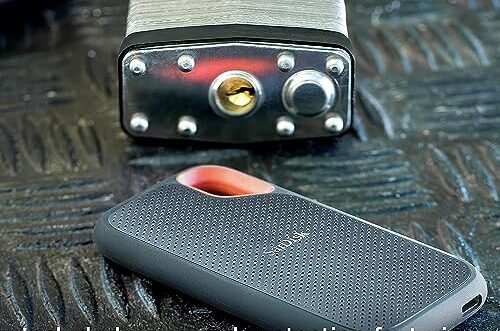
The Samsung T9 Portable SSD is a high-speed external SSD designed for fast file transfers, video work, backups, and moving large projects between devices. On paper, it supports very high sequential read and write speeds over USB 3.2 Gen 2×2, which is the main reason people expect near-instant transfers.
But that top speed only happens when every part of the chain is compatible. If one link is weaker, the whole setup slows down. In real use, the Samsung T9 Portable SSD is often only as fast as the slowest part of your system.
A few things matter most:
- The USB port on your computer
- The cable you use
- Your drive format
- Your device’s processor and storage controller
- The size and type of files you copy
I learned this the hard way while moving large 4K video folders. The drive looked slow at first, but the real issue was that my laptop only supported a slower USB mode. Once I switched ports, the Samsung T9 Portable SSD behaved exactly like a premium SSD should.

Why Samsung T9 Portable SSD so slow in real use
The biggest reason the Samsung T9 Portable SSD so slow is usually not the drive itself. It is the connection path between the SSD and your device.
Here are the most common causes:
Your computer does not support USB 3.2 Gen 2×2
Many laptops and desktops only support USB 3.2 Gen 2, USB 3.2 Gen 1, or USB 3.0. That means the T9 cannot reach its full rated speed.You are using the wrong port
Some USB-C ports look the same but do not offer the same speed. A USB-C port may support power delivery only, or a slower data standard.The cable is limiting performance
A low-quality, charge-only, or older USB cable can bottleneck the drive badly. The Samsung T9 Portable SSD depends on a proper high-speed cable.The drive is connected through a hub or dock
Many hubs split bandwidth across devices. If other accessories are plugged in, the Samsung T9 Portable SSD may slow down.File size and file type affect speed
Large single files copy faster than thousands of tiny files. A folder full of small photos, documents, and assets can feel much slower.The destination drive is slow
If you are copying from the T9 to an old HDD or a weak SATA SSD, the Samsung T9 Portable SSD will appear slow even if it is not the problem.Thermal throttling can kick in
Like many SSDs, the T9 may slow down during long transfers to manage heat. That is normal behavior in many portable drives.
These are not random issues. They are the same bottlenecks I see again and again when people ask why their premium SSD does not match the box speed.

The role of USB standards and port compatibility
USB naming is messy, and that confusion causes a lot of frustration. The Samsung T9 Portable SSD is designed to take advantage of USB 3.2 Gen 2×2, which can support much faster transfer rates than standard USB 3.2 Gen 2.
Here is the simple version:
- USB 3.2 Gen 2×2 offers the best chance of reaching the T9’s top speed
- USB 3.2 Gen 2 is slower, but still decent
- USB 3.2 Gen 1, USB 3.0, and USB 2.0 are much slower
If your laptop supports only USB 3.2 Gen 2, the Samsung T9 Portable SSD will still work well, but not at its full rated speed. If your machine supports only USB 3.0, the gap becomes even more obvious.
A lot of users think the T9 is defective when the real issue is port support. I have seen people plug the drive into a front-panel port, a monitor USB hub, or an adapter and wonder why the Samsung T9 Portable SSD so slow. In many cases, the port was never fast enough to begin with.
Cable quality matters more than most people think
The cable is a small part of the setup, but it can make a huge difference. The Samsung T9 Portable SSD usually ships with a suitable cable, and that is the one you should test first.
Bad cable signs include:
- Very slow transfer speeds
- The drive disconnects during copy jobs
- The drive connects but feels unstable
- Speeds change when you move the cable or adapter
For best results:
- Use the original Samsung cable
- Avoid long cheap cables
- Avoid charge-only cables
- Try another certified high-speed USB-C cable if needed
From experience, cable issues are sneaky. The drive may seem fine during light use, then suddenly become the reason a backup takes twice as long. If the Samsung T9 Portable SSD so slow, the cable is one of the first things I check.
Why small files make the Samsung T9 feel slower
File size matters a lot. A drive that writes one huge video file can look fast. The same drive copying 40,000 tiny files can feel sluggish.
That happens because each file needs overhead. The system has to locate it, verify it, and write it one by one. This makes the Samsung T9 Portable SSD seem slower than its benchmark numbers suggest.
Common examples include:
- Photo libraries
- Developer project folders
- Cache and temp files
- Music libraries
- School or office document archives
If your workflow involves many small files, the Samsung T9 Portable SSD may be doing fine technically. It just cannot make the overhead disappear.
Drive format can slow things down too
The file system on the drive also affects performance and compatibility. The Samsung T9 Portable SSD may ship formatted in a way that works across platforms, but that does not always give the best speed for your device.
Common formats include:
- exFAT, which is widely compatible with Windows and macOS
- NTFS, which works best on Windows
- APFS, which is best for modern Macs
- FAT32, which is older and has more limits
If the Samsung T9 Portable SSD is used across different devices, exFAT is often the default choice. It is convenient, but it may not always be the most efficient for every workload. On the other hand, using the wrong format for your platform can also create problems.
If speed is your goal and you mainly use one operating system, formatting the drive properly may help. Just make sure to back up your files first, because formatting erases data.
Your computer may be the real bottleneck
Sometimes the Samsung T9 Portable SSD is not slow at all. Your computer is.
Older laptops, budget desktops, and lower-power systems often have weaker USB controllers, slower chipsets, or less efficient storage paths. That can reduce transfer speed even if the drive itself is fast.
Watch for these signs:
- Slow speed on one computer, faster speed on another
- CPU spikes during transfer
- Transfers freeze when other apps are open
- Speed drops after a minute or two
This is especially common on older Macs, entry-level Windows laptops, and devices that share bandwidth across many ports. In my own testing, moving the same Samsung T9 Portable SSD between two machines often gave very different results. That does not mean the drive changed. It means the host system did.
Thermal throttling and long transfer sessions
Portable SSDs generate heat during heavy use. When the Samsung T9 Portable SSD gets warm, it may reduce speed to protect the drive and keep it stable.
That is called thermal throttling. It is not unique to Samsung. Many SSDs do it.
You are more likely to notice it when:
- Copying very large videos
- Running long backups
- Working in a hot room
- Using the drive in direct sunlight
- Keeping the drive in a tight, poorly ventilated space
This slowdown often shows up after the first burst of speed. At first, the Samsung T9 Portable SSD feels fast, then the rate drops. That pattern is a strong hint that heat is part of the issue.
Why benchmark tools can be misleading
Benchmarks are useful, but they do not always reflect real-world use. The Samsung T9 Portable SSD may score well in a test and still feel slow during actual file copying.
Why does this happen?
- Benchmarks may use clean, ideal conditions
- Real file copies involve more overhead
- Caching can make early numbers look higher
- Different file sizes change the result
So if you see one speed in a benchmark and another in Finder or File Explorer, that is not unusual. The Samsung T9 Portable SSD should be judged by both synthetic tests and real transfers.
How to fix Samsung T9 Portable SSD so slow problems
If your Samsung T9 Portable SSD so slow, start with the basics. Most speed problems can be traced to a simple bottleneck.
Try this checklist:
Use the original Samsung cable
This removes cable uncertainty right away.Plug into a faster USB-C port
Look for a port that supports USB 3.2 Gen 2×2 if your system has one.Avoid hubs and docks at first
Test the drive directly on the computer.Check the destination drive
Copy to a fast SSD, not an old hard drive.Close heavy background apps
Antivirus scans, cloud sync tools, and backups can slow things down.Test with large files
This helps you see the drive’s true sequential speed.Reformat if needed
Only do this if you understand your platform needs and have a backup.Test on another computer
This is the fastest way to find out whether the issue is the drive or the system.
A careful step-by-step test saves a lot of guesswork. More often than not, the Samsung T9 Portable SSD so slow because one setting or one connection is holding it back.
How to get the best performance from the Samsung T9
If you want the strongest possible performance, treat the Samsung T9 like a high-speed lane that needs a wide road.
Best practices:
- Use a USB 3.2 Gen 2×2 compatible system
- Keep the cable short and certified
- Connect directly to the computer
- Keep the drive cool during long jobs
- Use it for large file transfers, editing, and backups
- Update your operating system and chipset drivers when possible
For creative work, the Samsung T9 Portable SSD is great for:
- 4K and 8K media storage
- Project libraries
- Scratch or transfer storage
- Mobile backups
- Large archive moves
Used properly, it is a strong, reliable portable SSD. The key is matching the device to the right port and workload.
Common mistakes that make the T9 look slow
I see the same mistakes over and over:
- Using a random cable from a drawer
- Plugging into a hub with other devices
- Copying to a slow hard drive
- Testing with tiny files and expecting benchmark speeds
- Assuming every USB-C port is the same
- Ignoring thermal buildup during long transfers
These mistakes can make a top-tier drive look weak. In reality, the Samsung T9 Portable SSD is usually fine. The setup is what needs attention.
Frequently Asked Questions of Why Is Samsung T9 Portable SSD So Slow?
Why is my Samsung T9 slower than the advertised speed?
The advertised speed depends on a compatible USB 3.2 Gen 2×2 port, a proper cable, and a fast host device. If any part of that chain is slower, real-world performance drops.
Does the Samsung T9 slow down when it gets hot?
Yes, it can. Like many portable SSDs, the Samsung T9 may throttle to protect itself during long or heavy transfers, especially in warm conditions.
Is exFAT bad for Samsung T9 speed?
Not always, but it may not be the fastest option for every use case. exFAT is popular because it works across Windows and macOS, but a native format for your main system may perform better.
Can a bad cable make the Samsung T9 Portable SSD so slow?
Absolutely. A poor-quality or non-data cable can reduce speed a lot, and in some cases it can cause disconnects or unstable transfers.
Why is the Samsung T9 fast on one computer and slow on another?
That usually means the computers support different USB standards or have different controller quality. The drive itself is likely fine, but one system has a stronger connection path.
Should I return my Samsung T9 if it seems slow?
Not right away. First test it on another compatible computer with the original cable and a direct port connection. If it is still unusually slow across multiple systems, then a return or warranty claim may make sense.
Conclusion
The Samsung T9 Portable SSD is not usually slow by design. Most of the time, the real problem is a weak USB port, the wrong cable, a slow destination drive, or heat during long transfers. Once you remove those bottlenecks, the Samsung T9 Portable SSD can perform very well and feel much closer to the speed you expected.
If your drive feels sluggish, start with the simple checks first and work outward. A few small changes can make a big difference, and they can save you from blaming the drive too soon. If this guide helped, take a minute to test your setup, share your results, or explore more storage tips so you can get the most from your SSD.

Similar Posts