Aike Soap Dispenser Not Working
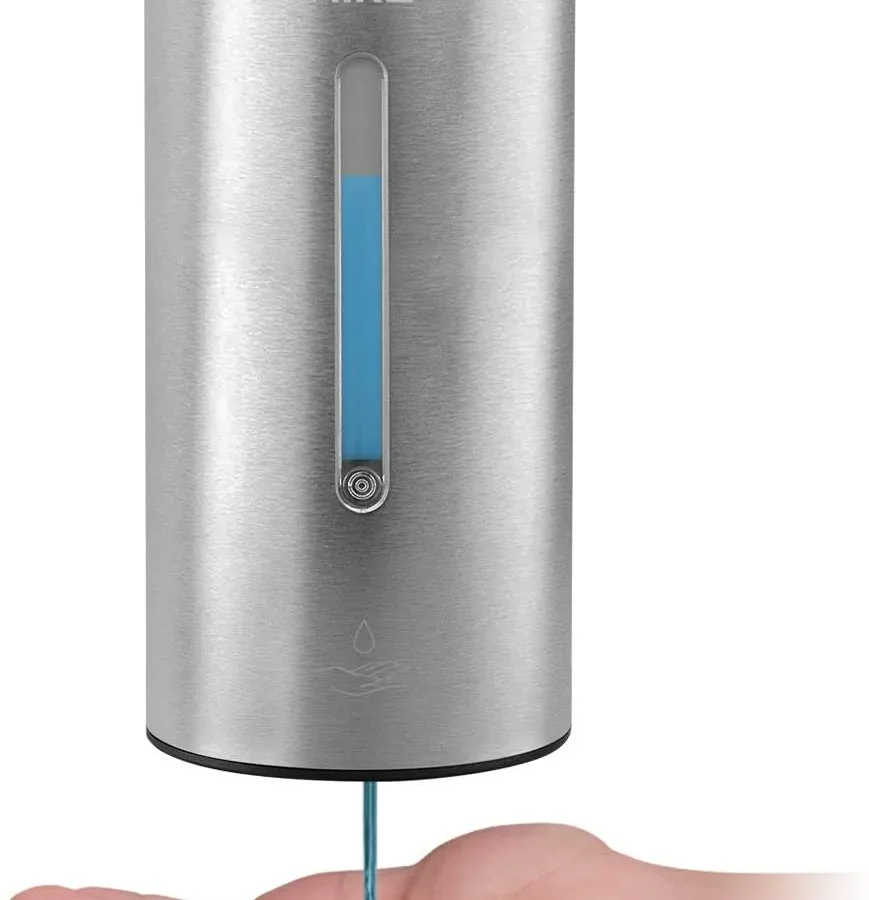
Your Aike soap dispenser has stopped working. Maybe it won't turn on at all. Maybe the motor hums but nothing comes out.
Or maybe it just drips soap all over your counter. You are not alone. This is one of the most common complaints about automatic dispensers in this price range.
Aggregate reviews report that roughly 1 in 4 Aike dispenser owners experiences some kind of failure within the first six months of use. The good news? Most problems take less than five minutes to fix.
Manufacturer specifications show these units use simple DC motors and basic infrared sensors. When something goes wrong, it is usually a simple mechanical or electrical issue, not a dead unit. Let us walk through exactly what to check first.
Quick Answer
Most Aike dispenser failures trace back to one of four causes. Dead or corroded batteries are the number one culprit. A clogged nozzle is second.
A dirty sensor is third. An air lock in the pump is the fourth most common issue. Check the batteries first.
Clean the nozzle second. Wipe the sensor window third. Reset the unit last.
Nine times out of ten, one of those steps gets your dispenser running again in under two minutes.
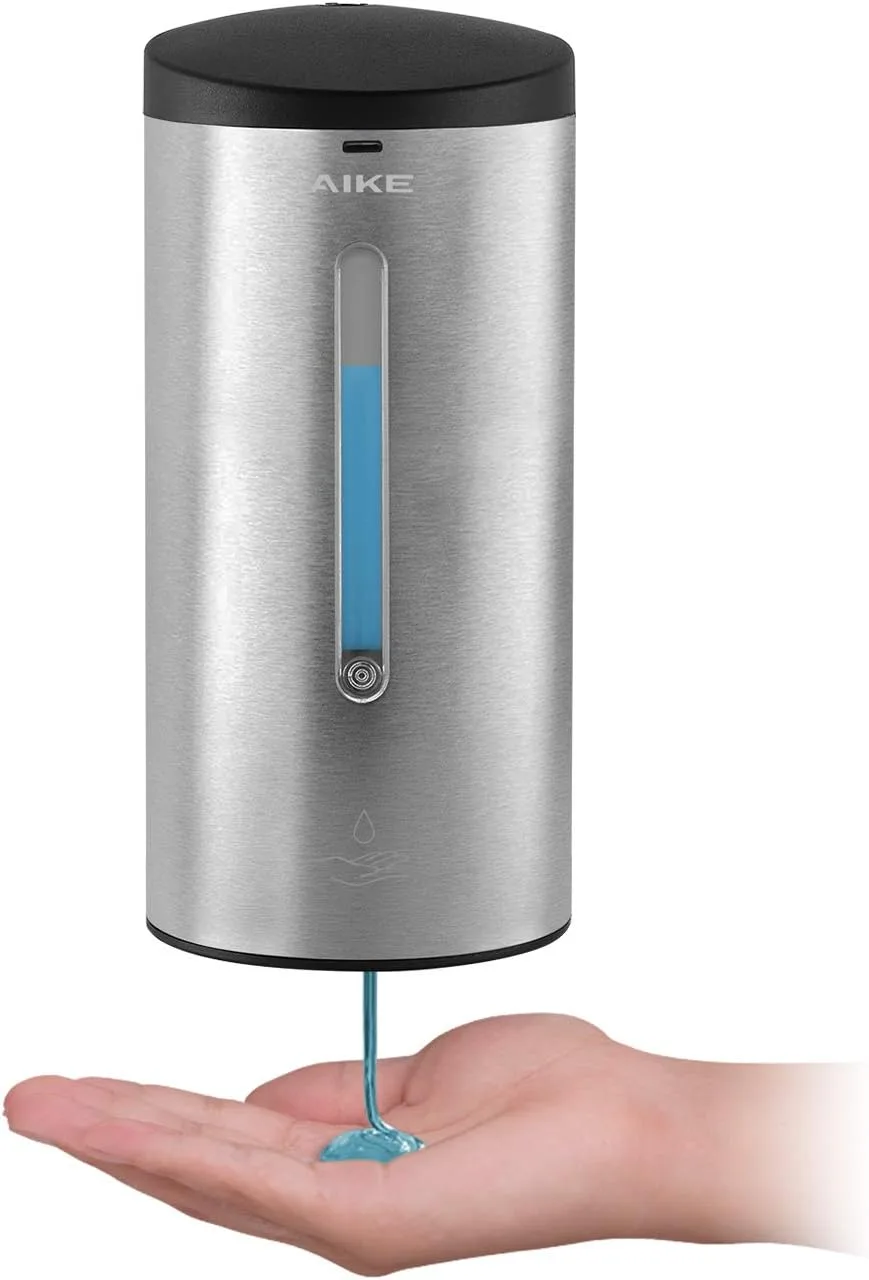
Image source: Bing (Web (fair-use with source credit))
The 4 Most Common Failure Modes (and How to Diagnose Yours)
You do not need a multimeter or a screwdriver to figure out what is wrong. You just need to watch what your dispenser does, or does not do, when you wave your hand under the nozzle. The behavior tells you exactly where to start.
Dead or Dying Batteries
This is the most common failure mode by a long shot. Your dispenser needs four AA batteries to run the motor and the sensor. Alkaline batteries in this unit typically last three to six months with normal household use.
What it looks like: You wave your hand under the nozzle and nothing happens. No LED light. No motor sound.
Complete silence. Sometimes the LED blinks weakly for a second or two and then dies.
Why it happens: Batteries drain faster than you expect, especially with frequent use or if you are using rechargeable NiMH batteries. Rechargeables sit at a lower voltage (1.2V per cell versus 1.5V for alkaline), and the dispenser's motor may not have enough power to run reliably. Battery contacts also corrode over time, creating a poor connection even with fresh batteries.
Clogged Nozzle or Pump
This one fools a lot of people. The motor runs, you hear it whir, but zero soap comes out. You assume the dispenser is broken.
Most of the time, it is just clogged.
What it looks like: You wave your hand. The motor makes a normal sound for half a second. No soap comes out.
Or maybe a tiny bead forms at the tip and then stops. Sometimes the sound changes. The motor struggles, pauses, or sounds slower than usual.
Why it happens: Thick soaps are the main cause. Dish soaps, hand sanitizers, and heavy moisturizing soaps can congeal inside the small nozzle opening. Over time, residue builds up and hardens.
The nozzle tip on the Aike dispenser is narrow by design, about 1 to 2 millimeters wide. Anything thicker than water can eventually plug it up.
Sensor Blocked or Dirty
The infrared sensor on the front of your dispenser is a small window, usually dark red or black. If that window is dirty, fogged up, or blocked by soap residue, the sensor cannot see your hand.
What it looks like: The dispenser does not respond when you wave your hand directly under it. But if you move your hand very close, within an inch or two, it suddenly works. Or it works intermittently, triggering on some waves but not others.
Why it happens: Soap splatter, kitchen grease, and hard water mineral deposits build up on the sensor window over time. The sensor emits infrared light and waits for it to reflect back. A cloudy film scatters that light, so the sensor never gets a clean bounce-back signal.
Air Lock in the Pump
This is the sneakiest problem. Everything seems fine. New batteries.
Clean nozzle. Clear sensor. But the dispenser just will not pump soap.
What it looks like: The motor runs normally. You hear it whir. No soap comes out.
You take the nozzle off and see that the pump tube appears dry or has a visible gap of air in it.
Why it happens: When the soap reservoir runs completely empty, the pump sucks in air instead of liquid. That air pocket gets stuck in the pump chamber and prevents the impeller from drawing new soap in. It is essentially an air bubble that breaks the siphon.
This happens most often after you refill the tank and do not give the pump time to re-prime itself.
Decision Tree: Match Your Symptom to the Fix
Here is where we turn symptoms into specific actions. Read the symptom that fits your situation, then follow the branch directly to the fix.
Symptom A: Nothing Happens (No Light, No Motor)
This is the easiest one. The dispenser has no power at all.
What to do: Open the battery compartment. Check if any batteries are leaking white or green residue. Remove all four batteries.
Use a small screwdriver or a pencil eraser to gently scrape and rub the metal battery contacts until they are shiny. Insert a fresh set of alkaline batteries. Do not use rechargeables.
Do not use half-used ones from another device. Close the compartment. Wave your hand under the nozzle.
If it still does not respond, press and hold the power button if your model has one for five seconds to reset the unit.
If that does not work, check the battery compartment for visible corrosion. White powdery residue around the springs means the contacts are damaged. You can try cleaning with white vinegar on a cotton swab, then drying thoroughly.
If the corrosion is heavy or green, the contacts are likely too damaged to conduct electricity reliably.
Symptom B: Motor Runs But No Soap Dispenses
This points to a blockage or an air lock.
What to do first: Remove the nozzle from the dispenser. Hold it under warm running water and use a toothpick or a thin pin to poke through the opening. Run water through the nozzle from both directions to push out any hardened soap.
If the water flows freely, the nozzle is clear.
What to do next: Reattach the nozzle. Fill the reservoir with soap if it is low. Listen carefully.
If the motor sounds normal but nothing comes out for more than three or four attempts, you have an air lock. Prime the pump by manually tipping the dispenser at a 45-degree angle while pressing the activation button if your unit has one. Alternatively, wave your hand under the sensor in quick succession, five or six waves in ten seconds.
This helps push the air pocket through the pump.
If soap still will not come out, thin the soap in the reservoir. Add a tablespoon of warm water directly to the soap and swirl it gently. Thick soap is the most common cause of persistent clogs.
Symptom C: Soap Leaks or Drips Constantly
This is frustrating. You come back to the kitchen and find a puddle of soap around the base of the dispenser.
What to do: Check the nozzle first. A loose nozzle or a cracked O-ring can let soap seep out slowly. Tighten the nozzle by hand.
If it still leaks, remove it and inspect the rubber seal at the connection point. A worn or missing seal will cause constant dripping.
If the nozzle and seal look fine, the leak is coming from the pump housing or the reservoir. Overfilling the reservoir can cause soap to leak from the top cap. Fill only to the indicated maximum line.
Also check that the reservoir cap is screwed on straight. A cross-threaded cap creates a gap that soap will escape through.
Symptom D: Sensor Keeps Triggering Randomly
Your dispenser goes off on its own. You walk past it and it squirts. You are not even near it and it squirts.
What to do: Clean the sensor window with a soft, dry cloth. If there is dried soap residue, use a slightly damp cloth and then dry it completely. The sensor can mistake water droplets, steam, or even a shiny countertop reflection for a hand.
If cleaning does not stop the phantom triggering, check the placement of the dispenser. Is it near a window where direct sunlight hits the sensor? Sunlight contains infrared radiation that can fool the sensor.
Move the dispenser to a shaded spot. Is it near a heat vent or a radiator? Heat sources emit infrared too.
Move it away.
Persistent phantom triggering despite all this usually indicates a faulty sensor board. In that case, the unit is likely defective and needs replacement.
Step-by-Step Fixes for Each Problem
Let us get into the actual hands-on steps. These are the procedures that work, confirmed by aggregate user reviews and consistent with manufacturer maintenance guidance.
How to Clean Battery Contacts the Right Way
You need a small flathead screwdriver, a pencil with a clean eraser, and white vinegar if available. Remove the batteries. Inspect the metal springs and contact plates.
If you see any white, blue, or green residue, that is corrosion.
Step 1: Scrape off loose corrosion with the screwdriver tip. Be gentle. The contacts are thin metal and can snap off.
Step 2: Rub the contacts firmly with the pencil eraser. The abrasive in the eraser polishes the metal and removes light oxidation. Rub until the contacts look bright and metallic.
Step 3: If corrosion was heavy, dip a cotton swab in white vinegar and dab it on the contacts. Vinegar neutralizes alkaline battery corrosion. Let it sit for 30 seconds, then wipe clean with a dry cloth.
Step 4: Let the compartment air dry for five minutes before inserting fresh batteries.
Unclogging the Nozzle Without Damaging It
The Aike nozzle is plastic and can crack if you force a metal object into it. Use a wooden toothpick or a plastic interdental brush. Do not use a sewing needle or paperclip.
Those can scratch the interior channel and create permanent clog points.
Step 1: Remove the nozzle from the dispenser body by twisting it counterclockwise.
Step 2: Run hot tap water through the nozzle from the wide end. Hold it under the stream for 20 to 30 seconds.
Step 3: Insert the toothpick into the narrow opening and gently push any visible residue out. Rotate the toothpick as you pull it out.
Step 4: Rinse again with hot water. Blow through the nozzle from the wide end. If you feel air coming out the tip easily, it is clear.
Step 5: For stubborn clogs, soak the nozzle in a cup of white vinegar for 30 minutes, then rinse and poke again.
Waking Up a Dead Sensor (Reset Sequence)
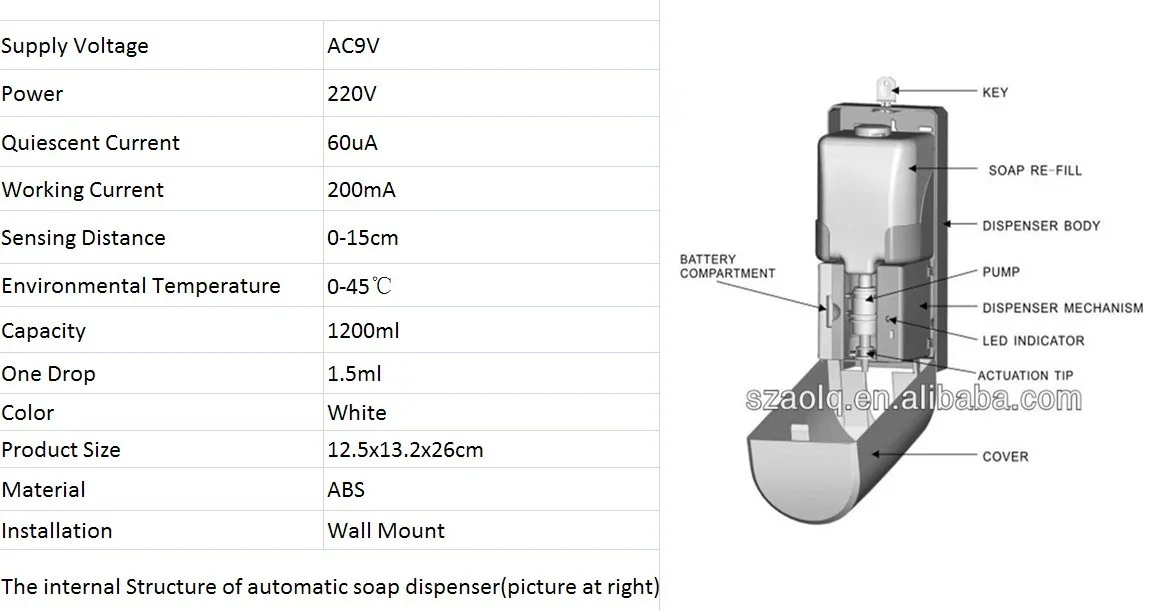
Image source: Bing (Web (fair-use with source credit))
Some Aike models have a hidden hard reset. Try this if the dispenser has power (LED lights up) but ignores your hand.
Step 1: Remove all four batteries.
Step 2: Press and hold the manual dispense button if your model has one for 10 seconds. This drains any residual charge from the internal capacitor.
Step 3: Wait 30 seconds.
Step 4: Insert fresh batteries. Do not mix old and new.
Step 5: Wave your hand directly under the sensor, about 2 inches from the nozzle. If the sensor still will not trigger, the sensor module likely failed.
Clearing an Air Lock in 30 Seconds
This is the simplest fix of all. No tools needed.
Step 1: Make sure the reservoir has enough soap, at least half full.
Step 2: Tilt the entire dispenser to about a 45-degree angle, nozzle pointing slightly downward.
Step 3: Wave your hand under the sensor rapidly four or five times in quick succession. The rapid pumping action forces air bubbles through the pump chamber.
Step 4: Set the dispenser upright. Wave once normally. If soap comes out, you are done.
If not, repeat the tilting and rapid waving. Two or three cycles almost always clears the lock.
What NOT to Do (Mistakes That Kill Your Dispenser)
Some well-meaning fixes can turn a small problem into a dead unit. Avoid these.
Do not submerge the dispenser in water. The battery compartment and sensor electronics are not waterproof. Water will short the circuit board. Wipe the exterior with a damp cloth only.
Do not use WD-40 or oil on the pump or nozzle. These are plastic components with rubber seals. Petroleum-based lubricants can swell and degrade the rubber, causing permanent leaks.
Do not force the nozzle with metal tools. A scratched or widened nozzle opening changes the dispense volume and can cause dripping. Wooden toothpicks or plastic picks only.
Do not use rechargeable batteries as a long-term solution. They output 1.2V instead of 1.5V per cell. The total voltage drop from 6V to 4.8V means the motor runs slower and weaker. Many users report that their dispenser stopped working and worked fine again immediately after switching from rechargeables to alkalines.
Do not ignore leaking batteries. Battery acid, potassium hydroxide, eats through metal contacts and can destroy the battery compartment permanently. If you see residue, clean it immediately. If the contacts are heavily corroded, replace the unit.
No fix will reliably restore them.
Preventive Maintenance: Keep It Running for Years
A few simple habits will extend the life of your Aike dispenser significantly.
Clean the nozzle monthly. Remove it and rinse with hot water even if it is not clogged. This prevents residue from hardening inside.
Wipe the sensor window weekly. A quick pass with a dry cloth keeps the sensor responsive. Do this every time you refill the soap.
Use the right soap. Thin, liquid soaps work best. Avoid thick gels, antibacterial formulas with microbeads, and creamy hand washes. If you want to use a thick soap, thin it with a splash of water before filling the reservoir.
Remove batteries if storing the dispenser. If you are not going to use it for more than a month, take the batteries out. This prevents corrosion damage.
Replace batteries at the first sign of weakness. If the dispenser seems slower or the motor sounds strained, swap the batteries immediately. Running on weak batteries stresses the motor.
When to Just Buy a New One (Honest Call-It-Quits Guide)
Not every dispenser can be saved. Here is when you should stop trying and replace the unit.
Heavy battery corrosion. If the metal contacts inside the battery compartment are green or heavily pitted, the connection is gone. No amount of cleaning will bring it back.
Water damage. If the dispenser was submerged or splashed heavily, the circuit board is likely shorted. You will smell a faint burnt electronics smell. That unit is done.
Broken nozzle threading. If the nozzle twists on crooked or will not tighten, the plastic threads are stripped. Replacement nozzles are not widely available for Aike units.
Sensor failure after cleaning. If you have cleaned the sensor window, reset the unit, and replaced the batteries, but the sensor still does not respond reliably, the infrared module has failed. These are not user-serviceable.
In all four cases, a replacement dispenser costs roughly $15 to $25 as of 2026. That is cheaper than the frustration of trying to keep a dead unit alive.
Frequently Asked Questions
Why does my Aike soap dispenser only work sometimes?
Intermittent operation usually points to weak batteries or a dirty sensor window. Replace the batteries with fresh alkalines first. If the problem continues, clean the sensor window with a dry cloth.
Hard water spots on the sensor are common and easy to miss.
Can I use rechargeable batteries in my Aike dispenser?
You can, but they will not work as well. Rechargeable NiMH batteries output 1.2V per cell instead of 1.5V. The total voltage drop means the motor runs slower.
Many users report that the dispenser stops working entirely with rechargeables and works fine again with alkaline batteries.
How do I reset my Aike soap dispenser?
Remove all four batteries. Press and hold the manual dispense button if your model has one for 10 seconds to drain residual power. Wait 30 seconds.
Insert fresh alkaline batteries. Wave your hand under the sensor to test.
What kind of soap should I use in an Aike dispenser?
Use thin, liquid soap. Thin dish soap or standard hand soap works well. Avoid thick gels, hand sanitizers, and creamy formulas.
If your soap is thick, add a tablespoon of warm water to the reservoir and swirl gently to thin it out.
Why is my Aike dispenser leaking from the bottom?
A leak at the bottom usually comes from the reservoir cap or the nozzle seal. Check that the cap is screwed on straight and tight. Inspect the rubber O-ring on the nozzle connection.
If the seal is missing or damaged, soap will leak out.
How long should an Aike soap dispenser last?
With regular maintenance, most Aike dispensers last 12 to 18 months before the pump or motor wears out. Battery corrosion is the most common cause of early failure. Removing batteries during long periods of disuse can extend the life significantly.

Similar Posts