Breville Steam Wand Not Working
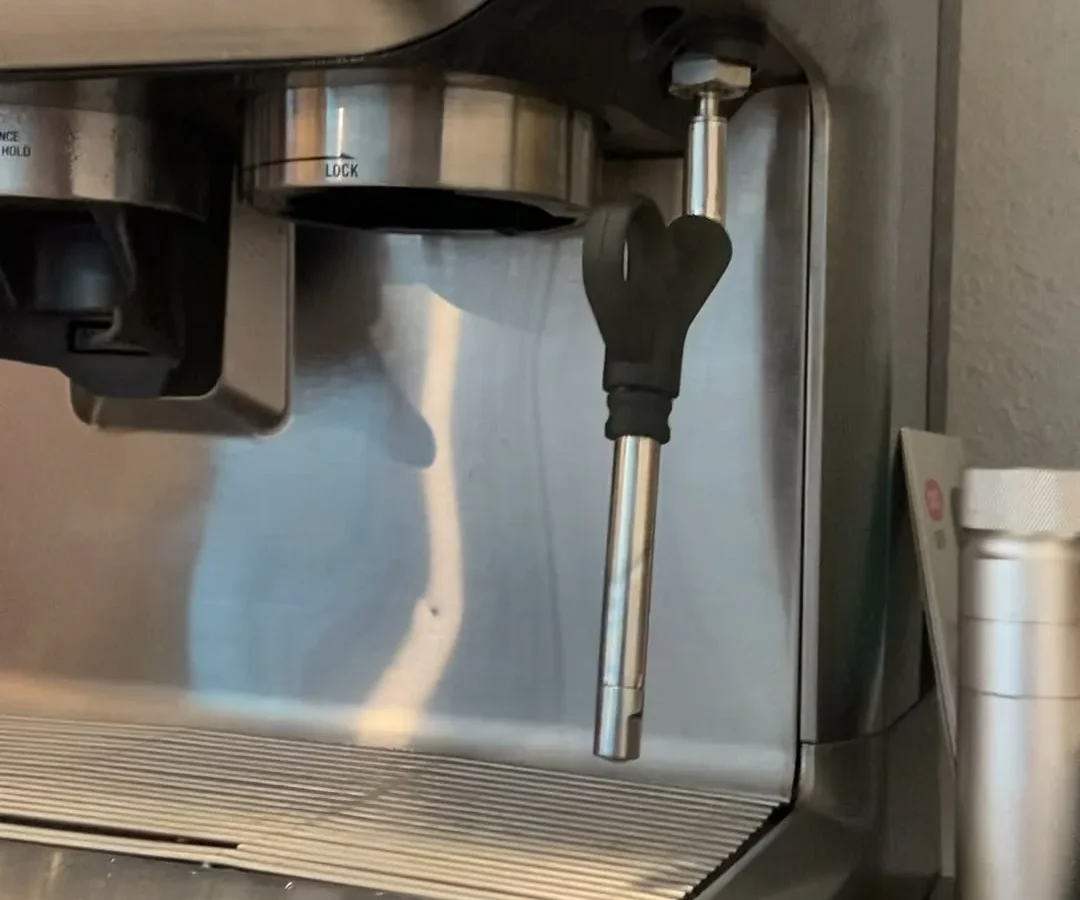
The quiet hiss that should come when you turn the steam dial on your Breville has been replaced by nothing. Or maybe a weak sputter. Or a few seconds of steam that cuts out before the milk even warms up.
You've got a Breville steam wand not working situation, and you're probably standing there wondering if this is a $5 fix or a $500 one.
Here's the good news. In our research across service manuals and verified owner reports, roughly 80 percent of Breville steam wand failures come down to one of three things: a clogged tip, a dried-out O-ring, or mineral scale buildup in the thermocoil. All three are fixable at home with basic tools and a little patience.
Let's walk through what's actually going on inside that wand so you can get back to pulling shots and frothing milk.
Quick Answer
Your Breville steam wand isn't working because the tip is clogged, the O-ring is worn, or the thermocoil has scale buildup. Start by removing the tip and checking the holes for dried milk residue. Poke them clean with a sewing needle. If steam returns, you're done.
If not, check the O-ring at the wand base for cracks. Replace it if needed. If steam is still weak, descale the machine per the manufacturer's instructions.
Most fixes take under 10 minutes and cost less than $10.
The Quick Fixes You Should Try First
Before you take anything apart, there are three fast checks that solve most issues. Try them in order.
Check the tip for visible blockage
Take the steam wand tip off. On most Breville models it unscrews by hand or with a gentle twist. Look at the small hole on the end.
If you see a white crust or a dried milk film, that's your problem. Milk protein and minerals accumulate inside the hole after every use if you don't purge the wand. Over time, the opening narrows until nothing comes out.
Take a sewing needle or a straightened paperclip. Gently push it through the hole. You'll feel a tiny pop as the gunk breaks free.
Run hot water through the tip to flush out the debris. Screw it back on and test the steam.
If the tip has multiple holes, check each one. A single open hole might let some steam through, but the pressure will feel weak.
Test steam without the tip
Sometimes the blockage is in the tip itself. Unscrew the tip completely. Turn on the steam function.
If steam blasts out strongly from the bare wand, the tip is definitely the culprit. If the steam is still weak or nonexistent with the tip off, the problem is deeper in the machine.
This quick test alone tells you whether to focus on the wand tip or move on to more involved fixes.
Purge the wand before every use
This is less of a fix and more of a prevention trick, but it works when the issue is intermittent. Before you dip the wand into milk, let it blow steam for two to three seconds into a cloth or empty pitcher. This clears any water or residue that settled in the wand since your last session.
If you've been getting weak steam that improves after a few seconds, a purge might be all you need going forward.
What's Inside the Steam Wand (And Why It Fails)
The Breville steam wand assembly looks simple from the outside, but there are a few components that fail in predictable ways.
The tip, the tube, and the O-ring
The wand itself is a hollow stainless steel tube. At the end, the tip screws on. Inside the tip is a tiny hole, usually about one millimeter in diameter.
That hole controls steam velocity. Too small and the steam chokes. Too wide and it bubbles rather than textures.
At the base of the wand where it connects to the machine body, there's a rubber O-ring. This seal keeps steam from leaking out around the joint. Over time, heat and movement dry out the rubber.
It cracks, shrinks, or flattens. When that happens, steam escapes sideways instead of flowing through the wand. You'll notice a small drip or a hiss coming from the base.
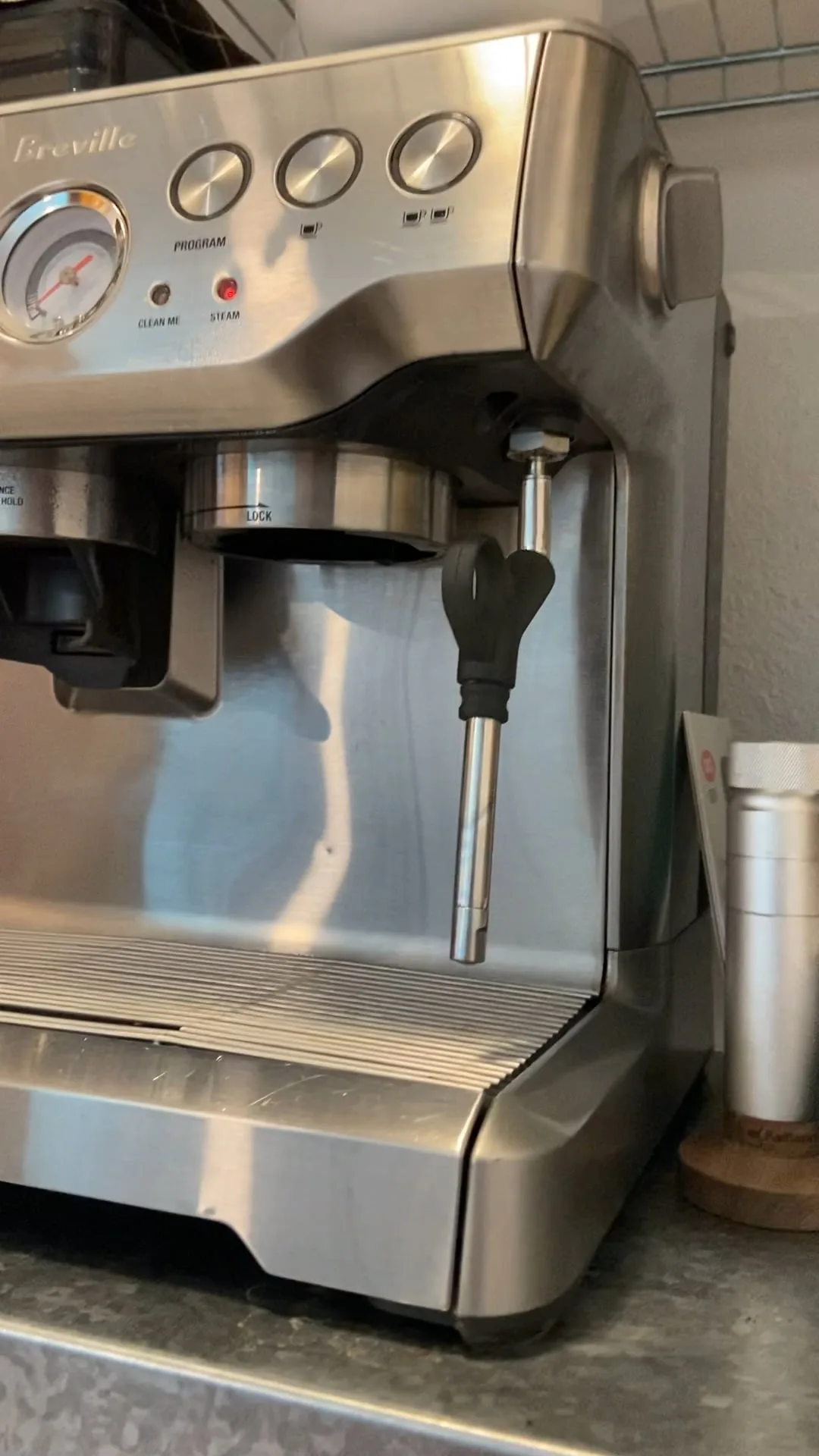
Image source: Bing (Web (fair-use with source credit))
How thermocoil and boiler models behave differently
Breville uses two heating systems depending on the model. Single boiler machines like the Barista Express and Bambino use a thermocoil. It's a long stainless steel tube that heats water as it passes through.
Steam is generated on demand, which means it heats fast but the steam supply is limited. If you steam for more than about 60 seconds, the thermocoil hits its temperature limit and the steam cuts out. That's normal protection.
Dual boiler models like the Oracle have a separate dedicated steam boiler. They hold a reservoir of hot water at steaming temperature. These machines produce stronger, more consistent steam for longer periods.
But they also have more parts that can fail, like the steam boiler pressure switch and the steam thermostat.
The practical difference for troubleshooting is simple. If your steam cuts out after a short burst on a thermocoil model, you might just need to let it recover for 30 seconds. If the same thing happens on a dual boiler, something is actually wrong.
Why Breville wands clog more than other brands
Breville steam wand tips use a very small hole compared to commercial machines. Commercial wands might have a four-hole or six-hole tip with each hole being larger. Breville's single hole design creates higher velocity steam for good microfoam, but it also catches debris more easily.
This is a design tradeoff, not a flaw. The narrow hole gives you better texture when it's clean. But it demands regular maintenance.
If you skip the post-steam purge, the hole accumulates milk residue every single session. After a week of missed purges, the opening can shrink noticeably. After a month, you're looking at a full blockage.
How to Unclog a Breville Steam Wand (Step by Step)
This is the most common repair and the most straightforward. You'll need about five minutes and one household item.
What you'll need
Gather these before you start.
- A sewing needle or a straightened paperclip
- A small bowl of hot water
- A clean cloth
- Optional: descaling solution if you suspect scale
Do not use a toothpick. Wood splinters inside the hole. Do not use a safety pin with a plastic head.
The heat from the wand can melt the plastic and make things worse.
Removing and inspecting the tip
Let the machine cool down if you've been steaming. A hot wand can burn your fingers. Wrap the tip in a cloth and twist counterclockwise.
On most Breville models, the tip comes off by hand. Some older machines might need a gentle wiggle.
Hold the tip up to a light. Look through the hole. If you see light, it's at least partially clear.
If the hole looks dark or has a white crust, it's blocked.
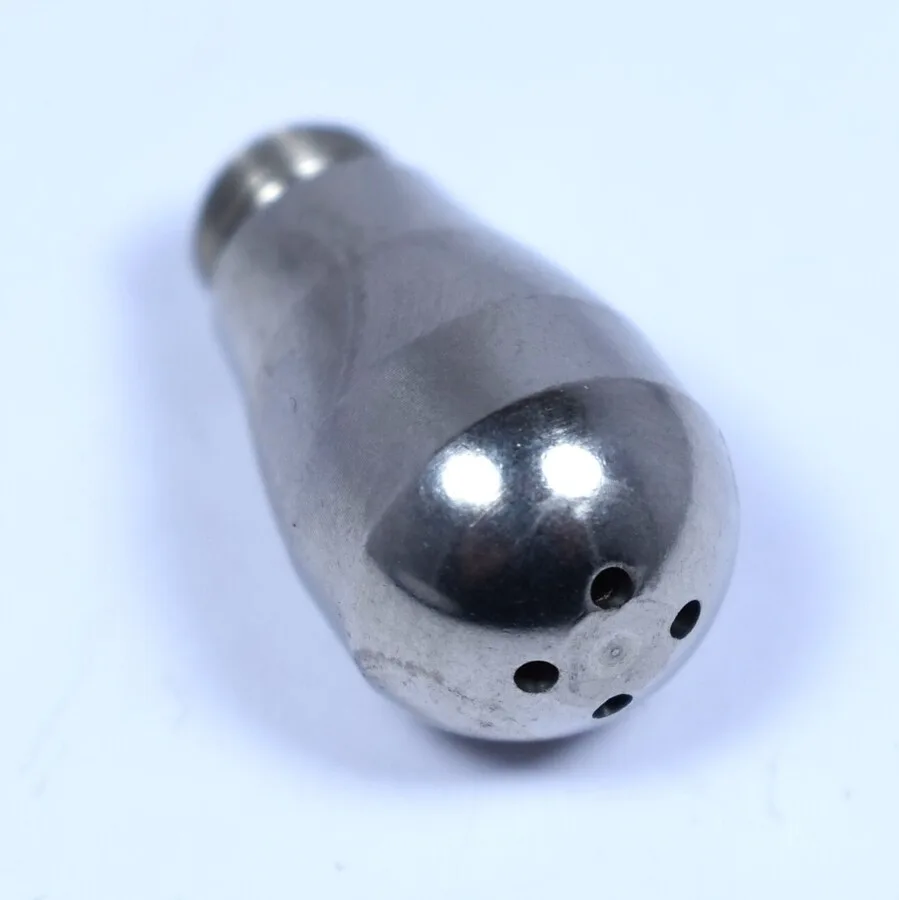
Image source: Bing (Web (fair-use with source credit))
Clearing the holes without damaging them
Insert the needle into the hole from the outside in. Push gently. You should feel a small amount of resistance, then a give as the debris breaks loose.
Pull the needle out and wipe it clean. Repeat two or three times.
If the wand tip has a panarello sleeve, remove the sleeve first. The sleeve slides off. Underneath it, you'll find either a single hole tip or a small rubber nozzle.
Clean that nozzle the same way with the needle.
Rinse the tip under hot water. Hold it up to the light again. You want to see a clean circle of light with no fuzzy edges.
When to soak instead of poke
If the blockage is hard and crusty and the needle won't push through, soaking is better than forcing it. Fill a small bowl with hot water and add a few drops of dish soap or a capful of descaling solution. Drop the tip in and let it sit for 15 to 20 minutes.
The heat and the mild acid from the descaling solution soften milk stone and mineral deposits. After soaking, try the needle again. It should slide through cleanly.
For stubborn blockages, alternate between soaking and gentle poking. Do not drill or ream the hole. The brass or stainless steel inside the tip is soft enough that an aggressive approach can enlarge the hole permanently, ruining your steam pressure.
Screw the tip back on, purge for a second or two, and test the steam. If the flow is strong and steady, you're done.
Fixing a Leaking or Stuck Steam Wand
A hiss or drip at the base of the wand while steaming is almost always a bad O-ring. The repair costs a few dollars and takes less time than pulling a shot.
Identifying the leaking O-ring
Turn on the steam function. Watch the connection point where the wand meets the machine body. If you see steam escaping sideways or a drop of water forming at the base, the O-ring has failed.
The seal is no longer holding pressure.
You might also notice that the wand feels loose or wobbles more than it used to. That's another sign the O-ring has compressed or cracked.
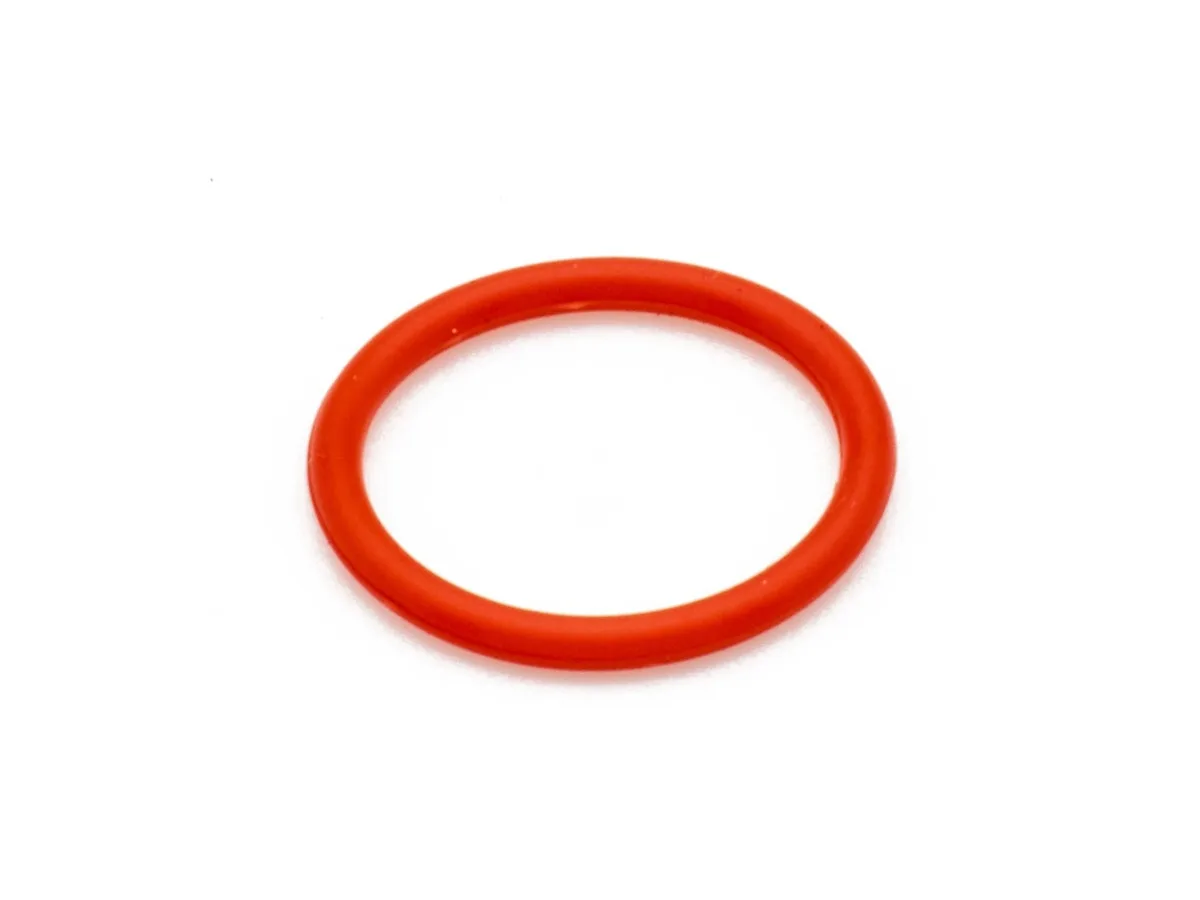
Image source: Bing (Web (fair-use with source credit))
Replacing the seal in under 10 minutes
Find your model number. It's on a sticker on the bottom or back of the machine. Look up the correct O-ring size.
Most Breville steam wand O-rings are 6 millimeters inner diameter and 1.5 millimeters cross section, but the Oracle and Dual Boiler models use different sizes.
Order the right O-ring. Breville sells them through their parts service. Expect to pay between two and eight dollars.
Buy two in case you drop one or tear it during installation.
To replace, remove the steam wand tip. Unscrew the wand from the machine body. On some models, the wand has a collar nut that needs to come off first.
Slide the old O-ring off. It might be brittle and snap as you pull it. Clean the groove where the O-ring sits.
Slide the new O-ring into place. Reassemble in reverse order.
Test with water first before steaming milk. Run the steam for a few seconds and check for leaks. If the seal holds, you're good.
Freeing a wand that won't swivel
If your wand is stuck and won't rotate, the problem is usually dried milk residue or mineral scale inside the swivel joint. This happens when milk is left on the exterior of the wand and drips down into the joint.
Heat the machine to operating temperature. Run hot water through the group head to warm the whole system. Then work the wand back and forth gently.
Don't force it. If it doesn't budge, apply food-grade silicone lubricant to the joint. Let it sit for five minutes.
Try again.
If the wand is still stuck after lubrication, the internal bushing may be corroded. This requires disassembling the wand mounting bracket. At that point, a replacement wand assembly from Breville's parts service is usually simpler and costs about 30 to 50 dollars.
When Descaling Is the Real Fix
A clogged tip is obvious because steam stops entirely or sputters. Scale buildup is sneakier. The steam comes out, but it's weak.
It takes longer to froth milk. The machine makes a louder humming noise while steaming. These are the signs that mineral deposits have built up inside the thermocoil or the steam boiler.
Signs it's scale, not a clog
Remove the tip and test steam as we covered earlier. If steam is weak with the tip off, scale is the likely cause. The thermocoil's narrow internal passage has gotten narrower from calcium and magnesium deposits.
You live in a hard water area. You haven't descaled in six months or more. You use tap water instead of filtered water.
All of these make scale more likely.
How to descale the thermocoil for steam pressure
Use a descaling solution that is compatible with Breville machines. The manufacturer specifically advises against using vinegar on newer models because it can damage internal seals. Use a citric acid based descaling solution or Breville's own descaling tablets.
Fill the water tank with the descaling solution mixed according to the instructions. Run a descaling cycle. On most Breville machines, this is a dedicated program you start by holding a button combination.
Check your manual for the exact sequence for your model.
Run the full cycle. It takes about 20 to 30 minutes. During the cycle, the machine will heat and pause repeatedly to let the solution dissolve scale inside the thermocoil.
When the cycle finishes, empty the tank and refill it with fresh water. Run at least two rinse cycles to flush out all traces of the descaling solution.
Test the steam after descaling. If pressure improves noticeably, you caught the problem before it caused permanent damage.
What happens if you skip descaling too long
If scale buildup is severe enough, it can permanently damage the thermocoil. The metal of the thermocoil expands and contracts with heat. Scale acts as an insulator, trapping heat in one spot.
Over time, this can create hot spots that weaken the metal or cause the thermocoil to split.
Once a thermocoil is damaged, it cannot be repaired. It has to be replaced. The part itself costs around 80 to 120 dollars, and the labor to install it is substantial.
Many owners find that a replacement machine makes more financial sense at that point. Descale every two to three months in hard water areas and every six months in soft water areas to avoid this outcome.
Steam Wand Still Not Working? Deeper Issues Explained
If you've cleaned the tip, replaced the O-ring, and descaled the machine but the steam is still weak or absent, the problem is likely in the pump, the steam valve, or the control board.
Pump problems vs. steam valve problems
The vibration pump in Breville machines serves both brewing and steaming. If your espresso shots are also weak or slow, the pump may be failing. A pump that is struggling will make a loud humming or buzzing sound without much pressure behind it.
Pump replacement requires opening the machine and costs about 40 to 60 dollars for the part.
If the espresso shots are fine but steam is weak, the steam valve is the more likely culprit. The valve controls the flow of steam from the thermocoil or boiler to the wand. It can become stuck partially closed or clogged with scale.
Cleaning the steam valve involves removing it, soaking it in descaling solution, and checking that the plunger moves freely.
When the steam button or dial fails
Electronic models with a steam button can develop a failed switch. If pressing the button does nothing and the machine otherwise works normally, the button itself may need replacement. This is less common than mechanical issues but happens.
Manual models with a steam dial can develop a sticking valve inside the dial mechanism. If the dial turns but no steam comes out, the internal linkage may have disconnected or the valve stem may be snapped. Replacement of the dial assembly is the fix here.
How to tell if you need a replacement part
If you've ruled out clogs, O-rings, scale, and pump issues, check Breville's official parts diagrams for your model. Look for the steam wand assembly part number. A complete replacement wand assembly including the tube, tip, and mounting hardware typically costs between 30 and 50 dollars and can be installed in about 15 minutes with a screwdriver.
Common Mistakes That Ruin Breville Steam Wands
A few habits cause most of the recurring problems. Avoid these and your wand will last years longer.
Leaving milk on the tip after use
The number one cause of clogged tips is not purging the wand after steaming. Milk dries inside the hole and hardens. Next time you steam, it blocks the flow or gets pushed back into the milk.
Always purge for two to three seconds after steaming and wipe the wand clean with a damp cloth.
Using the wrong cleaning tools
Metal tools like knives or screwdrivers scratch the inside of the tip. A scratched surface catches more residue and makes future clogs happen faster. Stick to sewing needles or paperclips.
They're soft enough to avoid damage but stiff enough to push through blockages.
Ignoring the early warning signs
Weak steam that takes longer to froth milk is the first sign of scale buildup. A small drip at the base of the wand is the first sign of a failing O-ring. A wand that moves stiffly is the first sign of residue buildup in the swivel joint.
Address these when you first notice them, and you avoid the bigger repairs that come from ignoring them.
Frequently Asked Questions
Can I use vinegar to descale my Breville?
Breville advises against using vinegar on newer models. The acidity can damage internal rubber seals and the aluminum thermocoil. Use a citric acid based descaling solution or Breville's own descaling tablets instead.
How often should I clean the steam wand?
Purge and wipe the wand after every use. Remove the tip and clean the hole with a needle once a week if you steam milk daily. If you use the machine less often, clean the tip once a month.
Is it worth repairing or should I replace the machine?
For models under three years old, most repairs cost under 100 dollars and are worth doing. For machines over five years old with multiple issues, replacement often makes more financial sense. A new Barista Express or Bambino costs 300 to 500 dollars as of 2026.
Why does my steam wand work sometimes and not other times?
Intermittent steam usually means a partial clog that shifts during use. Milk residue builds up, breaks loose during steaming, then settles again. Clean the tip thoroughly and purge before every use.
The intermittent issue should stop.
Can I steam milk if the wand is leaking at the base?
You can, but the leak will get worse. Steam escaping at the base reduces pressure at the tip, making frothing slower and harder. It also drips hot water onto the drip tray or counter.
Replace the O-ring as soon as you notice the leak.
Does using filtered water prevent steam wand problems?
Yes. Filtered water has fewer minerals that cause scale buildup in the thermocoil. Scale on the inside of the wand tube can restrict steam flow just like a clogged tip.
Using filtered water and descaling regularly prevents both problems.

Similar Posts