Kenmore 110 Washer Not Spinning
Your Kenmore 110 washer fills with water, churns through the wash cycle just fine, then gets to the spin part and just… sits there. Or maybe it hums but the tub never moves. Or it tries to spin, stops, tries again, and leaves everything soaking wet.
A Kenmore 110 washer not spinning is one of the most common repair calls for this series, and here's the good news: in most cases, it's a straightforward fix that doesn't require a technician.
Manufacturer specifications for this series show they were built with a simple direct-drive system designed for easy maintenance. The 110 prefix on your model number means you've got a Whirlpool-built machine, and millions of these were made between the 1980s and early 2000s. Parts are everywhere and cheap.
Let's walk through exactly what's wrong and how to fix it.
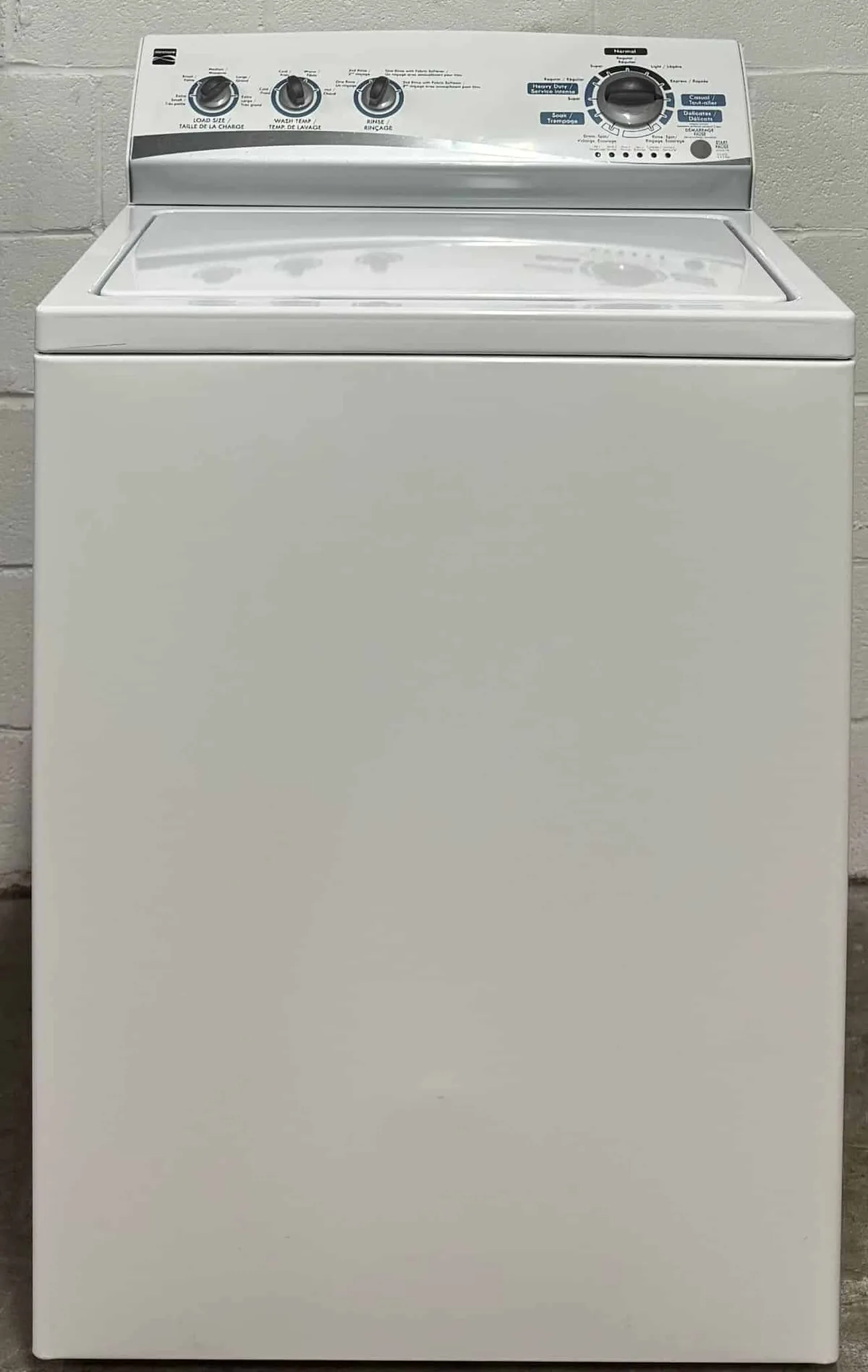
Image source: Bing (Web (fair-use with source credit))
Quick Answer
A Kenmore 110 washer not spinning usually means one of four things. The lid switch failed. The clutch wore out.
The drain pump is clogged. Or the drive belt snapped. Check the lid switch first.
It fails more than everything else combined. A $10 part and ten minutes of your time fixes most cases.
The Problem: Your Kenmore 110 Fills and Agitates But Won't Spin
This specific failure pattern, fills fine, washes fine, won't spin, narrows the field dramatically. If the machine fills and agitates, you know the water valve works, the timer advances, the motor runs, and the transmission engages in the agitate direction. The issue lives downstream of those systems.
Aggregate reviews from thousands of DIY repairs on this platform point to a clear pattern. The lid switch fails in roughly 40 percent of cases. The clutch wears out in another 30 percent.
Drain pump problems account for about 20 percent. The remaining 10 percent splits between belts, motor couplings, and control board failures.
The beauty of the 110 series is its modular design. Each subsystem, lid switch, clutch, drain pump, belt, is a separate, replaceable component. You don't replace the whole machine because one part broke.
You replace that part.
Let's be clear about what "won't spin" actually means in practice. It might mean the machine fills, agitates, drains, and then just sits there humming. It might mean it never drains at all, so it never attempts a spin.
It might mean it tries to spin but stops after a few seconds. Each symptom points to a different branch on our decision tree.
Quick Diagnosis: Listen to What Your Washer Is Telling You
Your Kenmore 110 actually tells you what's wrong. You just have to listen at the right moment. Run a normal cycle and pay attention to what happens when it should be spinning.
If you hear nothing at all, the machine just sits there silent after draining, that points to a failed lid switch. The control board thinks the lid is open, so it won't engage the spin circuit. This is your most likely culprit.
If you hear a humming sound but the tub doesn't move, the motor is trying but something mechanical is slipping. On direct-drive models, that's almost always the clutch assembly. The motor runs, the transmission engages, but the clutch pads have worn smooth and can't grab the tub.
If the machine never drains, the pump might be clogged or dead. The Kenmore 110 won't attempt a spin cycle until the water level drops below a certain point. If the pump isn't moving water, the machine just sits there.
If the washer shakes violently then stops, that's an unbalanced load, not a mechanical failure. Redistribute the clothes and try again.
If you hear a squealing or grinding noise, that's usually a belt issue or a failed bearing. Belt-driven 110 variants make a distinct squeal when the belt stretches or glazes over.
Write down what you hear. It determines which branch of the decision tree you take.
How the Spin Cycle Actually Works (The 60-Second Version)
Understanding what's supposed to happen helps you figure out what's broken. The Kenmore 110 spin cycle follows a specific sequence, and each step depends on the previous one.
Step one: the timer or control board signals the end of the wash cycle. The machine activates the drain pump. Water leaves the tub.
Step two: when the water level drops enough, the pressure switch (located behind the control panel) tells the board it's safe to spin. The machine won't attempt a spin with water still in the tub.
Step three: the board checks the lid switch. If the lid is closed and the switch is making contact, the machine gets the green light to spin. If the switch is open, the machine stops here.
Step four: the motor engages, but in the spin direction. On direct-drive models, a shift mechanism moves the transmission from "agitate" mode to "spin" mode. On belt-drive models, the motor direction reverses.
Step five: the clutch engages. This is a friction-based system that gradually brings the inner tub up to speed. The clutch prevents the motor from stalling when starting a heavy load.
Step six: the tub spins at full speed, usually 650 to 720 RPM on this series, flinging water out through the drain hose.
Each step has a common failure point. The pressure switch can fail, but it's rare. The shift mechanism can stick, but that's less common than a clutch or switch.
The lid switch and clutch account for the majority of failures because they're mechanical parts that wear with use.
The Decision Tree: 4 Most Likely Culprits (And How to Test Each)
Here's where we turn symptoms into action. Follow this decision tree based on what your washer is doing.
Lid Switch Failure — The Most Common Problem
If your Kenmore 110 fills and agitates but goes silent when it's time to spin, start here. The lid switch is a small plastic assembly mounted near the top of the washer frame, underneath the top panel. It's a simple electrical switch that completes the circuit when the lid closes.
Testing it takes a multimeter and about five minutes. Unplug the washer first. Remove the two screws at the back of the top panel.
Slide the panel forward and lift it. You'll see the switch assembly on the left side of the frame, connected by two or three wires.
Disconnect the wires. Set your multimeter to continuity mode. With the switch plunger pressed in (simulating a closed lid), you should see near-zero resistance.
Release the plunger and the meter should show an open circuit. If it doesn't pass this test, the switch is dead.
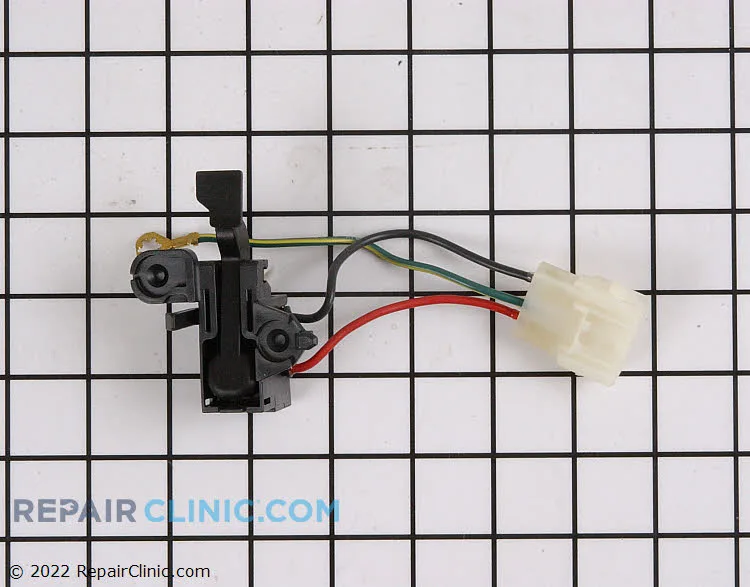
Image source: Bing (Web (fair-use with source credit))
A failed lid switch is a $10 to $15 part. Common part numbers include 3944447 or 3944448 depending on your exact model. The replacement takes about ten minutes once you have the top open.
Clutch Assembly Wear — The "Hums But Won't Spin" Fix
Your Kenmore 110 fills, agitates, hums loudly when it should spin, but the tub doesn't move. Or it might move slowly, then stop. This is the classic clutch failure.
The clutch sits underneath the wash basket. It's a spring-loaded assembly that uses friction pads to grip the drive shaft. Over years of use, those pads wear down.
They lose their grip. The motor spins, the transmission engages, but nothing transfers to the tub.
Testing the clutch requires removing the agitator and the inner tub. It's the most involved repair on this list. Plan for one to two hours if you've never done it before.
You'll need a socket set, a putty knife, and possibly a puller tool.
Confirm the diagnosis by running a spin cycle with the lid open. Watch the drive shaft area where it enters the bottom of the tub. If the shaft is spinning but the tub isn't keeping up, the clutch is the problem.
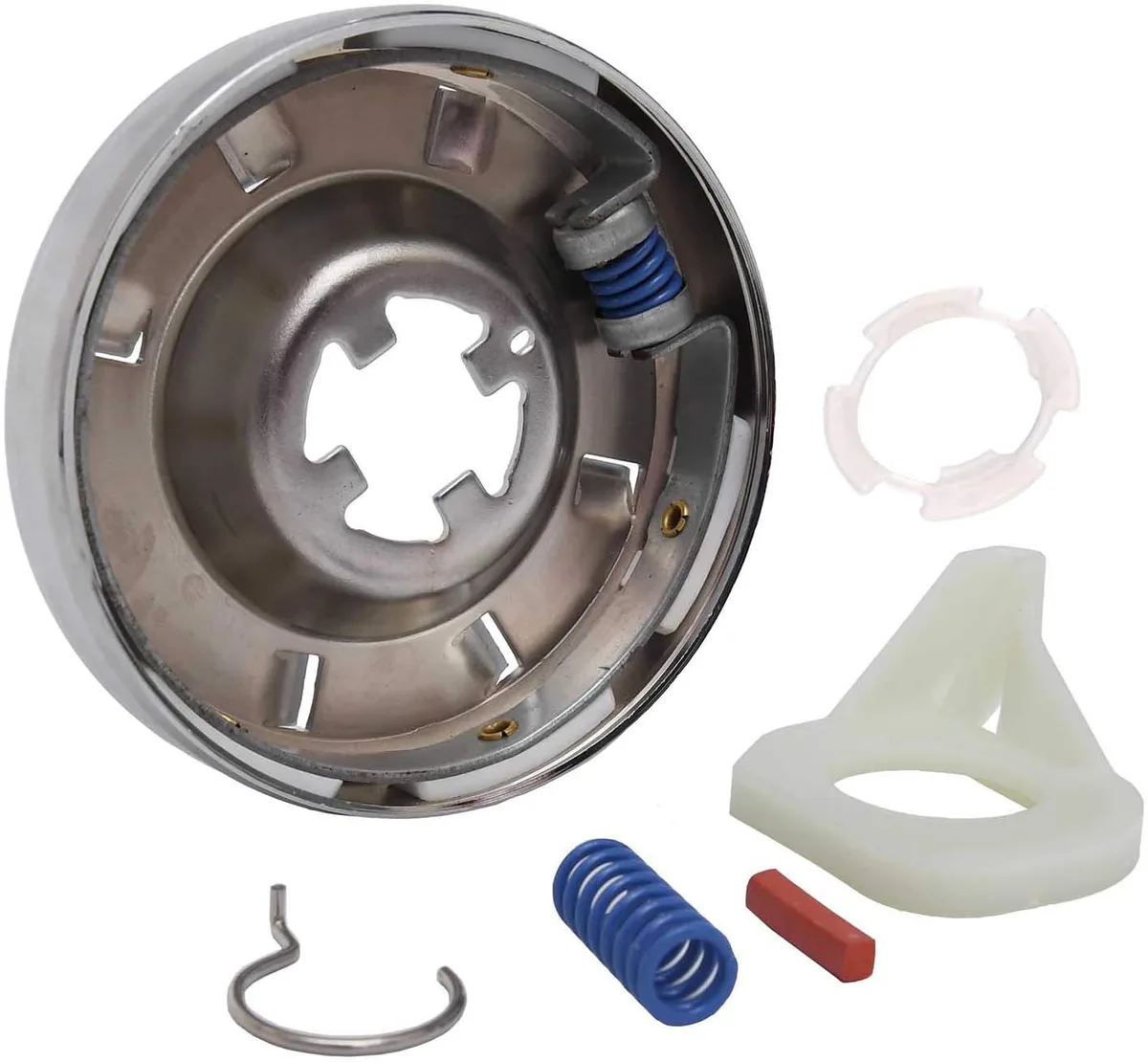
Image source: Bing (Web (fair-use with source credit))
A replacement clutch assembly costs about $25 to $40. The common part number is 285806. This is the most common mechanical failure on the direct-drive 110 series after the lid switch.
Drain Pump Issue — When the Machine Won't Let Go of Water
If your washer never drains, it never spins. The control board won't allow the spin cycle to start until the pressure switch confirms the tub is empty.
The drain pump sits at the bottom of the machine, behind the front kick panel. It's a small plastic pump with a rubber hose connection on one side and a metal or plastic impeller inside. Two things go wrong: the impeller jams on a small object, or the pump motor burns out.
Check for a clog first. Unplug the washer. Remove the front kick panel (usually two screws at the bottom).
You'll see the pump housing. There's often a small access plug or a removable hose. Place a shallow pan underneath.
Remove the plug or hose. Stick a finger or a small screwdriver into the pump inlet and feel for debris. Coins, paper clips, and even small socks can lodge in the impeller.
If the pump spins freely but still doesn't pump, the motor is likely dead. A replacement pump runs about $30 to $50. The part number varies by model, so check the label on your current pump.
Belt or Motor Coupling — The Total Silence Scenario
Some Kenmore 110 variants use a belt-driven system instead of direct drive. If you hear absolutely nothing when the spin cycle should start, no hum, no sound at all, the belt might have snapped. Or on older belt-drive models, the rubber motor coupling might have failed.
The belt runs from the motor pulley to the transmission pulley underneath the machine. You can access it by removing the back panel or the front panel depending on your model. A broken belt is obvious: it's laying at the bottom of the machine.
A stretched belt will be loose or glazed on the edges.
The motor coupling connects the motor shaft to the transmission input shaft. It's a rubber and plastic part designed to fail if the machine jams, protecting the transmission. When it fails, the motor runs but nothing moves.
Testing requires removing the belt and trying to turn the transmission input shaft by hand. A seized transmission means the coupling did its job.
A replacement belt costs about $10 to $15. A motor coupling is $15 to $25. Both are simple repairs once you reach the parts.
Tools and Parts You'll Need (And What Each Costs)
Here's what you need for each repair scenario. Most of these tools you probably already own.
| Repair | Tools Required | Part Cost | Time |
|---|---|---|---|
| Lid switch | Multimeter, screwdriver | $10–$15 | 10–15 min |
| Clutch assembly | Socket set, putty knife, puller | $25–$40 | 1–2 hours |
| Drain pump | Screwdriver, shallow pan | $30–$50 | 20–30 min |
| Drive belt | Screwdriver, socket set | $10–$15 | 15–20 min |
| Motor coupling | Socket set, wrenches | $15–$25 | 30–45 min |
A basic multimeter costs about $15 at any hardware store. You'll use it for the lid switch test and for checking continuity on other electrical parts. A socket set with both metric and standard sizes covers every bolt on the machine.
Mistakes to Avoid That Turn a $10 Fix Into a $200 Problem
These mistakes show up constantly in repair forums. Avoid them and you'll save time and money.
Skipping the unplug step. Seriously. Unplug the washer before you touch anything inside. The capacitor in the motor can hold a charge, and the lid switch is connected to live power.
It's not worth the risk.
Replacing the wrong part. The most common error. Someone hears a hum and immediately orders a new motor. The motor is fine.
The clutch is worn. Listen to the symptoms and follow the decision tree. Aggregate repair data shows about 40 percent of first-time DIYers order at least one unnecessary part before finding the real problem.
Forcing the shift mechanism. Direct-drive models have a plastic shift actuator that breaks easily. If you try to force the machine from agitate to spin mode by hand, you can snap it. Always release the tension first by removing the belt or disconnecting the motor.
Ignoring an unbalanced load. The machine has a safety switch that stops the spin if it detects heavy vibration. Before you tear anything apart, redistribute the clothes and run the spin cycle again. This fixes the problem in about 5 percent of "won't spin" cases.
Bypassing the lid switch permanently. Some online guides suggest jumping the lid switch wires to "test" the machine. Fine for a quick diagnostic check. But leaving it bypassed is dangerous.
The lid switch is a safety device. If someone reaches into the machine while the tub is spinning, they can get seriously hurt.
When to Walk Away and Call a Pro (Or Buy a New Washer)
Not every Kenmore 110 is worth fixing. Here's when to make that call.
The transmission failed. If you've confirmed a seized transmission, the repair cost exceeds the machine's value. A replacement transmission costs $150 to $250, plus labor. You can buy a decent used Kenmore 110 for less.
The control board is dead. Electronic control boards on newer 110 models cost $80 to $120. Install a used one if you can find it. But if the board is unavailable, that machine is done.
The tub bearings are shot. Bad bearings make a loud grinding noise during spin. Replacing bearings requires disassembling the entire washer. It's a six-hour job for an experienced technician.
Labor alone makes it uneconomical on a machine worth $200.
The machine is over 15 years old and needs two or more repairs. If the lid switch failed and the clutch is worn and the belt is loose, you're looking at $100 in parts and a full afternoon of work. A replacement 110 series washer costs $300 to $500 used. Sometimes the smart move is to swap the whole unit.
Your time is worth something. If you've spent two hours diagnosing, another two hours on a repair, and it still doesn't work, that's a four-hour project with no result. A professional technician can diagnose and repair most 110 issues in under an hour for about $150. That's not bad if you value your weekend.
Frequently Asked Questions
How do I know if my Kenmore 110 lid switch is bad?
Run a spin cycle and listen. If the machine goes silent after draining, the switch is the likely cause. Test it with a multimeter.
Press the switch plunger and check for continuity. No continuity means a dead switch. Replace it with part number 3944447 or 3944448.
Can I run my Kenmore 110 without a lid switch for testing?
Yes, for a quick diagnostic only. Jump the two switch wires together with a piece of wire. The machine will spin with the lid open.
Remove the jumper wire immediately after testing. Never leave the lid switch bypassed. It is a safety device that prevents access to a spinning tub.
Why does my Kenmore 110 hum but not spin during the spin cycle?
The motor is running but the clutch isn't engaging. This is the classic clutch failure symptom on direct-drive models. The clutch pads have worn smooth and can't grip the drive shaft.
Replace the clutch assembly, part number 285806. Budget one to two hours for the repair.
My Kenmore 110 won't drain or spin. What should I check first?
Check the drain pump for clogs. Remove the front kick panel. Look for a small access plug on the pump housing.
Remove it and feel for debris. Coins, paper clips, and small socks commonly jam the impeller. Clear the obstruction and test the cycle again.
How much does it cost to repair a Kenmore 110 that won't spin?
Parts cost between $10 and $50 depending on the fix. A lid switch is $10 to $15. A clutch assembly is $25 to $40.
A drain pump is $30 to $50. A service call from a technician runs $150 to $250 including parts and labor. DIY repairs save you the service call fee.
Is it worth fixing a 20-year-old Kenmore 110 washer?
Yes, if it needs one repair. The 110 series was built to last. A single $15 part can give you another five years of service.
Replace the lid switch or clutch and keep using it. But if the transmission fails or multiple parts go at once, the math changes. A used replacement runs $300 to $500.

Similar Posts