New Holland Tc30 Problems
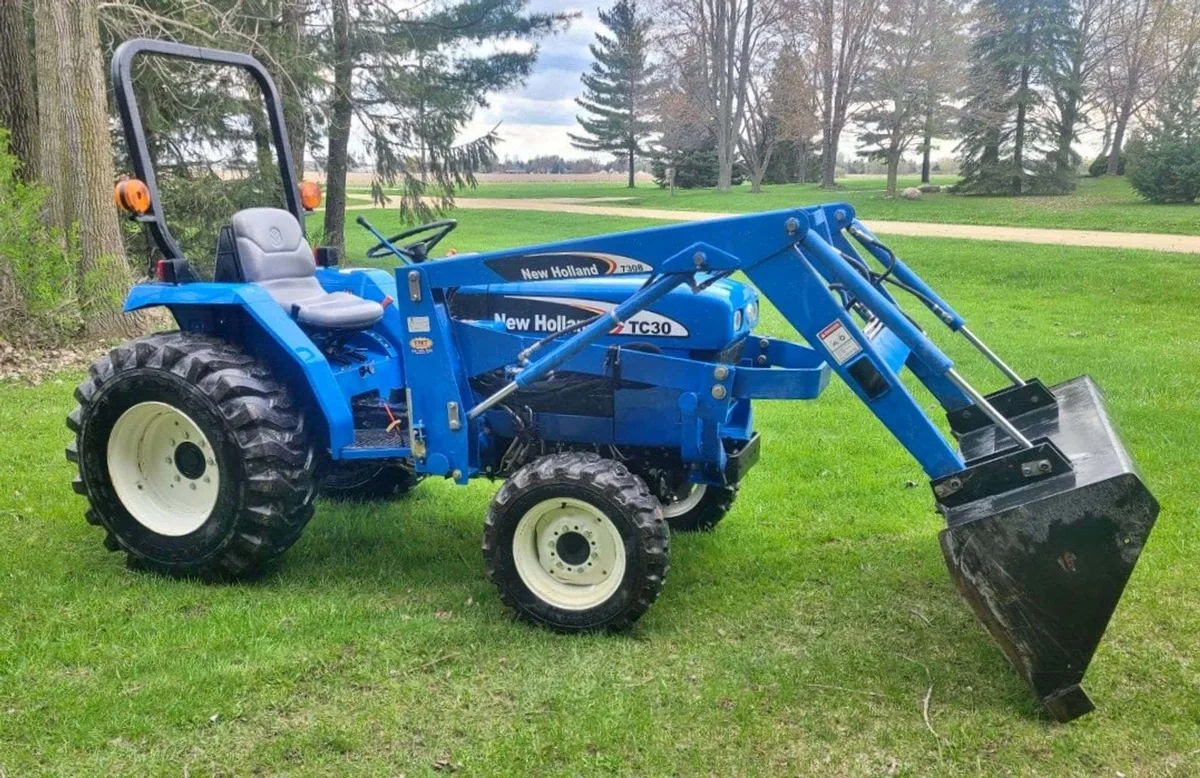
New Holland TC30 problems can hit when you least expect them, usually right in the middle of a job. If you are dealing with a tractor that won't start, hydraulics that barely lift, or a PTO that refuses to engage, you are not alone. The TC30 is a solid machine.
But it has a handful of well-known weak spots. The good news is that most of them are simple to diagnose once you know what to look for.
The TC30 uses a Shibaura N844 three-cylinder diesel engine rated at 30 horsepower. Aggregate owner reports show that the most common issues cluster around the fuel system, hydraulic circuit, and electrical connections. Understanding how these systems work together is the first step to getting your tractor back in the field.
Quick Answer
The most common New Holland TC30 problems are hard starting, weak hydraulics, PTO engagement failures, and transmission noise. Most stem from the fuel system, hydraulic fluid issues, or electrical connections. Check glow plugs, hydraulic filter, and PTO switch first.
These fixes are manageable with basic tools.
Image source: Bing (Web (fair-use with source credit))
What's Going Wrong? – The Most Common TC30 Complaints
Before you start taking things apart, it helps to know which problems are truly common on this model. The TC30 was built from 2002 to 2008. It shares a lot of DNA with the earlier Ford 1920 and later Boomer 30.
Parts are still widely available. The repair knowledge pool is deep.
Engine issues top the list. Hard starting, especially in cold weather, is the number one complaint. It usually comes down to glow plugs, a tired battery, or air in the fuel lines after a filter change. White smoke on startup points to unburned fuel.
Black smoke under load means the engine is choking for air or fuel delivery is off.
Hydraulic problems are close behind. The open-center hydraulic system runs at about 7.5 gallons per minute. When it gets slow or stops lifting altogether, the culprit is almost always low fluid, a clogged suction screen, or a worn pump. The Category I 3-point hitch has a lift capacity around 1,500 pounds at the link ends.
If it won't lift that much, something is starving the pump.
PTO engagement failures frustrate a lot of owners. The electric PTO uses a switch and a solenoid to engage the clutch pack. When it won't engage, check the switch and wiring first. When it engages but won't disengage, the solenoid is likely stuck or the clutch plates are welded together.
Transmission noise and hard shifting appear on both gear and hydrostatic models. Gear models develop clutch chatter. Hydrostatic models whine when the charge pressure drops due to low fluid or a clogged filter.
Electrical gremlins show up as a dead starter, flickering lights, or the hour meter stopping. Corroded connectors under the dash and a bad ignition switch are the usual suspects. The patterns are consistent. Knowing them saves you from chasing ghost problems.
Decision Tree: Engine Won't Start or Runs Rough – Step-by-Step Diagnosis
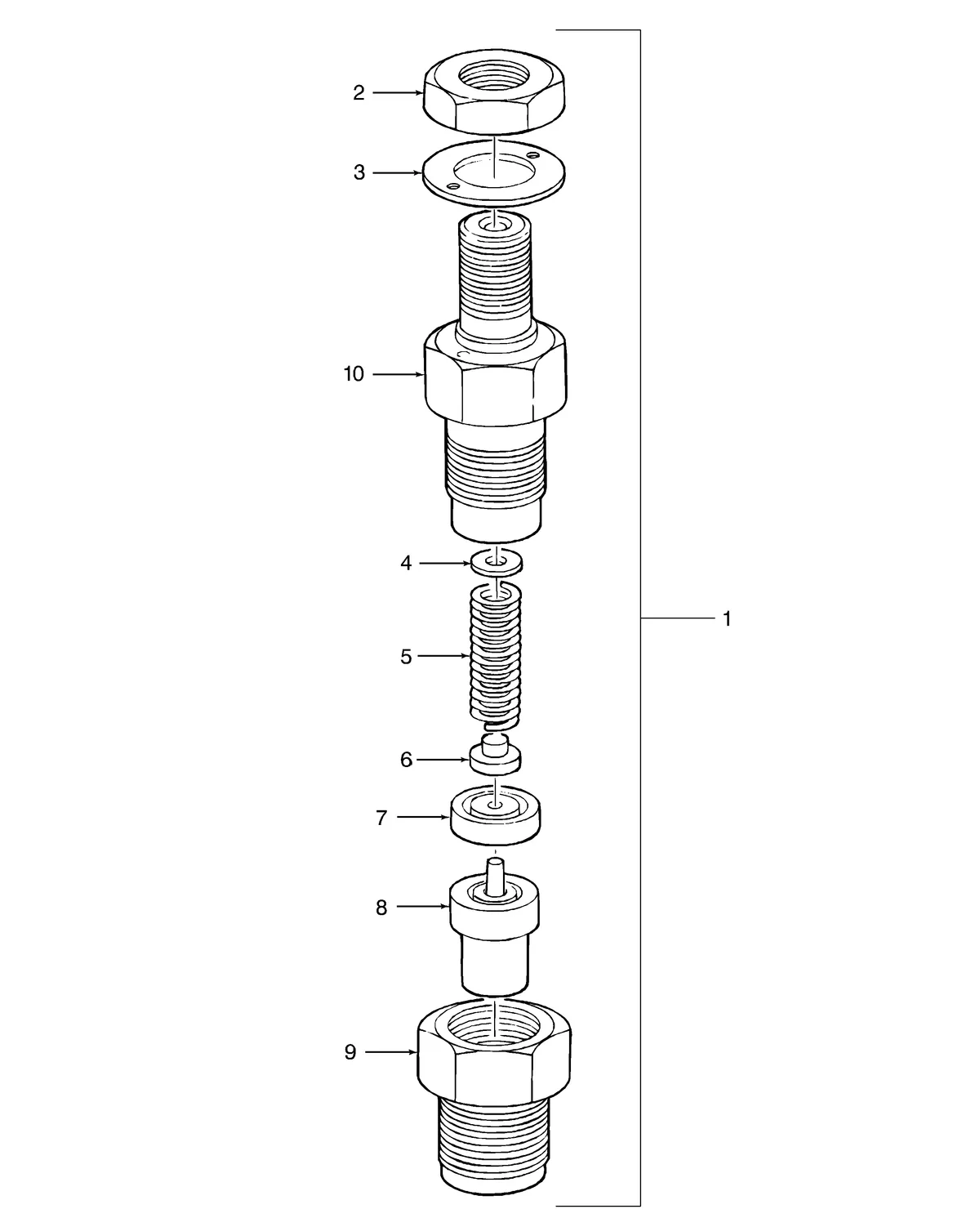
Image source: Bing (Web (fair-use with source credit))
When the engine cranks but won't fire, follow this order. Do not skip steps. Jumping to the injector pump is a waste of time if the problem is just a dead glow plug.
Does it crank at all?
- No crank, no click. Check the battery voltage. The TC30 needs at least 12.4 volts. Clean the terminals and ground connections. Test the starter relay and the neutral safety switch on the transmission. If the dash lights go dim when you turn the key, the battery is weak.
- Slow crank with clicks. The battery is low or the starter ground is corroded. Charge the battery and clean the cable ends. If it still drags, the starter bushings may be worn.
Cranks but won't start
This is where the decision tree splits.
Is the outside temperature below 50°F? If yes, suspect glow plugs first. Each plug should read 0.5 to 1.5 ohms to ground. If any are open (infinite resistance), replace all four.
A bad glow plug relay is also common. Listen for the relay click when you turn the key to the glow position. No click means the relay or its control circuit is dead.
Is the fuel filter old? The TC30 fuel filter is part number 84318444. If it has been more than a year or the tractor sat with old diesel, replace it. Then bleed the system.
Crack the injector lines at the pump or at the injectors. Crank until air-free fuel flows. Tighten and try again.
Did it run rough then stop? That points to air in the system or a fuel lift pump failure. The mechanical lift pump on the side of the engine can leak internally. Check for fuel weeping from the weep hole on the pump body.
Smoke clues:
- White smoke with no start. Glow plugs not heating or injector timing off. Try starting fluid sparingly to see if it fires. If it does, injectors need servicing.
- Black smoke, starts then dies. Clogged air filter or stuck fuel shut-off solenoid. Clean or replace the air filter. Test the fuel solenoid on the injection pump by applying 12 volts directly.
- Blue smoke on startup, runs okay. Worn valve seals or rings. This is a wear issue, not a no-start issue. Drive it but plan for a rebuild.
Runs rough at idle
If it starts but misses, check for air in the fuel lines again. Then inspect the injector nozzles for spray pattern. A dirty injector can cause a misfire at low RPM.
Use a compression test if the miss persists after fuel delivery is clean. The engine section of the TC30 service manual (CNH form number 87738491) has detailed test specs. Follow the factory procedure for injection pump timing if you have had the pump off.
Decision Tree: Hydraulics Are Weak or Not Working – Where to Check First
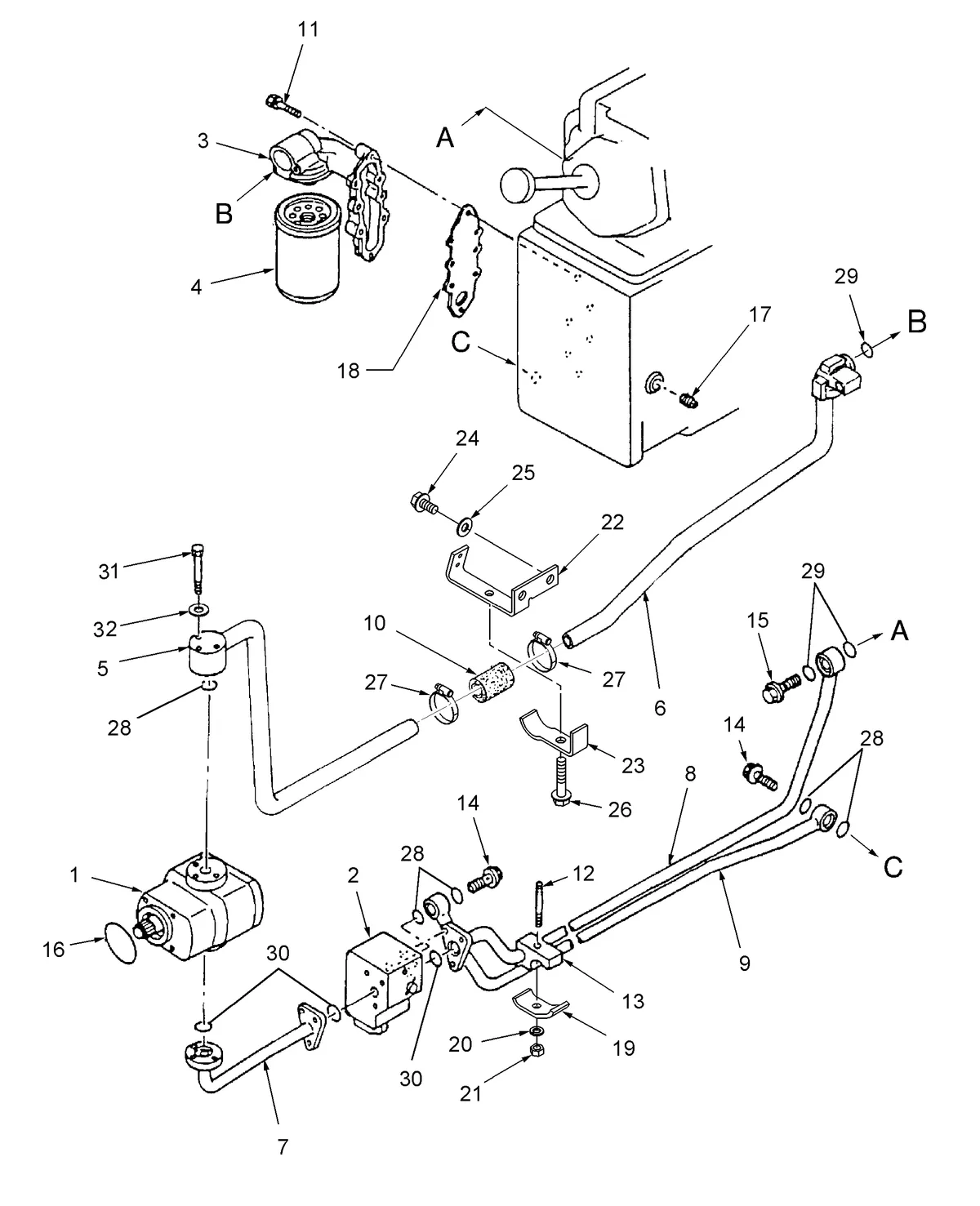
Image source: Bing (Web (fair-use with source credit))
Hydraulic problems on the TC30 usually show up as a slow 3-point hitch, a loader that struggles to lift, or no hydraulic response at all. The fix is often simpler than you think. But you have to check in the right order.
Is the fluid level correct?
Low fluid is the most common cause of weak hydraulics. The TC30 holds about 9 to 10 gallons of hydraulic and transmission fluid. Check the dipstick on the transmission housing with the tractor on level ground and the engine off.
The fluid should be between the marks and look clean. If it is dark or smells burnt, change it before doing anything else.
Is the hydraulic filter clean?
The hydraulic filter is located on the left side of the transmission near the rear axle. It is a spin-on canister. Replace it every 200 hours or annually.
A clogged filter starves the pump and makes the 3-point hitch lift slowly or not at all.
Is the suction screen clogged?
This is a big one. The TC30 has a suction screen inside the transmission housing that feeds the hydraulic pump. Over time, debris and sludge accumulate on the screen.
If the pump whines loudly and the hydraulics are weak, the screen is likely clogged. To clean it, drain the fluid, remove the pump suction line, and pull the screen. Clean it with solvent and a soft brush.
Reinstall with a new O-ring.
Does the pump prime?
After a filter change or screen cleaning, the pump may lose prime. If the hydraulics are dead after service, the pump is likely air-locked. Crack the pressure line at the pump or cycle the 3-point hitch lever several times with the engine running at low idle.
If no fluid appears after 10 seconds, stop and check the suction line for air leaks.
Is the relief valve set correctly?
The hydraulic system relief valve should open at about 2,000 psi. If the pressure is too low, the pump won't build force. You can test pressure with a gauge on the work port.
Adjusting the relief valve is a last step. It is behind the small cap on the hydraulic block. Turn clockwise to increase pressure, but stay within spec.
Still weak after all that?
The pump itself may be worn. On high-hour TC30s over 3,000 hours, the pump gears can wear and reduce flow. A rebuild kit costs around $100 and is straightforward to install.
If the 3-point hitch drifts down quickly, the control valve spool or the lift cylinder seals are leaking. Rebuild the lift cylinder before replacing the entire pump. The key is to start with the simple stuff.
Fluid, filter, screen. Nine times out of ten, that is the fix.
Decision Tree: PTO Won't Engage or Stays Engaged – Electrical and Mechanical Checks
The PTO on the TC30 uses an electric clutch. When you flip the switch, it sends 12 volts to a solenoid that engages the clutch pack. When it works right, it is seamless.
When it fails, it fails in one of two ways. It won't engage, or it won't disengage.
PTO won't engage
Start at the switch. The PTO switch on the dash is a known weak point. Test it with a multimeter.
With the key on and the switch in the ON position, you should see 12 volts at the output terminal. If not, replace the switch.
Next, check the seat safety switch. The TC30 has a pressure switch under the seat that cuts power to the PTO if you stand up. If the switch is stuck or the wiring is shorted, the PTO will never engage.
Bypass it temporarily to test. Do not run without it long term.
If the switch and seat circuit check out, move to the PTO solenoid. It sits on top of the PTO housing. Apply 12 volts directly from the battery with a jumper wire.
If the PTO engages, the solenoid is fine and the problem is upstream. If it does not engage, the solenoid coil is open. Replace it.
PTO engages but slips under load
This means the clutch plates inside the PTO housing are worn. The gap between the plates increases over time. Adjust the air gap by removing the rubber plug on the PTO housing and turning the adjustment nut.
The spec calls for a gap of 0.010 to 0.020 inches. If the plates are glazed, you can sand them lightly or replace the clutch disc.
PTO won't disengage
This is dangerous. If the PTO stays spinning after you flip the switch off, the solenoid is stuck or the clutch plates have welded together. Turn the engine off immediately.
Check the solenoid plunger for free movement. If it is stuck, tap it with a wrench. If the plates are welded, the PTO clutch pack needs replacement.
Do not run the tractor with a stuck PTO. It can damage the transmission and cause injury.
Lights or indicator flashing
The TC30 PTO indicator light on the dash will flash if there is a fault. A steady flash usually means the switch or solenoid circuit is open. A rapid flash points to a short.
Use the wiring diagram in the service manual to trace the circuit.
Decision Tree: Transmission Issues – Gear vs Hydrostatic
The TC30 came in two transmission variants. A 9×3 gear transmission and a hydrostatic transmission. The problems are different for each.
The fix depends on which one you have.
Gear transmission: hard shifting or grinding
If the gear shift is hard to move or grinds when going into gear, the clutch is likely dragging. Check the clutch pedal free play first. It should have about 1 inch of free travel before you feel resistance.
If there is no free play, the clutch is partially engaged. Adjust the linkage under the floorboard.
If the clutch slips under load, the disc is worn. On the TC30 gear model, the clutch is a single dry disc. Replacing it requires splitting the tractor.
That is a two-day job. If the clutch chatters when starting from a stop, the pressure plate fingers are uneven. Replace the clutch kit.
Gear transmission: noisy in one gear
A whine or growl in a specific gear means that gear pair is worn. Low transmission oil is the usual cause. Check the oil level with the tractor level.
Top off with the correct grade. Use New Holland 134D spec or equivalent. If the noise persists after filling, the bearing behind that gear is failing.
Plan for a transmission rebuild.
Hydrostatic transmission: whine under load
The hydrostatic transmission uses a charge pump to keep the hydraulic circuit pressurized. A whine that gets louder as you press the pedal means the charge pressure is low. Check the fluid first.
Then replace the hydrostatic filter. If the whine remains, test the charge pressure. The spec is 150 to 250 psi.
If it is below that, the charge pump is worn or the relief valve is stuck.
Hydrostatic transmission: weak or won't move
If the tractor moves slowly or not at all, the charge pump or the swash plate control is failing. First, check the linkage to the pedal. It can loosen over time.
Adjust the rod so the pedal moves the swash plate fully. If that does not help, the pump itself is suffering from internal leakage. A rebuild kit costs around $300 and requires pulling the transmission.
Both types: noisy in neutral
If you hear a rattle or whine in neutral with the clutch engaged, check the throwout bearing. It can wear and make noise even when not engaged. Also check the pilot bearing in the flywheel.
These are cheap parts but require splitting the tractor to replace.
The transmission is the most expensive system to repair on a TC30. Preventive maintenance matters more here than anywhere else. Change the hydraulic fluid and filter every 200 hours.
Do not let hydrostatic fluid get hot and stay hot. If the transmission overtemp light comes on, stop and let it cool before continuing.
What to Avoid – Common Mistakes That Make It Worse
Some fixes go wrong because owners skip steps or use the wrong parts. These mistakes turn a simple repair into an expensive one.
Using the wrong hydraulic fluid
The TC30 needs hydraulic fluid meeting New Holland 134D spec. Using cheap universal tractor fluid can cause foaming, pump cavitation, and seal swelling. Aggregate owner reports show that universal fluid labeled "meets 134D" often falls short.
Stick with a known brand. Check the label for explicit 134D compliance.
Ignoring air in the fuel system
After changing the fuel filter, you have to bleed the air out. Many owners just crank the engine until it starts. That can damage the starter and flood the injection pump with air.
Bleed properly by cracking the injector lines at the pump first. Then crack the lines at the injectors. Use a wrench, not your thumb.
Over-tightening hydraulic fittings
The hydraulic system runs at about 2,000 psi. But the fittings are not steel. They are often brass or plated soft metal.
Over-tightening strips the threads or cracks the fitting. Tighten hand-tight plus a quarter turn. Use a thread sealant rated for hydraulic oil.
Teflon tape is fine but do not let it shred into the system.
Bypassing safety switches permanently
The seat switch and the neutral safety switch are annoying when they fail. Bypassing them with a jumper wire is a temporary test. Leaving them bypassed is dangerous.
If you leave the seat switch unplugged, the PTO can engage unexpectedly while you are off the seat. Replace the switch. It costs about $20.
Using starting fluid on glow plugs
A quick spray of starting fluid can get a cold engine running. But if the glow plugs are working, the starting fluid can ignite prematurely and damage pistons or glow plug tips. If you must use starting fluid, remove the glow plug relay first.
Better yet, fix the glow plugs.
| Mistake | Consequence | Proper Fix |
|---|---|---|
| Wrong hydraulic fluid | Pump cavitation, seal damage | Use NH 134D spec fluid |
| Skipping fuel system bleed | Starter wear, no-start | Bleed at pump then injectors |
| Over-tightening fittings | Cracked or stripped threads | Hand-tight plus 1/4 turn |
| Bypassing safety switches | Injury risk, PTO runaway | Replace faulty switch |
| Starting fluid with glow plugs | Bent connecting rods | Fix glow plugs or disable relay |
When to Call a Mechanic – Safety and Cost Decisions
You can handle most TC30 problems with basic tools and a service manual. Some repairs require skills or equipment you probably do not have. Knowing when to stop and call a pro saves you money in the long run.
Clutch replacement on gear models
Replacing the clutch requires splitting the tractor. That means separating the engine from the transmission. The TC30 weighs about 2,350 pounds.
You need a good set of stands, a floor jack, and patience. The first time takes 10 to 12 hours. Shop labor rates run $80 to $120 per hour.
A dealer will quote $800 to $1,200 for the job. If you split it yourself and get stuck, the tractor is dead in your garage. Consider your skill level honestly.
Injection pump rebuild
The injection pump on the Shibaura N844 is reliable but not indestructible. If the engine runs fine cold but loses power when hot, the pump may need new seals. Rebuilding it yourself is possible with a kit and a manual.
But the timing is critical. Set it wrong and the engine runs backwards or detonates. Most owners send the pump to a diesel injection shop.
The cost is $400 to $700. Labor to remove and reinstall is about 2 hours.
Transmission internal failure
If the hydrostatic transmission has internal leakage or the gearbox has broken teeth, the repair is beyond home mechanics. The transmission must come out. The parts are heavy and the tolerances are tight.
Shop time runs 15 to 20 hours. Budget $1,500 to $3,000 for a full rebuild. If the tractor is worth less than $6,000, consider selling it for parts and buying a cleaner machine.
Hydraulic pump replacement
The hydraulic pump on the TC30 is accessible. Remove the loader frame and the pump is right there. A rebuild kit costs about $100.
If you can turn a wrench and read a diagram, you can do it. But if you strip the pump mounting bolts or misalign the gear coupling, the pump will fail immediately. If that sounds intimidating, let a mechanic handle it.
Electrical problems beyond the basics
If you have checked fuses, relays, and connectors and still have a dead circuit, the wiring harness may have a chafed wire inside the loom. Tracing that takes a wiring diagram and a multimeter. Mobile tractor mechanics are good at this.
They charge $80 to $100 per hour plus a service call fee. One hour of their time beats a weekend of frustration.
When safety is at risk
Call a mechanic immediately if:
- The PTO won't disengage even with the engine off.
- The brakes are soft or the pedal goes to the floor.
- The steering fails or becomes extremely heavy.
- The 3-point hitch drops instantly when you release the lever.
- You see or smell diesel fuel leaking near the injection pump.
Do not operate the tractor with any of these problems. They can cause injury or fire.
Pro Tips for Keeping Your TC30 Reliable
Preventive maintenance on the TC30 is simple. The parts are cheap compared to the downtime. Follow these tips and the tractor will outlast the restoration.
Fluid and filter schedule
| Component | Interval | Spec |
|---|---|---|
| Engine oil | 100 hours or annually | SAE 15W-40 API CK-4 |
| Hydraulic fluid | 200 hours | New Holland 134D |
| Hydraulic filter | 200 hours | OEM or Wix equivalent |
| Hydraulic suction screen | 500 hours or if symptoms appear | Clean with solvent |
| Fuel filter | 100 hours | New Holland 84318444 |
| Grease fittings | Every 10 hours | NLGI #2 lithium |
Fuel system care
The TC30 injection pump is sensitive to water and algae in diesel. Use a fuel stabilizer with biocide if the tractor sits for months. Add it to a full tank.
Run the engine for 10 minutes to circulate it. Change the fuel filter before winter storage. Keep the tank full to prevent condensation.
Battery and electrical
The ground cable bolts to the frame near the starter. It corrodes over time. Remove it, clean the bolt and frame with a wire brush, and reinstall with dielectric grease.
Do the same for the positive terminal at the starter. This fixes 80% of electrical gremlins.
PTO clutch care
Engage the PTO at low engine RPM. Idle the engine down first. Slamming the PTO switch at full throttle wears the clutch plates.
When mowing heavy grass, use 540E economy PTO to reduce load. It also saves fuel.
Steering system
The TC30 has hydrostatic steering. If the steering gets heavy, check the fluid before the pump. A dirty hydraulic filter causes steering problems before the 3-point hitch shows symptoms.
Change the filter at the first sign of heavy steering.
Cold weather operation
Below freezing, let the glow plugs cycle twice before cranking. Turn the key to the glow position, wait for the light to go out, then turn it back and repeat. Then crank.
This ensures the combustion chambers are warm enough for a clean start. Never crank for more than 10 seconds at a time. Let the starter cool for 30 seconds between attempts.
Frequently Asked Questions
How do I bleed the fuel system on a TC30?
Start with a full fuel tank. Loosen the bleed screw on top of the fuel filter housing. Pump the manual primer lever until clear fuel flows.
Tighten the screw. Then crack the injector lines at the pump and crank the engine until fuel squirts. Tighten and crank again.
The engine should start within 5 seconds.
What hydraulic fluid does the New Holland TC30 use?
Use a fluid that meets New Holland 134D specification. That includes most premium universal tractor hydraulic oils. Brands like Shell Rotella, Chevron, and John Deere Hy-Gard are commonly used.
Do not use automotive ATF or engine oil. The wrong fluid causes seal swelling and pump failure.
Why does my TC30 blow white smoke when starting?
White smoke on startup is unburned fuel. It means the glow plugs are not heating properly or the injection timing is off. Test the glow plugs with an ohmmeter.
Each plug should read 0.5 to 1.5 ohms. If they check out, the injection pump timing may have slipped. Have a diesel shop check the timing.
How much does it cost to rebuild the injection pump?
A professional rebuild runs $400 to $700 parts and labor. A DIY rebuild kit costs about $80 to $120. But timing the pump requires a dial indicator and a spec sheet.
Many owners prefer to send the pump out. The cost is well worth a proper calibration.
Can I use a loader on a TC30 with a gear transmission?
Yes. The TC30 gear transmission handles a loader fine. The key is to use the proper loader frame.
The New Holland 7308 or 7310 loader is designed for the TC30. Make sure the tractor has the factory loader mounting brackets. Aftermarket loaders require modifications that can stress the transmission housing.
What is the most reliable TC30 year?
There is no bad year for the TC30. The mechanical design stayed the same from 2002 to 2008. The later models from 2006 to 2008 had slightly improved wiring connectors.
But the engine, hydraulics, and transmission are identical across all years. Condition and maintenance history matter far more than the model year.

Similar Posts