Richmond Water Heater Troubleshooting
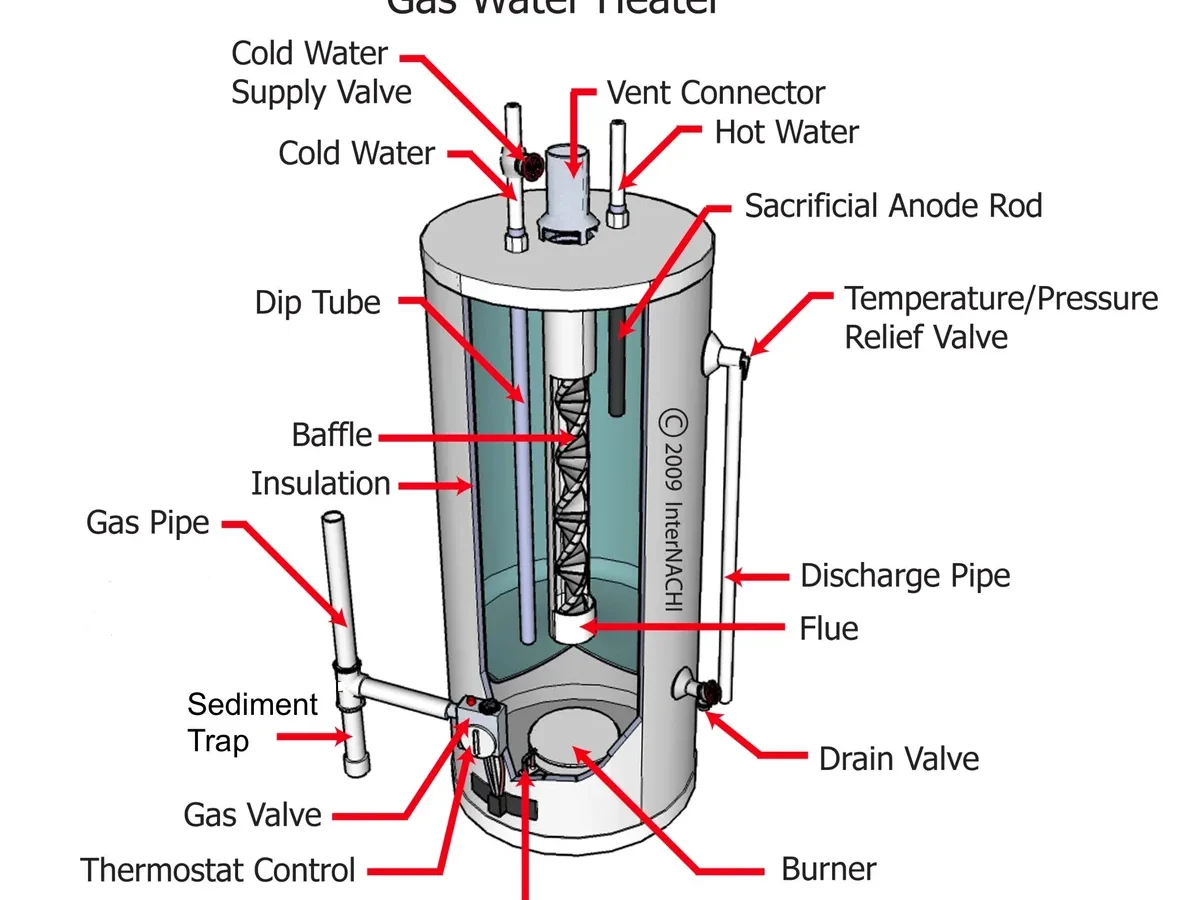
A sudden cold shower on a Richmond winter morning isn't just an inconvenience. It's a crash course in frustration, especially when you don't know where to start looking. That's exactly why we put together this Richmond water heater troubleshooting guide, to walk you through the real causes, the safe fixes, and the moments when calling a plumber is the only smart move.
Richmond's water comes from the James River, and it carries a specific mineral load that directly affects how your water heater behaves. Hardness levels typically run between 100 and 150 mg/L, which is moderately hard by national standards but enough to shorten a tank's life by several years if you ignore it. The city also treats its water with chloramines, a disinfectant that reacts with standard anode rods and creates that rotten-egg smell you've probably noticed.
Understanding these local factors is the first step to troubleshooting that actually works.
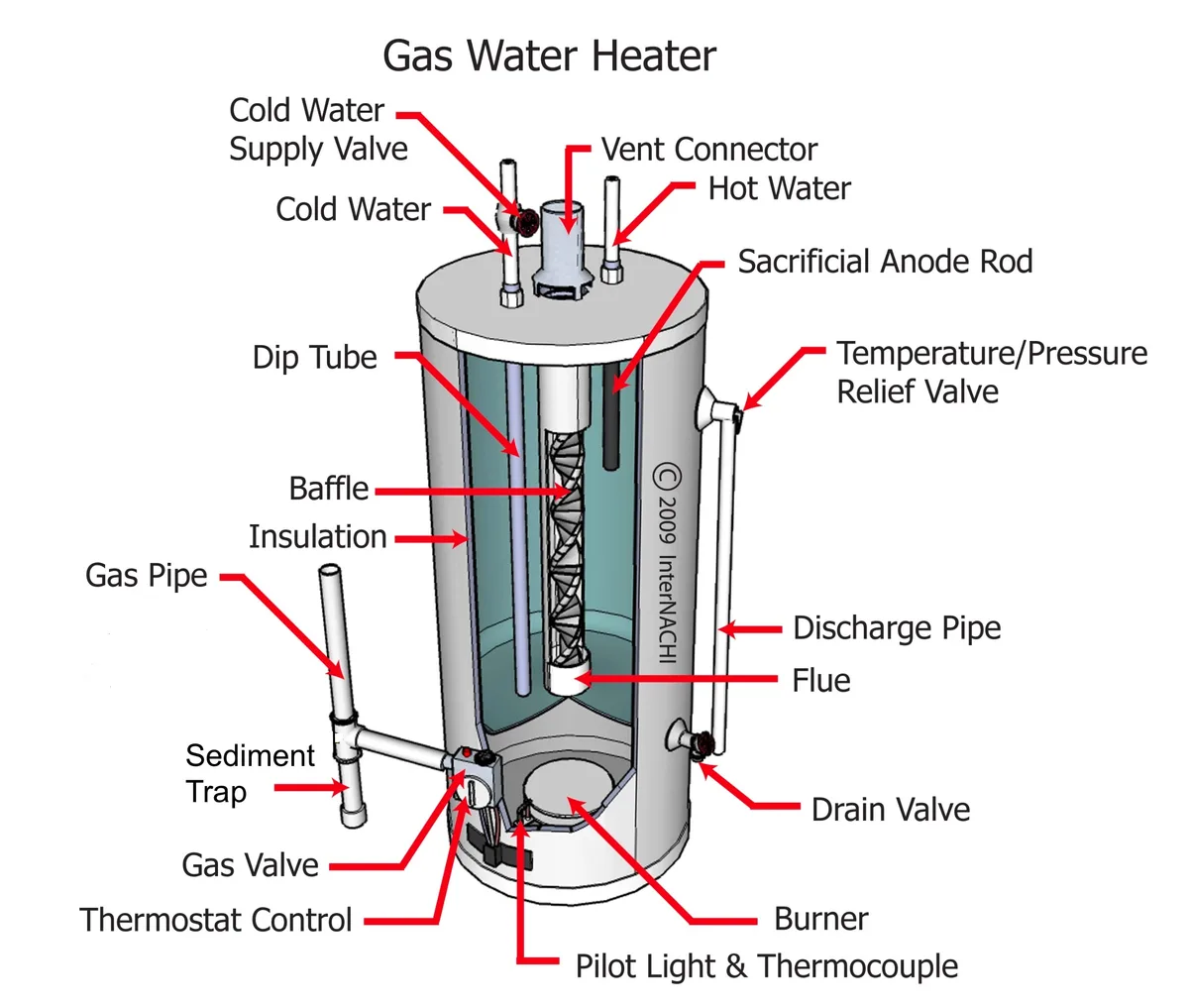
Image source: Bing (Web (fair-use with source credit))
Quick Answer
Richmond water heater troubleshooting starts with identifying the symptom: no hot water, lukewarm water, strange noises, smelly water, or leaks. Check the pilot light or heating element first. Flush sediment every spring.
Replace the anode rod every 3 to 5 years. Call a pro for gas odors or tank leaks.
Why Getting This Wrong Can Cost You (Or Worse)
Water heater mistakes have real consequences. A simple pilot light relight gone wrong can leave carbon monoxide leaking into your basement. A pressure relief valve that's been capped off (a common DIY shortcut) can turn your heater into a steam bomb.
And a minor gas fitting leak? That's a call to Dominion Energy or the Richmond Fire Department, not a YouTube fix.
The safety stakes are higher than most people realize
Gas water heaters operate with an open flame inside your home. If the burner isn't getting enough oxygen (maybe because you stored boxes too close to it last fall), incomplete combustion produces carbon monoxide. You can't smell it.
You won't see it. But a $25 CO alarm can save your life. Richmond building code requires one within 15 feet of any gas appliance, and for good reason.
Electric heaters have their own dangers. A failing heating element can short out and trip the breaker repeatedly. If you keep resetting without finding the cause, that breaker gets weaker.
Eventually it stops tripping, and the wire inside the wall starts to melt. That's how basement fires start.
The expensive DIY mistakes
A common blunder: replacing the thermocouple (a $15 part) when the real problem is the gas control valve ($300 plus installation). Homeowners waste hours and money on the wrong part. Another classic: draining a water heater without first turning off the power or gas.
On an electric model, the heating elements will burn out within seconds if they're exposed to air while still energized. That's a $150 mistake you can avoid by flipping the breaker first.
Then there's the pressure relief valve. If it's leaking, some folks tighten it or cap the discharge pipe. Both are dangerous and illegal under Richmond city plumbing codes.
The valve is there to release pressure if the temperature or pressure gets too high. Blocking it means the tank can explode. It's rare, but it happens.
Every year, water heater explosions cause injuries and property damage nationwide.
When Richmond's conditions make things worse
Our humid climate means basement moisture collects on gas burners and pilot assemblies. That moisture can cause corrosion or blockage over time. And because Richmond sits in a nor'easter path, strong winter winds can blow down chimneys and snuff out pilot lights repeatedly.
If your pilot goes out every time a storm rolls through, the problem might not be the thermocouple at all, it might be the wind.
The James River sediment doesn't just sit at the bottom of your tank. It gets into the drain valve, the T&P valve opening, and even the dip tube. Over years, that sediment hardens into a crust that insulates the water from the burner.
You end up burning more gas to get lukewarm water. That's money down the drain, literally.
The Quick Diagnostic Flowchart: What's Your Symptom?
Start with what you're actually experiencing, then follow the branch that matches. This isn't a comprehensive repair manual, it's a triage system that tells you where to look first and whether you need a professional.
No hot water at all
If you have a gas heater: Check the pilot light first. Is it lit? If not, try relighting it using the manufacturer's instructions on the tank label.
If it won't stay lit, the thermocouple is the most likely culprit (85% of cases, per manufacturer service data). If it lights but the burner doesn't fire up, the gas control valve may have failed.
If you have an electric heater: Check the breaker in your panel. If it's tripped, push it back to on. If it trips again immediately, you have a shorted element or a wiring issue.
Use a multimeter to test each heating element for continuity (resistance should be 10, 16 ohms). A reading of zero or infinity means the element is dead.
Lukewarm water
This usually points to one of three things:
- Sediment buildup. The bottom of the tank is coated with mineral deposits, insulating the water from the burner or element. Flushing the tank usually solves it.
- Dip tube failure. The dip tube (the plastic pipe that sends cold water to the bottom of the tank) can crack or break. Cold water then mixes with the hot water near the top, leaving you with warm water at best. This is common on tanks 8+ years old.
- Thermostat set too low. Check if someone accidentally turned it down. For Richmond households, 120°F is the sweet spot, hot enough for showers, safe enough to prevent scalding.
Water takes forever to heat up
If you've always had decent hot water and suddenly it's slow, you're likely looking at a dying heating element (electric) or a failing gas valve (gas). But if the heater has been slow from day one? You may have an undersized tank.
A 40-gallon tank in a household with two teenage shower-takers is a recipe for cold mornings. The solution isn't repair, it's replacement with a larger unit.
Strange noises from the tank
Rumbling, popping, or banging sounds are the classic sign of hard water sediment. As the burner heats the tank bottom, trapped moisture under a crust of mineral deposit boils into steam and pops. It sounds worse than it is.
A proper flush clears the sediment and stops the noise. If you ignore it long enough, the tank bottom will eventually rust through, and that means a new water heater.
Smelly or rusty water
Rotten egg smell is almost always the anode rod reacting with Richmond's chloraminated water. The rod sacrifices itself to protect the tank, but in the process it creates hydrogen sulfide gas. The fix: replace the magnesium anode rod with an aluminum one.
Aluminum doesn't produce the same chemical reaction, so the smell disappears.
Rusty water can mean the anode rod is fully consumed and the tank itself is starting to rust. If the water is brownish-red and the tank is more than 8 years old, you're probably looking at replacement. If it's just a little rusty first thing in the morning, flushing the tank might clear it.
Leaking water
Not all leaks are the same. If the leak is coming from the top (around the cold or hot water connections), you might just need to tighten a fitting or replace a gasket. If it's coming from the T&P valve, the valve might be failing or the pressure in your system is too high (happens in closed systems without an expansion tank, and Richmond code requires one).
If water is pooling at the bottom of the tank, that's a tank leak. The inner glass lining has cracked. No amount of patching will fix it.
You need a new water heater. Period.
Pilot light keeps dying
This is the most common gas water heater complaint. The thermocouple is the safety device that senses the pilot flame. If it's dirty, bent, or failing, it tells the gas valve to shut off.
Cleaning it with an emery cloth or replacing it ($15, $20) solves most cases.
But if the thermocouple looks fine and the pilot still goes out, check for drafts. Richmond nor'easters can blow down the flue. A wind-resistant flue cap solves that.
Also check the gas pressure, low pressure from Dominion Energy after a storm or maintenance can cause the pilot flame to be too small.
How Richmond's Water and Weather Change Your Troubleshooting
Local conditions aren't just background noise. They're the reason why the same water heater that lasts 12 years in Denver might only make it 6 in Richmond. Let's break down the specifics.
James River water chemistry
Richmond draws its drinking water from the James River, and that water carries dissolved minerals from the Appalachian Mountains all the way to the fall line. The hardness range, 100 to 150 mg/L, is moderate, but it's consistent year-round. That constant sediment load settles in your tank like fine sand in a glass.
- Sediment layer thickness: After 5 years of no flushing, expect a 2- to 3-inch layer of silt and mineral crust at the bottom of your tank. That's enough to reduce efficiency by 20, 30%.
- Chloramines: The city uses chloramines instead of free chlorine to disinfect the water. Chloramines are more aggressive on the anode rod, causing it to dissolve faster and produce hydrogen sulfide, the rotten egg smell. This is a Richmond-specific issue that plumbers in other cities rarely see.
Humidity and condensation
Richmond's average relative humidity sits around 70% year-round. In a basement with a gas water heater, that humid air condenses on the cold gas pipe and the burner assembly. Over time, this moisture can collect in the pilot light area, causing the flame to flicker or go out.
It can also rust the burner orifices, which affects gas flow and flame color.
Signs of a moisture problem: Orange or yellow flame tips on the burner (should be blue), soot buildup around the burner, pilot light that goes out after periods of high humidity.
Nor'easter wind effects
When a nor'easter rolls up the coast, Richmond gets strong, sustained winds from the northeast. Those winds can create downdrafts in chimney flues, especially if the flue cap is missing or damaged. The draft blows out the pilot light.
If this happens once a year, it's a nuisance. If it happens every time the wind picks up, you need to address the flue.
Quick test: Light the pilot and watch the flame when a gust of wind hits. If it bends or flickers, you have a draft problem. A simple flue cap with a wind baffle costs $20, $40 at a Richmond hardware store.
Flood zones and elevation
Some parts of Richmond, near the James River, Shockoe Bottom, Manchester, are in flood zones. If your water heater is in a basement that's ever flooded, the burner and gas controls can be damaged. Even a few inches of standing water can ruin the gas valve electronics.
After a flood, don't try to relight the pilot yourself. Call a licensed plumber to inspect the gas control and burner assembly.
Seasonal maintenance timing
Richmond's seasons are distinct. Spring is the perfect time to flush your water heater because the sediment from winter heating has built up. Fall is the time to check the pilot and flue before the first cold snap.
If you skip the fall check, you're gambling that a November nor'easter won't knock out your heat and hot water at the same time.
Step-By-Step: Diagnosing and Fixing the 7 Most Common Problems
We've covered the theory. Now here's the practical walkthrough, the steps you can take safely, with tools you probably already own. Remember the safety rules: gas off before any work, power off before any electric work, and never work on a hot tank.

Image source: Bing (Web (fair-use with source credit))
1. Relighting the pilot safely
If your gas water heater pilot went out, here's the safe sequence:
- Turn the gas control knob to OFF. Wait 5 minutes for any accumulated gas to dissipate. This is non-negotiable.
- Remove the outer access panel and the inner burner cover.
- Turn the knob to PILOT. Press and hold the red button (or follow your model's instructions).
- Use a long-stem lighter or a wick lighter to light the pilot flame at the thermocouple tip.
- Hold the button for 60 seconds after the flame ignites. This lets the thermocouple heat up and send the signal to the gas valve.
- Release the button. The pilot should stay lit. If it goes out, repeat the process. If it fails three times, the thermocouple likely needs cleaning or replacement.
Richmond gas shutoff note: If you smell gas at any point, don't try to relight. Turn the gas off at the heater's shutoff valve and call Dominion Energy's emergency line at (866) 366-4357. They'll dispatch a technician to check the line for free.
2. Testing and replacing a thermocouple
The thermocouple is a thin copper tube that runs from the pilot assembly to the gas valve. It generates a small voltage (about 25, 30 millivolts) when heated. If it's dirty or failing, the voltage drops and the gas valve shuts off.
Test with a multimeter:
- Set the multimeter to DC millivolts (mV).
- Disconnect the thermocouple from the gas valve. Touch one probe to the copper tip and the other to the connector end.
- Light the pilot. You should read 25, 35 mV. Below 10 mV means the thermocouple is bad.
Replacement: Unscrew the fitting at the gas valve and at the pilot assembly. Install the new one, hand-tighten plus a quarter turn. Test the pilot again.
3. Draining and flushing sediment
This is the most important maintenance task for Richmond water heaters. Do it once a year, ideally in early spring.
- Turn off the gas or power to the heater.
- Attach a garden hose to the drain valve at the bottom of the tank. Run the hose to a floor drain, sump pit, or outside.
- Open the drain valve. If nothing comes out, the drain is likely clogged with sediment. Try opening the pressure relief valve (with a bucket under it) to let air in and break the suction.
- Let the tank drain completely. Then open the cold water supply valve briefly to stir up remaining sediment. Close it and let it drain again.
- Once the water runs clear, close the drain valve and open the cold water supply to refill the tank.
- Turn the power or gas back on. Wait about 30 minutes for the water to heat up before checking for leaks.
4. Checking and replacing heating elements (electric models)
Electric water heaters have two heating elements: upper and lower. The upper element heats the top portion of the tank first. If it fails, you'll get some hot water but not much.
The lower element heats the rest.
Test with a multimeter:
- Turn off the breaker.
- Remove the access panel and insulation. You'll see the element terminals.
- Set the multimeter to ohms (Ω). Touch one probe to each terminal. A good element reads 10, 16 ohms. A reading of 0 or OL (open line) means it's dead.
- Also test resistance between each terminal and the element's metal flange (should be infinite, no continuity). If you get any reading, the element is shorted to ground and needs replacement.
Replacement: Drain the tank below the element level. Use a 1-1/2 inch socket wrench to unscrew the element. Apply Teflon tape to the threads of the new element.
Tighten moderately (don't overtighten, the gasket seals it). Refill the tank before turning on the power.
5. Testing the T&P valve
The temperature and pressure relief valve is a critical safety device. It should be tested monthly.
Safe test: Place a bucket under the discharge pipe. Lift the test lever gently. Water should rush out.
Let it run for a few seconds, then release the lever. It should snap back shut. If it drips continuously after the test, the valve needs replacement.
Never cap or block the discharge pipe. Per Richmond plumbing code, the pipe must terminate within 6 inches of the floor. Blocking it can cause the tank to explode.
6. Inspecting the anode rod
We're covering this in detail in the next section because it's the one part most Richmond homeowners ignore. For now, the quick check: look at the top of the water heater for a hexagonal head bolt (usually 1-1/16 inch). That's the anode rod.
If it's visibly corroded or you've never replaced it after 5 years, it's time.
7. Resetting the high-temperature limit switch
Electric water heaters have a safety reset button behind the access panel (often red). If the water gets too hot, the switch trips and shuts off power to the elements.
To reset: Press the button firmly. If it stays in, you're good. If it pops back out immediately, you have a failing thermostat or a shorted element.
Don't keep resetting it, address the underlying problem.
The One Part Most Richmond Homeowners Ignore (And Shouldn't)
There's a component inside every tank water heater that quietly sacrifices itself so your tank doesn't rust. The anode rod is essentially a metal stick, usually magnesium or aluminum, that attracts corrosion away from the steel tank. It's the last line of defense against leaks, and most people don't even know it exists.
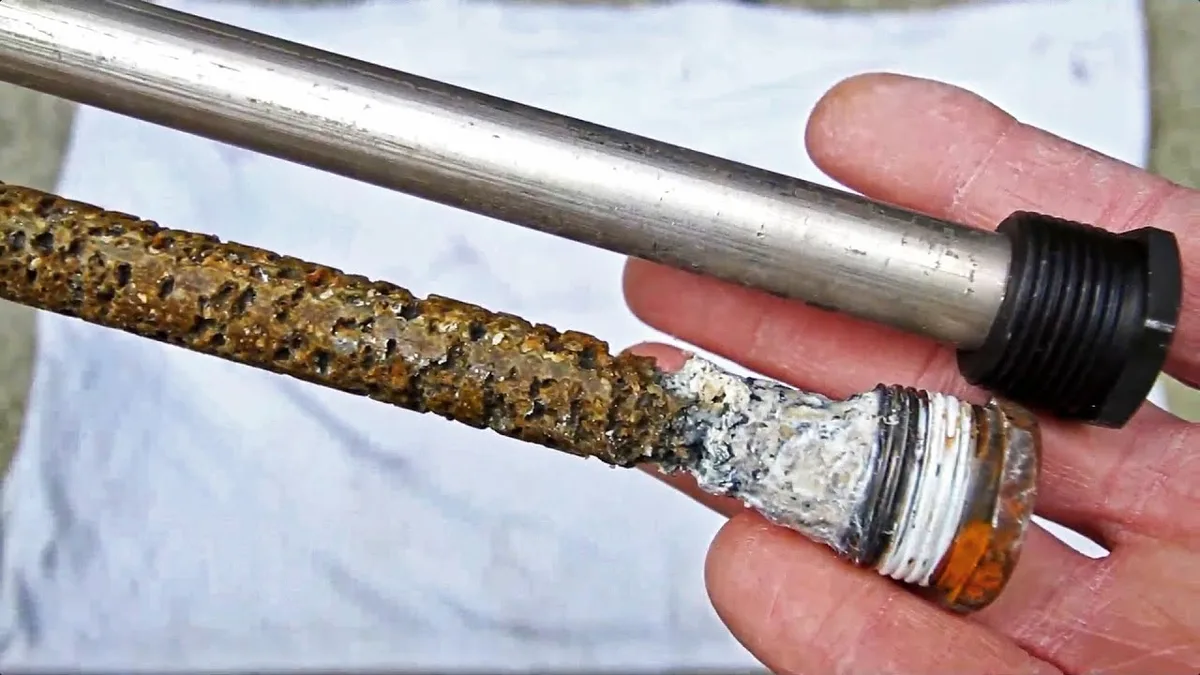
Image source: Bing (Web (fair-use with source credit))
What the anode rod does and why Richmond's water eats it faster
The rod bolts into the top of the tank and hangs down into the water. Because it's made of a more reactive metal, it corrodes first. That's the design.
The rod protects the tank by dying slowly.
But Richmond's water treatment speeds up that death. Chloramines react aggressively with magnesium rods, causing them to dissolve much faster than in cities that use free chlorine. A rod that might last 6 years in a chlorinated water system could be completely gone in 3 years in Richmond.
Signs your anode rod needs replacement
- Rotten egg smell: That's the hydrogen sulfide gas from the reaction between magnesium and chloramines. Switching to an aluminum rod eliminates the smell.
- Rusty water: If the rod is completely consumed, the tank itself starts rusting. You'll see rusty water first thing in the morning. At that point, replacing the rod won't fix the tank damage.
- Visible corrosion on the rod head: If the hex head is heavily corroded, the rod is probably done.
How to replace the anode rod
Tools needed:
- 1-1/16 inch socket or impact wrench
- Breaker bar (the rod is usually torqued tight)
- Teflon tape
- Turn off the gas or power and shut off the cold water supply.
- Attach a garden hose to the drain valve and drain about 5 gallons from the tank to lower the water level below the rod.
- Remove the hex head using the socket and breaker bar. If it's stuck (common after years), apply penetrating oil and let it sit 30 minutes. You can also use an impact wrench.
- Pull the rod out. Inspect it. If the core wire is exposed for more than 6 inches or the rod is less than 1/2 inch thick, replace it.
- Thread the new rod into the opening. Use Teflon tape on the threads. Tighten firmly.
- Reopen the cold water supply and refill the tank. Check for leaks around the rod head.
- Restore power or gas.
If the rod is so corroded that it breaks off during removal, and that's not uncommon, you'll need a special tool called an anode rod remover or a plumbing pro. Alternatively, some plumbers install a powered anode rod (which uses a small electrical current to prevent corrosion without a sacrificial metal). Those are about $120 but last longer and eliminate the smell issue.
When replacing the rod isn't enough
If your tank is more than 8 years old and you've never replaced the rod, the tank may already have internal rust damage. Replacing the rod now is still a good idea, it can extend the life another 2 or 3 years, but start budgeting for a replacement. A tank that has already leaked or shows heavy rust shouldn't be treated.
Replace it.
Richmond plumbers' observation: In our research, local service pros report that the average Richmond water heater lasts 6 to 9 years. That's 3 to 5 years shorter than the industry average. The main cause: neglected anode rods and annual flushes.
A $30 rod and a Saturday afternoon of work can add 3 years to your tank's life. That's a return of about $800 in delayed replacement cost. Worth doing.
When to Try DIY vs. When to Call a Richmond Plumber
Knowing when to pick up a wrench and when to pick up the phone saves you money and keeps you safe. Here's the breakdown based on what Richmond plumbers actually see.
Safe to DIY
- Relighting the pilot. Follow the label instructions. If it won't stay lit after three tries, stop and troubleshoot.
- Flushing the tank. Hose, drain, refill. Simple and low risk.
- Changing the temperature setting. Turn the dial. Wait an hour. Test.
- Replacing the thermocouple. $15 part, one tool, 15 minutes.
- Testing the T&P valve. Lift the lever. Watch it reseal.
- Replacing the anode rod. Requires some muscle and a socket wrench. Doable for most homeowners.
Risky to DIY
- Replacing a gas control valve. This involves disconnecting gas lines. One mistake means a gas leak. Leave this to a licensed plumber.
- Cutting or modifying vent pipes. Improper venting can kill you. Carbon monoxide has no smell. Don't gamble.
- Electrical work without a permit. Richmond requires permits for water heater replacement and any electrical work tied to it. Skip the permit, and you could face fines or insurance denial after a fire.
- Repairing a tank leak. You can't patch a failed glass lining. Any attempt to seal it is temporary at best and dangerous at worst.
Always call a pro
- You smell gas. Leave the house. Call Dominion Energy from outside.
- Your carbon monoxide alarm goes off. Evacuate. Call 911.
- The tank is leaking from the bottom. That's a tank failure. Replace it.
- You need a permit. Richmond City Building Inspections requires permits for water heater installation. A licensed plumber handles the paperwork.
- The pilot won't stay lit after replacing the thermocouple. Could be a gas valve, gas pressure, or venting issue. A plumber has the tools to diagnose it.
How to find a licensed plumber in Richmond
Use the Virginia Department of Professional and Occupational Regulation (DPOR) license lookup. Search for "plumber" and verify the license is active and without recent complaints. Ask for proof of insurance before any work starts.
A reputable plumber will provide both without hesitation.
What Richmond's Building Code Requires (And What Happens If You Skip It)
Richmond has specific plumbing codes that apply to water heaters. These aren't suggestions. They're enforced during permit inspections and can cause serious problems if ignored.
Expansion tank requirement
If your water system has a backflow preventer or check valve (most Richmond homes built after 1990 do), you have a "closed system." When water heats up, it expands. In a closed system, that pressure has nowhere to go. The T&P valve opens and leaks.
Or the tank pressure builds until something fails.
The fix: Install an expansion tank on the cold water line near the water heater. It's a small tank with an air bladder that absorbs the pressure swing. Richmond code requires one on all new installations in closed systems.
Cost: $50, $100 for the tank, plus labor if you hire a plumber.
Permit rules for water heater replacement
Richmond City requires a permit for any water heater installation, repair, or replacement. This includes tank and tankless models. The permit fee is typically $50, $100.
An inspector will check:
- Proper venting (pipe size, slope, termination)
- Gas line sizing and shutoff valve
- T&P valve discharge pipe (must terminate within 6 inches of the floor)
- Expansion tank (if required)
- Seismic straps (required in Richmond's seismic zone)
What happens if you skip the permit? If you sell your home, the buyer's inspection will catch an unpermitted installation. You'll have to get a retroactive permit and pay a penalty. Or you'll negotiate a lower sale price.
If an unpermitted installation causes a fire or flood, your insurance may deny the claim. It's not worth the risk.
T&P valve discharge location
The discharge pipe from the T&P valve must end within 6 inches of the floor. It cannot be threaded or capped. It must be the same size as the valve outlet (typically 3/4 inch).
This prevents scalding injuries and allows the valve to discharge safely.
Venting requirements
Gas water heaters need proper venting to carry combustion gases outside. The vent pipe must be the correct diameter (usually 4 inches for residential water heaters), slope upward at least 1/4 inch per foot, and terminate at least 2 feet above the roof. Double-wall vent pipe is required for most installations.
In Richmond's historic districts, side-wall venting may not be allowed. If you're replacing a water heater in a home in the Fan, Church Hill, or Jackson Ward, check with Richmond City Building Inspections before you buy a power vent model.
Dominion Energy gas rules
If you're working on the gas line, Dominion Energy requires that the work be done by a licensed gas fitter. Homeowners can work on their own gas lines if they own the property and live in it, but any mistakes are your responsibility. If you cause a gas leak that damages property or injures someone, you're liable.
A licensed plumber carries insurance.
Costs, Lifespan, and When Replacement Beats Repair
Let's talk money. Water heater repairs are usually affordable. But at some point, you're throwing money at a dying appliance.
Here's how to decide.
Typical repair costs in Richmond (2025–2026)
| Repair | Cost (parts + labor) |
|---|---|
| Thermocouple replacement | $100–$200 |
| Heating element replacement | $150–$300 |
| Tank flush | $100–$150 |
| Anode rod replacement | $150–$250 |
| T&P valve replacement | $150–$250 |
| Gas control valve replacement | $300–$600 |
| Full diagnostic visit | $100–$180 |
Replacement costs
| Type | Cost (installed) |
|---|---|
| Standard 40-gallon gas tank | $1,200–$1,800 |
| Standard 50-gallon gas tank | $1,500–$2,200 |
| Standard 40-gallon electric tank | $1,000–$1,500 |
| Standard 50-gallon electric tank | $1,200–$1,800 |
| Tankless gas | $2,500–$4,500 |
| Heat pump (hybrid) | $2,500–$4,000 |
Lifespan in Richmond
- Standard gas tank: 6, 9 years (national average is 10, 12)
- Standard electric tank: 8, 12 years (less affected by sediment)
- Tankless gas: 15, 20 years (but mineral buildup reduces flow)
- Heat pump hybrid: 10, 15 years (Richmond's humidity helps efficiency)
The shorter lifespan for gas tanks comes directly from sediment buildup and anode rod neglect. Flushing and rod replacement every 3, 5 years can push a gas tank to 10, 12 years in Richmond.
Dominion Energy rebates
As of 2026, Dominion Energy offers rebates for high-efficiency water heaters in Virginia. Check their website for current amounts. Typical rebates range from $100 to $300 for ENERGY STAR certified models.
Tankless and heat pump models qualify for higher rebates.
When replacement beats repair
Use the 50% rule. If the repair cost is more than 50% of a new unit's cost, replace it. Also replace if:
- The tank is more than 8 years old and needs a major repair (gas valve, tank leak, rust)
- You've already spent $400+ on repairs in the last 2 years
- The water is rusty and the tank is old (internal rust won't stop)
- You want to upgrade to a more efficient model (savings add up over time)
A $300 repair on a 6-year-old tank makes sense. A $300 repair on a 10-year-old tank? You're gambling that nothing else fails in the next year.
Most Richmond plumbers recommend replacement at 10 years regardless of symptoms.
Richmond Water Heater Troubleshooting FAQs
Why does my water smell like rotten eggs only in Richmond?
The smell comes from hydrogen sulfide gas. It forms when the magnesium anode rod reacts with chloramines in Richmond's treated water. The fix is to replace the magnesium rod with an aluminum one.
Aluminum doesn't produce the same reaction. The smell usually disappears within a week after the swap.
Can Richmond's hard water really kill a water heater in 5 years?
Yes, if you never flush the tank or replace the anode rod. The sediment layer insulates the water from the burner, causing the tank bottom to overheat and weaken. The anode rod dissolves faster in Richmond's chloraminated water.
Without maintenance, the tank can rust through in 5 to 7 years. With annual flushing and rod replacement, expect 10 to 12 years.
Does my water heater need an expansion tank in Richmond?
It depends on your plumbing system. If you have a backflow preventer or check valve (common in newer Richmond homes), you have a closed system. Heated water expands and has nowhere to go.
The pressure builds until the T&P valve opens and leaks. Richmond code requires an expansion tank for all new installations in closed systems. A simple test: if you hear the T&P valve dripping after a shower, you likely need one.
How do I know if my gas water heater is venting properly?
Check the flue pipe. It should be cool to the touch after the burner runs. If it's hot, the vent is restricted.
Also check for rust, gaps, or disconnected sections. During operation, a properly venting heater produces a steady blue flame. Yellow or orange flames indicate incomplete combustion.
That's a carbon monoxide risk. Call a plumber immediately.
What should I do if I smell gas near my water heater?
Do not light anything. Do not flip any switches. Do not use your phone inside the house.
Leave the building immediately. Go outside and call Dominion Energy's emergency line at (866) 366-4357. They'll dispatch a technician to check the line.
If you hear a hissing sound from a gas line, call from a neighbor's house. A gas leak is not a DIY fix.
How often should I flush my water heater in Richmond?
Once a year, in early spring. The sediment from winter heating has built up, and the weather is mild enough that a few hours without hot water won't hurt. If you have very hard water (above 150 mg/L), consider flushing every 8 months.
The sediment layer builds faster, and the efficiency loss adds up.
Is it safe to test the pressure relief valve myself?
Yes, with caution. Place a bucket under the discharge pipe. Lift the test lever gently.
Hot water will spray out. Let it run for a few seconds. Release the lever.
It should snap shut. If it drips for hours after the test, the valve seat is worn and needs replacement. Wear gloves and eye protection.
The water is hot.

Similar Posts