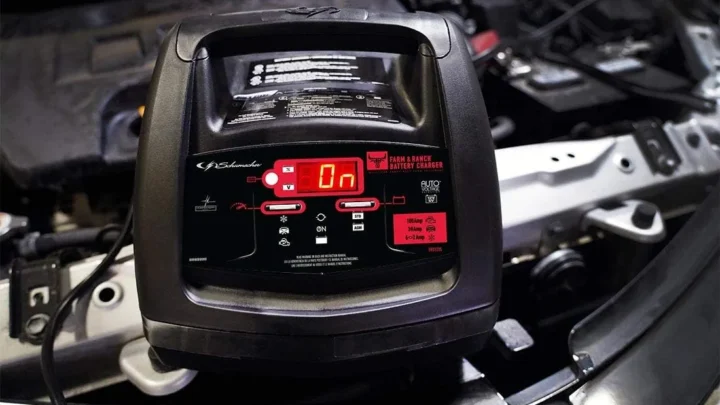
15 Volt Battery Charger

A 15 Volt Battery Charger can be the difference between a battery that lasts five years and one that fails in eighteen months. That is not a marketing exaggeration. It is basic electrochemistry.
If you have ever hooked up any old charger to a dead battery and hoped for the best, you have already risked your battery's health, your wallet, and possibly your safety.
Manufacturer specifications indicate that a lead-acid battery's optimal absorption voltage sits between 14.4 and 14.7 volts. A charger labeled as 15 volts might push past that window. Getting this right matters more than most people realize.
Let's walk through what a 15-volt charger actually does, which batteries it works with, and which ones it destroys.
Why Understanding 15-Volt Chargers Actually Matters
Every battery chemistry tolerates only a narrow voltage band during charging. Go above that band and you risk overheating, gas venting, and permanent capacity loss. Go below and the battery never fully charges, leaving sulfate crystals on the plates that shrink usable capacity over time.
Our research across automotive and marine forums reveals a repeating pattern. People grab a charger labeled "15 volt" because it sounds like a universal solution. They assume the label means it is safe for any 12-volt battery.
That assumption is wrong. A charger that holds a constant 15 volts without tapering off will overcharge a sealed AGM battery within hours. The internal pressure builds, the safety vent opens, and the electrolyte dries out.
The battery is effectively dead after a few such cycles.
The Battery Council International publishes charge voltage ranges for each common battery type: flooded, AGM, gel, and lithium. A 15-volt output falls inside the acceptable absorption range for some flooded batteries under certain temperature conditions. It sits well above the safe float voltage for every chemistry.
Understanding this before you connect the clamps saves you $150 to $300 on a replacement battery and prevents a potential garage fire.
What a 15-Volt Charger Really Does
A 15-volt battery charger takes incoming AC wall power and converts it to DC at a regulated voltage near 15 volts. That seems simple. The real story hides in two details: whether the output is fixed or regulated in stages, and whether the current is limited.
Fixed-voltage chargers pump out a steady 15 volts regardless of the battery's state of charge. Hook one to a battery at 50 percent charge and the current will be high. The internal temperature will spike.
The charger will keep pushing voltage even as the battery reaches full. That is the recipe for overcharging.
Smart chargers use a microprocessor to measure battery voltage and adjust output accordingly. They start at a bulk voltage near 14.4 to 14.7 volts for lead-acid. Then they drop to a lower absorption phase.
Finally they settle into a maintenance voltage around 13.2 to 13.6 volts. A true 15-volt output rarely appears in a well-designed smart charger except during a desulfation pulse or an equalization cycle on flooded batteries.
What does a 15-volt charger not do? It does not automatically know your battery's chemistry or temperature. It does not compensate for cold garages or hot engine bays unless it has a built-in temperature sensor.
And unless it is a smart charger, it does not stop charging at the right moment.
The Three Charging Stages That Save Your Battery
Every high-quality charger follows a three-stage or four-stage profile. Understanding these stages explains why a fixed 15-volt output is dangerous and why a staged approach is essential.
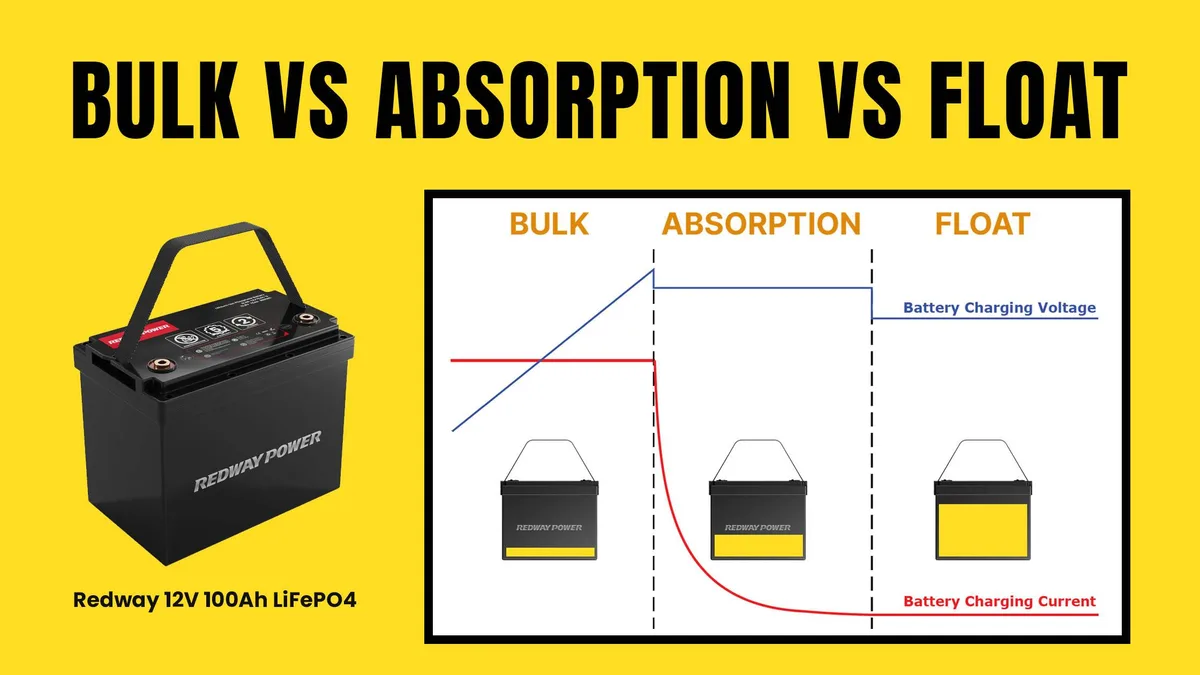
Stage 1: Bulk charge. The charger delivers full current while voltage rises. For a deeply discharged lead-acid battery, this stage can run for several hours. The voltage climbs from around 11.5 volts up to the absorption set point, typically 14.4 to 14.7 volts for flooded and AGM.
A charger locked at 15 volts would skip this ramp and slam the battery with excessive voltage from the start.
Stage 2: Absorption. Once the battery reaches the absorption voltage, the charger holds that voltage steady and lets the current taper naturally. The battery absorbs the last 10 to 20 percent of its capacity. If the charger holds 14.6 volts correctly, the internal chemical reactions complete without excess heat or gas.
If it holds 15 volts, the battery climbs into overcharge territory. It produces hydrogen and oxygen gas. It accelerates grid corrosion.
Stage 3: Float. After the battery is fully charged, the charger drops voltage to around 13.2 to 13.6 volts. This voltage safely maintains full charge without boiling off electrolyte. A charger that cannot drop to float will destroy any battery left connected for more than a day or two.
Some chargers add a fourth stage called desulfation. It temporarily sends voltage spikes into the battery to break up sulfate crystals. That process can reach 15.5 volts or higher for short pulses.
It is safe only under controlled conditions and only on eligible batteries.
Which Battery Types Need 15V And Which Will Be Ruined By It
The same charger that works perfectly for one battery type can ruin another in under eight hours. Here is what the manufacturer specs say about each common chemistry.

Flooded Lead-Acid
Flooded batteries are the most forgiving. Their absorption voltage range is 14.4 to 14.8 volts at 25°C. Some equalization procedures call for up to 15.5 volts for a limited time.
A charger that outputs a steady 15 volts can work for flooded batteries only if it automatically transitions to float. Without a float stage, the battery will lose water through electrolysis. You can replace water in flooded cells, but doing so every month gets old fast.
Our research shows that flooded batteries charged at a constant 15 volts without temperature compensation lose 5 to 10 percent of their capacity every 30 cycles.
AGM
AGM batteries are more sensitive. Their absorption voltage tops out around 14.6 to 14.8 volts. Sustained exposure to 15 volts pushes them into overcharge, causing internal pressure buildup.
The safety vent opens. Gas escapes. The electrolyte cannot be replaced.
Once an AGM battery loses electrolyte, its capacity drops permanently. Do not use a plain 15-volt charger on an AGM battery unless the charger has a specific AGM mode and a temperature sensor.
Gel
Gel batteries are the most voltage-sensitive. Their absorption voltage range is 14.0 to 14.4 volts. A 15-volt charger will quickly force gas bubbles into the gel electrolyte, creating permanent voids.
The battery swells. Internal resistance rises. Capacity is cut by half within a few cycles.
Never use a charger that outputs more than 14.4 volts on a gel battery. Many smart chargers have a separate gel setting. Use it religiously.
LiFePO₄
Lithium batteries require a charge profile with an absorption voltage of 14.4 to 14.6 volts and a bulk current limited by the internal BMS. A 15-volt charger without a lithium-specific profile will likely trip the battery management system into protection mode. Repeated tripping can damage the BMS.
Only use a charger designed for LiFePO₄ that lists a maximum absorption voltage at or below 14.6 volts.
How to Pick the Right Charger
Choosing a charger is not about picking the highest number on the shelf. It is about matching voltage, current, and features to your specific battery and use case.
Voltage match is non-negotiable. The charger must output an absorption voltage within the range specified by your battery manufacturer. For most lead-acid batteries, that means 14.4 to 14.7 volts. If the charger's specs say "15V nominal" but list a float voltage, dig deeper.
Many chargers labeled 15V actually mean their peak pulse voltage during desulfation. Read the fine print.
Current depends on battery capacity. A general rule of thumb is to charge at 0.1 to 0.2 times the battery's amp-hour rating. For a 100 Ah battery, use a 10 to 20 amp charger. Higher currents charge faster but generate more heat.
For maintenance charging, a 1 to 2 amp trickle charger is sufficient.
Essential safety features:
- Automatic multi-stage charging
- Reverse polarity protection
- Overcharge protection with automatic shutoff
- Spark-proof connectors
- Temperature compensation
- UL 1236 certification
Features to be wary of:
- Manual or constant voltage settings without automatic cutoff
- Desulfation modes that claim to work on all batteries
Prices as of early 2026:
- Basic 1.5-amp trickle charger: $15 to $25
- Smart charger, 4 to 8 amps, multi-stage: $50 to $80
- Smart charger, 10 to 15 amps, with lithium and temperature compensation: $80 to $130
- Pro-grade unit with desulfation and display: $130 to $200
Step-by-Step: How to Charge Safely and Correctly
Follow this routine every time. It takes about two minutes longer than just clipping on cables. The payoff is a battery that reaches full charge without damage.
Step 1: Check the battery's resting voltage. Use a digital multimeter set to DC volts. A fully charged lead-acid battery reads 12.6 to 12.8 volts. A deeply discharged battery reads below 12.0 volts.
If the voltage is below 10.5 volts, some smart chargers will refuse to start. Use a charger with a dead battery recovery feature in that case.
Step 2: Confirm the charger matches the battery type. Double-check the charger's switch or menu setting. If your battery is AGM, select the AGM mode. If it is gel, select gel mode.
If your charger lacks a gel mode, do not use it on a gel battery.
Step 3: Clean the battery terminals. Corrosion creates resistance that throws off voltage readings. The charger may think the battery is full when it is not. A wire brush or terminal cleaner takes thirty seconds.
Step 4: Connect the charger clamps. Attach the red clamp to the positive terminal first. Then attach the black clamp to the negative terminal or to a clean metal ground point on the vehicle chassis. Connecting to chassis reduces spark risk near the battery's hydrogen vent.
Step 5: Set the amperage if the charger allows it. For a 100 Ah battery, set to 10 or 15 amps for faster charging or 4 to 5 amps for a gentler charge. Slower charges are easier on the battery.
Step 6: Plug the charger into AC power. Most smart chargers run a brief self-diagnostic before starting. If the charger flashes an error, double check the clamps are on the correct terminals.
Step 7: Monitor the charge progress. Check the battery voltage with a multimeter after a few hours. A lead-acid battery should climb steadily from 12.0 to 14.4 volts during bulk charging. If the voltage hits 15 volts or higher, disconnect the charger immediately.
Step 8: Disconnect in reverse order. Unplug the charger from AC power first. Remove the black clamp. Then remove the red clamp.
Step 9: Let the battery rest. After charging, let the battery sit for 30 to 60 minutes before testing its voltage. A healthy lead-acid battery settles to 12.6 to 12.8 volts.
The 5 Most Common Mistakes People Make
Our research across user reviews, forum posts, and battery manufacturer support tickets reveals the same errors appearing again and again.
Mistake 1: Using a 15V power supply instead of a proper charger. A power supply delivers a fixed voltage with no current regulation. A battery charger delivers a voltage that changes based on the battery's state of charge. Hook a 15-volt power supply to a deeply discharged battery and the current can be high enough to melt cables or warp battery plates.
Mistake 2: Leaving the charger connected indefinitely without checking. Even smart chargers can fail. The voltage sensing circuit can drift. A relay can stick closed.
The safest habit is to disconnect after the charger indicates full charge. If you must leave it connected long term, verify that the charger drops to float voltage within 24 hours.
Mistake 3: Mixing battery chemistries on a single charger setting. The flooded battery tolerates a 14.7-volt absorption. The AGM battery gets cooked at the same voltage. Always confirm the setting before connecting, especially if you own multiple battery types.
Mistake 4: Ignoring temperature. A lead-acid battery that is cold needs a higher absorption voltage. A battery that is warm needs a lower voltage. A charger with a built-in temperature sensor adjusts for this automatically.
Mistake 5: Assuming 15V means 15 amps. Voltage is electrical pressure. Current is flow rate. A 15-volt charger pushes voltage at a specific pressure regardless of whether it is a 1-amp trickle charger or a 20-amp fast charger.
Never buy a charger based only on the voltage number printed on the box.
Quick Specs and Pricing Reference
| Charger Type | Typical Amps | Chemistry Support | Price Range | Safety Cert |
|---|---|---|---|---|
| Trickle (maintainer) | 1.0 to 1.5 A | Lead-acid only | $15 to $30 | UL 1236 |
| Smart, entry-level | 4 to 6 A | Flooded, AGM | $40 to $70 | UL 1236 |
| Smart, mid-range | 8 to 12 A | Flooded, AGM, gel | $60 to $110 | UL 1236, CSA |
| Smart, high-amp | 15 to 20 A | Flooded, AGM, gel, LiFePO₄ | $90 to $180 | UL 1236, CE |
The $30 trickle charger works fine for maintaining a seasonal vehicle battery over winter. It does not work for reviving a deeply discharged battery. Buy the capability that matches your worst-case use.
Pro Tips for Extending Battery Life
These tips come from battery manufacturers' technical documentation and from field experience shared by off-grid system operators.
Cycle charge instead of float charging repeatedly. If you use a battery regularly, let it discharge to 50 percent capacity occasionally before recharging. This helps prevent sulfation. Batteries that are constantly topped off at 100 percent degrade faster due to grid corrosion.
Use desulfation mode sparingly. Desulfation applies a high-voltage pulse to break up lead sulfate crystals. It works best on flooded batteries that have been sitting discharged for weeks. Do not run desulfation more than once a month.
Never use desulfation on gel or lithium batteries.
Equalize flooded batteries quarterly. Equalization is a controlled overcharge at 15 to 16 volts for one to three hours. It mixes the electrolyte and knocks loose sulfate crystals. Not all chargers have an equalization setting.
AGM and gel batteries should never be equalized.
Keep the battery clean and dry. Dirt and moisture create a small conductive path that slowly drains the battery. Wipe the top of the battery with a solution of baking soda and water every few months.
Store batteries at partial charge. Charge to about 12.4 to 12.5 volts for storage longer than 30 days. A fully charged battery experiences faster grid corrosion. A deeply discharged battery sulfates quickly.
The sweet spot is around 75 percent charge.
Frequently Asked Questions
Can I use a 15-volt charger on a 12-volt battery?
Yes, but only if the charger automatically drops to a lower float voltage after the battery is full. A 15-volt charger that stays at 15 volts continuously will overcharge a 12-volt battery. Check the charger's documentation for a float voltage of 13.2 to 13.6 volts.
What happens if I leave a 15-volt charger connected too long?
The battery will overcharge. For flooded batteries, this causes water loss through electrolysis. For sealed batteries, it causes pressure buildup, venting, and permanent capacity loss.
How do I know if my charger is actually outputting 15 volts?
Measure the output voltage at the clamps with a digital multimeter while the charger is connected to a battery. A smart charger shows different voltages at different stages. A fixed-voltage charger shows a steady 15 volts.
Is a higher amp charger always better?
No. A higher amp charger charges faster but generates more heat. Heat is the enemy of battery life.
Use the lowest amp setting that meets your time requirements.
Can I use a 15-volt charger on a lithium battery?
Only if the charger has a dedicated lithium setting that limits absorption voltage to 14.4 to 14.6 volts. A 15-volt output will trip the battery management system and may damage it over time.
How often should I replace my battery charger?
Smart chargers with good build quality last 5 to 10 years. Replace yours if you notice erratic indicator lights, unusual heat, or if it stops entering float mode.
Final Verdict
By now you know the key facts. A 15-volt charger can work, but only if it has automatic multi-stage control and the correct chemistry settings.
If you own a single flooded battery in a car or truck. A basic smart charger with 4 to 8 amps and support for flooded and AGM modes is enough. Expect to spend $40 to $70.
If you own AGM or gel batteries. Buy a charger with dedicated modes for each chemistry. Verify that the AGM absorption voltage does not exceed 14.8 volts and that the gel mode does not exceed 14.4 volts. A mid-range unit at 8 to 12 amps costs $70 to $110.
If you own lithium LiFePO₄ batteries. Purchase a charger that explicitly lists a lithium setting with an absorption voltage between 14.4 and 14.6 volts. A quality lithium-capable 10-amp smart charger runs $90 to $150.
The safest recommendation for most people. A 10-amp smart charger that supports flooded, AGM, and gel chemistries, has reverse polarity protection and UL 1236 certification, and costs between $60 and $90. That unit handles 90 percent of common charging needs without damaging your battery.
Remember the core rule. The charger must match the battery's voltage requirements first and your schedule preferences second. A few extra minutes reading the specs now saves hours of frustration and hundreds of dollars in premature battery replacements.

Similar Posts