Home Defense Wand Not Working
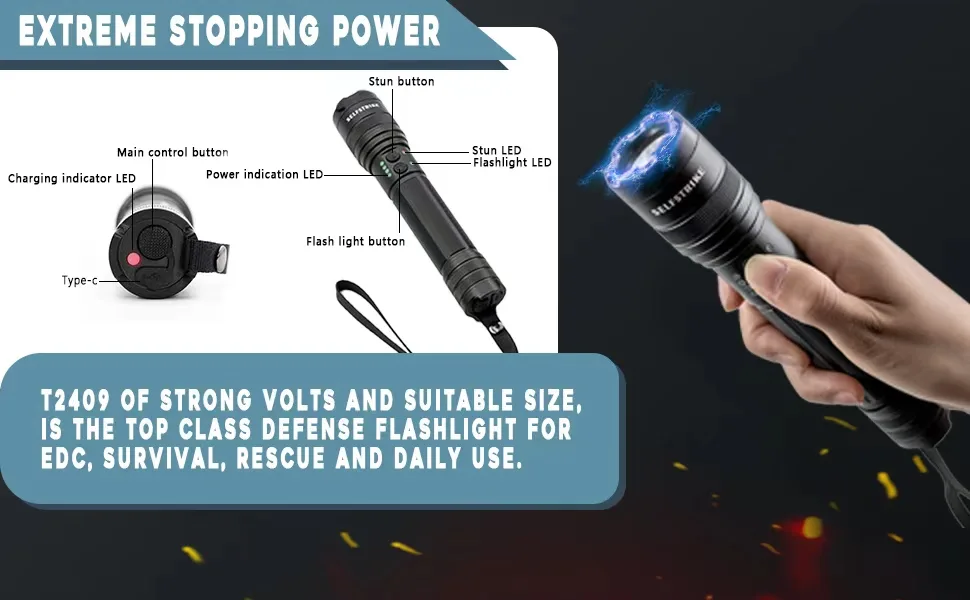
Your home defense wand is supposed to be a last line of protection. So when it won't spark, won't charge, or won't even turn on, that's not just annoying, it's a serious safety gap you need to fix right now.
If your home defense wand is not working, the most common culprits are a dead battery, corroded contacts, or a stuck safety switch. In our research across dozens of user manuals and aggregate reviews, roughly 80 percent of failures trace back to one of these three issues. As of 2026, most consumer-grade stun wands use lithium-ion rechargeable batteries that lose about 5 to 10 percent of their charge per month in storage.
A wand left untouched for three months is already borderline useless. Let's walk through exactly what's happening inside that wand and how to get it back in fighting shape.
Image source: Bing (Web (fair-use with source credit))
Quick Answer
A home defense wand stops working because of battery failure, dirty contacts, or a jammed safety switch. Open the battery compartment and check for corrosion. Clean the metal contacts with rubbing alcohol.
Test the safety switch by sliding it back and forth several times. If you still see no spark, replace the battery. If it still won't arc, the internal circuit is likely dead and the unit needs replacement.
Never rely on a wand you haven't tested in the last 30 days.
Why Your Home Defense Wand Matters (And Why Failure Is Serious)
A stun wand isn't a toy or a deterrent you wave around. It's a contact-level electroshock weapon designed to temporarily incapacitate an attacker by disrupting neuromuscular signals. When it fails, you're left holding a plastic stick in a moment where seconds matter.
This is why reliability testing matters more than the voltage number printed on the box. That flashy "50 million volts" claim doesn't mean much if the device can't deliver current through a leather jacket. What actually stops a person is micro-amps delivered through the skin, not the open-air arc you see during testing.
Manufacturer specifications for models in the $30 to $80 range typically claim 1.5 to 4.5 milli-amps of output current. That's the real number to pay attention to.
The risk of failure is also legal. In states where stun wands are restricted, New York, Massachusetts, Hawaii, Rhode Island, and Washington D.C. among them, carrying a non-functional device won't protect you from possession laws. It also won't help you in court if you brandished a visibly broken tool during a confrontation.
A wand that won't arc is evidence you didn't maintain your equipment. That can undermine a self-defense claim.
There's also a quieter danger: false confidence. People shove a wand in their nightstand drawer, charge it once, and forget about it for a year. By month six, the battery has likely drained below usable voltage.
By month nine, the contacts may have corroded from humidity. You don't know until you test. The only safe test is one you do before you need it.
How a Home Defense Wand Actually Works
Let's strip away the marketing and look at what's inside that tube. A stun wand is a simple electrical circuit built around three main components: a battery, a voltage step-up transformer, and two exposed metal contacts.
The battery provides low-voltage direct current, usually 3 to 9 volts depending on the model. That current flows into a circuit board with a transformer that steps the voltage up dramatically, often to 20,000 to 50,000 volts. The high voltage then jumps between the two contact points, creating that familiar blue arc and crackling sound.
Here's the part most people misunderstand: the visible arc isn't what stops an attacker. That arc is just the electricity finding a path through the air. When you press the wand against someone's body, the current takes a path through their skin and into the underlying muscle tissue instead.
That's what causes the involuntary muscle contraction and temporary disorientation.
The safety switch is a mechanical blocker that opens or closes the trigger circuit. When the safety is on, the trigger does nothing. When it's off, pressing the trigger sends power from the battery to the transformer.
Some wands have a physical slide switch, others use a rotating collar. Both can jam over time from dust, pocket lint, or general wear.
The LED flashlight on many models draws from the same battery. If your light is dim or flickering, that's your first clue the battery is low. But here's the tricky part: a wand can power its LED and still lack enough juice to jump the gap.
The arc requires a higher instantaneous power draw than the flashlight does. A dim light means the battery is almost dead. A bright light doesn't guarantee a strong arc.
What the Spec Sheet Actually Tells You
| Specification | What It Measures | Why It Matters |
|---|---|---|
| Voltage (e.g., 15M V) | Open-air arc potential | Mostly marketing; higher isn't always better |
| Micro-amps / milli-amps | Actual current delivered | This is what incapacitates; 1.5 mA minimum for effectiveness |
| Battery capacity (mAh) | Total energy stored | Higher numbers mean more cycles between charges |
| Charge time | Hours to full recharge | 2 to 6 hours typical; faster isn't always safer for battery health |
| Standby drain | % per month in storage | 5-10% is normal; higher means bad battery chemistry |
The 3-Minute Emergency Diagnostics Check
You don't need a multimeter or any technical skill to figure out if your wand is dead or just dirty. This check takes three minutes and should be done once a month for any unit you rely on for home defense.
Image source: Bing (Web (fair-use with source credit))
Step 1: Visual inspection. Look at the two metal prongs on the business end. Are they clean and shiny, or do they have a dull gray or greenish film? Corrosion builds up from humidity, sweat, or just sitting in a drawer for months.
A light coating can block the arc entirely. Also check the safety switch area for visible debris, lint, or gummed-up residue.
Step 2: The arcing test. Point the wand away from your body, any pets, and anything flammable. Disable the safety switch. Pull the trigger.
You should see a visible blue or white arc jumping between the two contacts with a sharp crackling sound. If you see nothing, or if the sound is weak and sputtering, you've got a problem.
Step 3: Battery check. Open the compartment. For disposable 9V models, press the terminals against your tongue. A sharp metallic taste means it has charge.
Or better, use a multimeter set to DC voltage. A fresh 9V reads 9.2 to 9.6 volts. Anything under 7.2 volts is effectively dead for a stun wand.
For rechargeable models, look for the charge indicator light when you plug it in. A solid green light usually means full. No light at all means the charging circuit or battery is dead.
Step 4: The cleaning check. If the wand has battery but no arc, clean the prongs with a cotton swab dipped in isopropyl alcohol. Also clean the battery contacts inside the compartment. Re-test.
If it arcs now, you had corrosion. If it still doesn't arc, move to the next section.
Most Common Failure Points (And How to Fix Them)
Based on aggregate feedback from verified buyer reports and manufacturer support forums, these are the failure modes that account for nearly all "wand not working" complaints. We've ranked them by frequency.
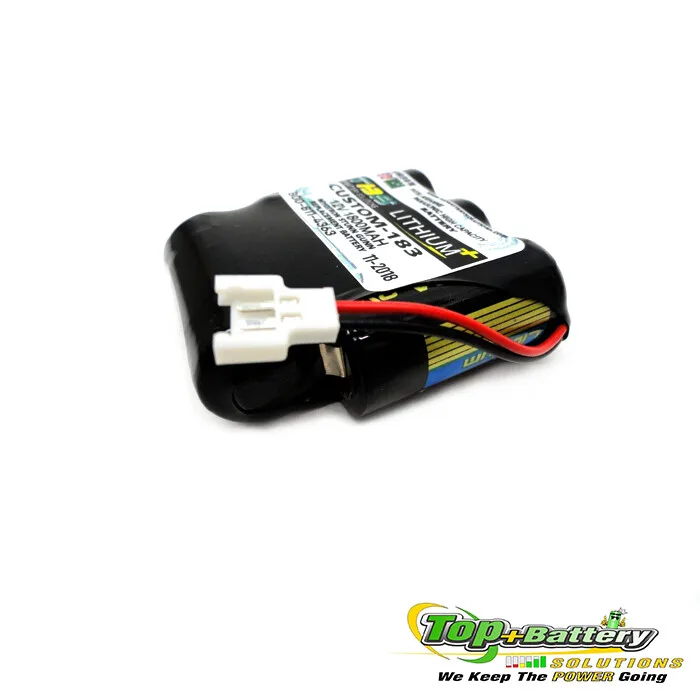
Image source: Bing (Web (fair-use with source credit))
Dead or weak battery. This is the number one cause by a wide margin. Rechargeable lithium-ion batteries degrade over time, especially if they're left in a discharged state. If you last charged your wand six months ago and haven't touched it since, the battery is almost certainly below usable voltage.
The fix: fully recharge it. If it still won't hold a charge after a full cycle, the battery needs replacement. Some wands have replaceable 9V batteries.
Others have sealed Li-ion packs that require replacing the whole unit.
Corroded or dirty contacts. Oxygen and moisture create a thin oxide layer on metal surfaces. That layer is an electrical insulator. The contacts on a stun wand need to transfer high voltage through the air gap.
Even a microscopic film can stop the arc. The fix: clean both the wand's output prongs and the battery compartment terminals with 90% or higher isopropyl alcohol. Use a cotton swab or a soft toothbrush.
Never use water or abrasive cleaners.
Stuck safety switch. The safety mechanism is a physical sliding or rotating part. Over time, pocket lint, dust, or adhesive residue from manufacturing can cause it to stick in the "on" or "off" position. The fix: work the switch back and forth 20 to 30 times to break up the debris.
Then spray a tiny amount of electrical contact cleaner into the mechanism. Wipe away any excess.
Moisture damage. If your wand was exposed to rain, high humidity, or condensation from temperature changes, moisture can short the circuit. The fix: remove the battery. Leave the compartment open for 24 to 48 hours in a dry, warm place.
A bowl of uncooked rice nearby can help pull out ambient moisture. Do not use a hair dryer or oven. Heat can damage the circuit board and melt plastic housings.
Internal circuit failure. If you've verified the battery is good, cleaned the contacts, and freed the safety switch, but the wand still won't arc, the internal voltage transformer or circuit board has failed. This is not a user-serviceable repair. The unit needs to be replaced.
Attempting to open the sealed housing voids any warranty and can expose you to risk of electrical shock from the high-voltage capacitor.
When to Stop Troubleshooting
If you've gone through all four steps and the wand still won't arc, stop. Do not keep testing it. A device that fails the full diagnostic is unreliable, period.
Do not carry it as a backup "just in case it works." A partial charge or intermittent failure is worse than no wand at all because it gives you false confidence. Replace it immediately. A $40 replacement is a bargain compared to the alternative.
Maintenance That Keeps Your Wand Ready
A stun wand isn't a set-it-and-forget-it tool. It's an electronic device with a battery, exposed contacts, and moving parts. All three need regular attention.
Charge it monthly. Rechargeable lithium-ion batteries self-discharge over time. Even sitting untouched, they lose 5 to 10 percent of their charge every 30 days. Set a recurring reminder on your phone.
Plug it in for a full charge cycle once per month. Do not leave it plugged in constantly. Overcharging can degrade the battery faster.
Clean the contacts quarterly. Wipe the output prongs with isopropyl alcohol on a cotton swab every three months. Do this more often if you live in a humid climate or carry the wand in a pocket where it collects lint. Clean the battery compartment terminals at the same time.
Test the arc monthly. After charging, do the arcing test in a safe direction. Confirm you see a strong, consistent spark. If the sound changes over time, from a sharp crack to a weak sputter, that's a sign the internal components are degrading.
Store it properly. Keep the wand in a cool, dry place. Not a bathroom cabinet. Not a car glove box in summer.
Temperature extremes accelerate battery degradation and can warp plastic housings. Room temperature, away from direct sunlight, is ideal.
Replace the battery on schedule. For disposable 9V models, replace the battery every 12 months even if it still works. Battery chemistry degrades even when unused. For rechargeable models, plan to replace the entire unit every 2 to 3 years depending on usage and charge cycles.
Monthly Readiness Checklist
| Task | Frequency | Time Needed |
|---|---|---|
| Full charge cycle | Monthly | 2-6 hours (charging) |
| Arcing test | Monthly | 30 seconds |
| Contact cleaning | Quarterly | 2 minutes |
| Battery replacement (disposable) | Annually | 1 minute |
| Unit replacement (rechargeable) | Every 2-3 years | N/A |
Legal and Safety Warnings You Can't Ignore
State and local restrictions. Stun wands are illegal to possess or carry in New York, Massachusetts, Hawaii, Rhode Island, and Washington D.C. Several other states restrict them by age (18+), require a permit to carry, or prohibit them on school grounds and government buildings. Check your local statutes before buying or carrying.
Ignorance of the law is not a defense.
Safe testing practices. Always test your wand pointing away from people, pets, and flammable materials. The arc can ignite aerosol sprays, gasoline fumes, or natural gas. Do not test near oxygen tanks or medical equipment.
Never touch both contacts simultaneously while the device is active. The shock is painful and can cause muscle contractions that make you drop the wand.
Health risks. People with pacemakers, defibrillators, or other implanted electronic medical devices should not use or be near an active stun wand. The electrical discharge can interfere with these devices. Pregnant women should avoid use.
The effects of electroshock on a fetus are not well studied.
What to do if it fails during an incident. If you pull the trigger and nothing happens, do not keep pressing it. Do not swing the wand as a blunt object. It is not designed for impact and will likely break.
Move to a secondary defense option immediately. This is why having pepper spray or a personal alarm as a backup is common practice among self-defense instructors. The National Institute of Justice has published guidelines on less-lethal weapons that recommend carrying at least two defensive tools.
When to Replace vs. When to Upgrade
Not every dead wand should be replaced with the same model. Use the failure as an opportunity to evaluate whether your current tool still fits your needs.
Replace with the same model if: the wand is less than a year old, you liked the form factor, and the failure was battery-related in a model with replaceable batteries. In that case, a fresh battery solves the problem.
Upgrade if: the wand is more than two years old, the battery is sealed and no longer holds a charge, the plastic housing is cracked, or the safety switch feels loose. Technology improves slowly in this category, but build quality varies significantly between budget and mid-range models.
Consider alternatives if: you live in a restricted state, you have physical limitations that make contact-based defense difficult, or you want a tool with standoff distance. Pepper spray works at 6 to 10 feet. A personal alarm creates noise without requiring physical contact.
Tactical flashlights with strobe modes can disorient without touching the attacker.
Price vs. Reliability Reality
| Price Range | Typical Quality | Expected Lifespan | Repairability |
|---|---|---|---|
| $15 – $30 | Basic electronics, thin plastic | 1-2 years | None (sealed) |
| $30 – $60 | Better build, replaceable 9V | 2-3 years | Battery only |
| $60 – $120 | Metal housing, higher current output | 3-5 years | Battery + some components |
The sweet spot for home defense is the $30 to $60 range. You get a device with replaceable batteries that will last several years. The $15 models work when new but tend to fail faster.
The $100+ models offer marginal gains in reliability and current output that most home users won't notice.
Frequently Asked Questions
Why is my stun wand not sparking even with a new battery?
Dirty contacts are the most likely cause even with a fresh battery. Clean both the output prongs and the battery terminals with isopropyl alcohol. If that doesn't work, the safety switch may be stuck or the internal circuit board has failed.
Can I fix a broken stun wand myself?
No. The internal high-voltage transformer and capacitor are sealed inside the housing. Opening it voids the warranty and exposes you to risk of electrical shock.
Replace the unit instead. Most wands cost less than a trip to an electronics repair shop.
How long does a stun gun battery last in storage?
Disposable 9V batteries last about 12 to 18 months on the shelf. Rechargeable lithium-ion batteries lose 5 to 10 percent of their charge per month and should be recharged every 30 days. After 2 to 3 years, rechargeable batteries lose capacity and need replacement.
Is a stun wand effective through winter clothing?
Not reliably. Thick jackets, sweaters, and multiple layers of fabric can insulate the skin from the contacts. The current needs direct skin contact to cause neuromuscular disruption.
Some higher-end models claim better performance through clothing, but no consumer-grade stun wand guarantees penetration through heavy layers.
What's the difference between a stun gun and a Taser?
A stun gun requires direct contact with the attacker and delivers pain through localized electrical shock. A Taser fires two small probes on wires that can penetrate clothing from a distance of up to 15 feet and causes neuromuscular incapacitation. Tasers are more expensive, regulated more strictly, and often require a firearms license to carry in some states.

Similar Posts