Kenmore 500 Washer Not Spinning
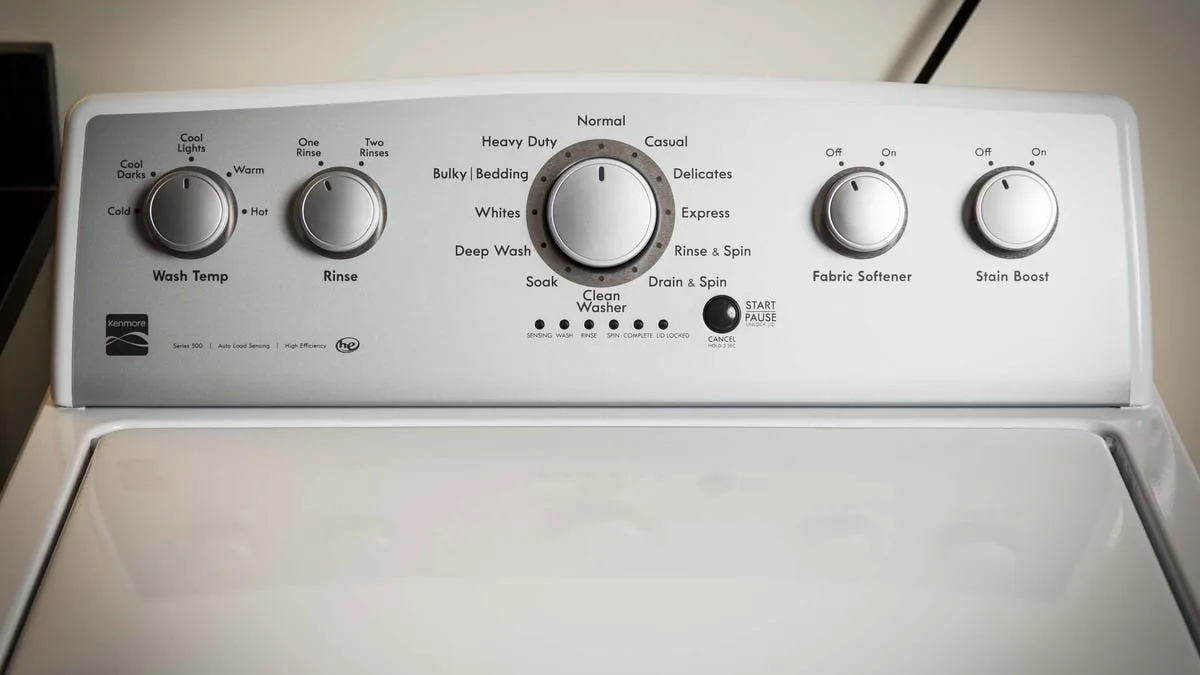
Your Kenmore 500 washer fills with water, you hear it sloshing around, and then nothing happens. The drum just sits there. Clothes come out sopping wet, and you're left wondering if you need to call a repairman or start shopping for a new machine.
That "Kenmore 500 washer not spinning" problem is one of the most common service calls in the laundry world. Per manufacturer specifications, the 500 series uses either a belt-drive or direct-drive system depending on the model year, and each has predictable failure points. Let's walk through what's actually happening and how to fix it without guessing.
Image source: Bing (Web (fair-use with source credit))
Quick Answer
A Kenmore 500 washer stops spinning for one of three reasons. A broken lid switch prevents the spin cycle from starting. A slipped or snapped drive belt stops the drum from turning.
A clogged drain system triggers an error code that blocks the spin.
Start with the lid switch. It fails most often. Check it before touching anything else.
The Most Common Reason Your Kenmore 500 Won't Spin (It's Probably This)
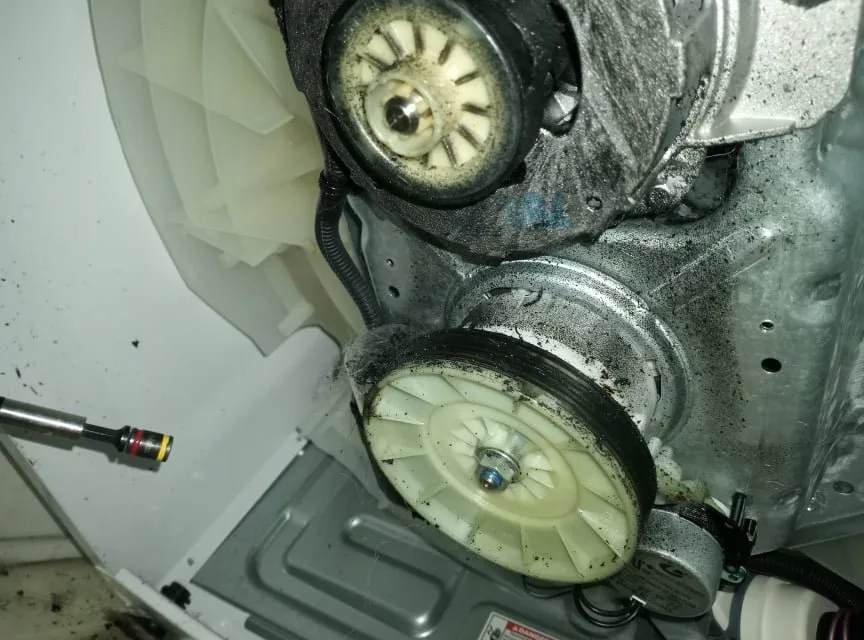
Image source: Bing (Web (fair-use with source credit))
Nine times out of ten, the culprit is a broken lid switch. The Kenmore 500 has a safety mechanism that won't let the machine spin unless the lid is fully closed and the switch engages. Over time, that plastic switch cracks or the metal contacts corrode.
Here's what happens. You close the lid. The switch doesn't connect.
The machine thinks the lid is open. It refuses to spin.
There's an easy way to test this. Listen for a click when you close the lid. If you don't hear one, the switch is likely broken.
On top-load Kenmore 500 models, the switch sits right under the lid frame. You can see it if you open the lid and look at the front edge.
A broken lid switch is a $10 to $25 part. Replacement takes about 15 minutes. No special tools needed, just a screwdriver.
The second most common cause is the drive belt. This one is mechanical. The belt wraps around the motor pulley and the drum pulley.
When it stretches, slips, or snaps, the motor runs but the drum doesn't turn.
You'll know it's the belt if you hear the motor humming but nothing moves. Or if you hear a high-pitched squealing sound during the spin cycle. That's the belt slipping.
The third cause is a drain problem. Your Kenmore 500 has a sensor that checks if the water has drained before it starts spinning. If the drain pump is clogged or the hose is kinked, the machine won't advance to the spin cycle.
We'll cover all three fixes in detail. But start with the lid switch. It's the most common failure point and the easiest to check.
How to Diagnose What's Wrong Without Calling a Repairman
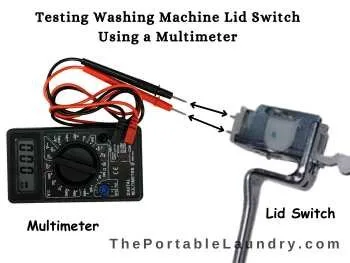
Image source: Bing (Web (fair-use with source credit))
You don't need a repairman to figure this out. You just need to run through a simple sequence of checks. Each one takes under a minute and tells you exactly what's broken.
Step 1: Listen Before You Touch
Press the spin cycle button and listen closely.
- A humming sound with no drum movement points to the belt or motor coupling.
- A clicking sound that stops short points to the lid switch.
- A grinding or scraping sound points to a foreign object jammed in the pump.
- Complete silence points to the control board or timer.
Write down what you hear. That's your starting point.
Step 2: The Lid Switch Test
Open the lid and close it firmly. Listen for a solid click.
If you hear the click, the switch is engaging. Move to Step 3.
If you don't hear the click, the switch is broken. This is your fix.
To confirm, unplug the washer and use a multimeter. Set it to continuity mode. Place the probes on the two terminals of the lid switch.
Close the lid and press the switch manually. A good switch will show zero resistance. A broken switch will show no continuity.
Step 3: Check the Drain System
Look at the drain hose behind the machine. Straighten any kinks. Then open the drain pump filter.
On most Kenmore 500 models, it's a small access panel at the bottom front.
Place a shallow pan underneath. Open the filter slowly. Water will spill out.
Check for coins, buttons, paper clips, or any small objects blocking the pump.
A clogged pump means the machine can't drain. If it can't drain, it won't spin. Clear the clog, replace the filter, and run a rinse cycle.
Step 4: Inspect the Drive Belt or Motor Coupling
Unplug the washer. Tilt it back carefully against the wall so you can access the bottom.
Look at the drive belt. If it's loose, cracked, frayed, or completely broken, that's your problem. A good belt feels snug with a little give.
A bad belt hangs loose or shows visible damage.
If your Kenmore 500 is a direct-drive model (older units with the 110 model prefix), you won't have a belt. Instead, you have a motor coupling. This is a rubber and plastic piece that connects the motor shaft to the transmission.
Over time, the plastic splines wear down or break. The motor spins but the drum doesn't.
A broken coupling makes a distinct whirring sound with no movement. You can see it by removing the front panel or accessing the back of the machine, depending on the exact model.
The Three Main Culprits and How to Fix Each One
Now that you've diagnosed the problem, let's walk through each fix. These are the three most common repairs for a Kenmore 500 washer not spinning. Each one is doable with basic tools and a little patience.
Broken Lid Switch
Tools needed: Screwdriver, multimeter (optional)
Part cost: $10 to $25
Time: 15 minutes
Unplug the washer. Open the lid. Locate the lid switch assembly at the front edge of the cabinet.
On most 500 series models, it's held in place by two screws.
Remove the screws. Pull out the old switch. Disconnect the wire harness (note which wire goes where).
Connect the new switch. Screw it back in.
Test it by closing the lid and listening for the click. Run a short spin cycle.
Slipped or Snapped Drive Belt
Tools needed: Screwdriver, possibly a socket wrench
Part cost: $12 to $25
Time: 20 to 30 minutes
Unplug the washer. Tilt it back. Remove the rear access panel on most 500 series models.
Locate the drive belt wrapping around the large drum pulley and the small motor pulley.
If the belt is broken, pull it out. Route the new belt around the motor pulley first, then stretch it over the drum pulley. Rotate the drum pulley by hand while pressing the belt into place.
It should seat snugly.
If the belt is loose but not broken, check the tension. Some models have a tensioner pulley. If yours doesn't, a loose belt means it's stretched out and needs replacing.
Clogged Drain or Dead Motor Capacitor
Drain clog fix: Unplug the washer. Remove the front access panel. Open the drain pump filter.
Clear any debris. Run a rinse cycle to confirm.
Motor capacitor fix: This one is less common but worth knowing. The capacitor gives the motor an extra jolt of power to start spinning. If it dies, the motor hums but won't turn.
Tools needed: Screwdriver, multimeter with capacitance setting
Part cost: $8 to $15
Time: 10 minutes
Unplug the washer. Locate the capacitor near the motor (usually a small metal cylinder with two terminals). Discharge it by shorting the terminals with an insulated screwdriver.
Test it with the multimeter. If the reading is outside the rated microfarad range, replace it.
What Not to Do When Your Kenmore 500 Won't Spin
This section might save you more money than the repair itself. There are a few common mistakes people make when they're frustrated with a washer that won't spin.
Don't bypass the lid switch. Some online advice tells you to zip-tie or tape the lid switch closed to force the spin cycle. This is dangerous. The lid switch is a safety device.
If you bypass it and the washer starts spinning with the lid open, someone could get hurt.
Don't overload the washer to force a spin. Adding more clothes or overloading the machine won't help. It will only strain the motor and belt further. If the washer is already struggling, overloading makes things worse.
Don't use the spin cycle repeatedly to test. Running multiple spin cycles without diagnosing the root cause can damage the motor or control board. Test once, diagnose, then fix.
Don't assume you need a new machine. A Kenmore 500 series washer is mechanically simple compared to modern smart machines. Parts are cheap and widely available. A $15 part can give you another five years of use.
Don't throw away a good machine over a broken belt or switch.
Don't ignore error codes. If your Kenmore 500 displays an error code like dE1, dE2, dL, or FdL, look it up. These codes point to specific problems. dE1 means the lid switch isn't engaging. dL means the door lock failed. FdL points to a drain issue.
Fixing the root cause clears the code automatically.
Quick Decision Guide: Fix It Yourself or Call Someone?
Not every Kenmore 500 problem is a DIY repair. Here's a simple way to decide.
Fix it yourself if:
- The lid switch is broken
- The drive belt is loose or snapped
- The drain pump has a visible clog
- The motor capacitor needs replacing
Call a technician if:
- The control board is fried (burning smell, no display, no response)
- The transmission is seized (drum won't turn by hand even with the belt off)
- The drum bearing is grinding (loud rumbling noise during any cycle)
- You've replaced all three common parts and it still won't spin
A technician visit runs $100 to $200 for the service call plus parts and labor. Compare that to the cost of a new Kenmore 500, which as of 2026 runs $400 to $700 depending on the model and retailer. A $15 belt or $20 lid switch is almost always worth trying first.
One more thing. If your Kenmore 500 is over 12 years old and the drum bearing is shot, that's usually the end of the line. A new bearing costs $50 but the labor to install it runs $200 to $400.
At that point, a new washer makes more financial sense.
What Your Kenmore 500 Model Number Tells You About the Fix
Not all Kenmore 500 washers are built the same. The model prefix tells you exactly which system you're working with.
Look for the model number sticker. It's inside the lid on top-load models or behind the door on front-load models. The prefix is the first three digits.
110 prefix (most common): This is a Whirlpool-built direct-drive machine. No drive belt. No pulley system.
The motor connects directly to the transmission through a plastic and rubber coupling. When the coupling breaks, the motor runs but the drum sits still. The fix is a $10 coupling and about 20 minutes of work.
796 prefix: This is an LG-built front-load machine. It uses a belt-drive system with a spider arm assembly. Spin failures here often point to a broken belt, a worn spider arm, or a control board issue.
The belt is the cheapest and easiest fix.
970 prefix: This is a Frigidaire-built machine. It uses a belt-drive system with a separate drain pump. Spin failures usually come from a broken belt or a failed timer.
Write down your prefix before ordering parts. A lid switch for a 110 model won't fit a 796 model. The wrong part wastes time and money.
When to Replace vs. When to Call It Quits
| Situation | Decision | Why |
|---|---|---|
| Lid switch broken | Replace it | $15 part, 15 minutes |
| Drive belt snapped | Replace it | $20 part, 30 minutes |
| Motor coupling broken | Replace it | $12 part, 20 minutes |
| Control board fried | Consider repair or replace | Board costs $100-$200 |
| Drum bearing grinding | Replace the washer | Bearing repair costs more than a new machine |
| Transmission seized | Replace the washer | Transmission parts are expensive and hard to find |
| Machine over 12 years old with major failure | Replace the washer | New models are more energy efficient |
Here's the rule of thumb. If the repair cost is under $100 and the machine is under 10 years old, fix it. If the repair cost exceeds half the price of a new Kenmore 500, replace it.
As of 2026, a new 500 series washer starts around $400. Anything over $200 in repairs on a machine past its expected lifespan is throwing good money after bad.
Frequently Asked Questions
What error code means the lid switch is bad on a Kenmore 500?
dE1 and dL both point to lid switch or door lock problems. dE1 means the washer detects the lid is open when it should be closed. dL means the door lock mechanism failed to engage. Either way, start with the lid switch.
Can a clogged drain cause the Kenmore 500 not to spin?
Yes. The machine won't spin until it finishes draining. If the drain pump is blocked by a coin, button, or small object, the washer senses the water level hasn't dropped and stops the cycle.
Clear the pump filter first.
How do I manually drain my Kenmore 500 to check the pump?
Unplug the washer. Remove the lower front access panel. Pull out the drain hose and place it in a bucket.
Open the filter cap slowly. Water will spill out. This manual drain lets you check for clogs without running a cycle.
Why does my Kenmore 500 hum but not spin during the spin cycle?
That humming sound means the motor is getting power but can't turn the drum. The drive belt is likely snapped or slipping. On direct-drive models, the motor coupling is broken.
The humming motor confirms electricity is reaching it. Something mechanical is stopping the rotation.
Is it worth fixing a Kenmore 500 washer that won't spin?
Yes, as long as the repair cost stays under $100. The three most common fixes (lid switch, drive belt, motor capacitor) cost $8 to $25 each and take under 30 minutes. Even a technician visit and a simple part replacement usually stays under $200.
That's less than half the price of a new washer.
How long should a Kenmore 500 washer last?
Manufacturer specifications target 10 to 14 years with normal use. If your washer is under 10 years old and stops spinning, a simple part repair is almost always a better investment than replacing the whole machine.

Similar Posts