Volvo Penta Service Manual
If you've ever stared at a Volvo Penta service manual and felt like you needed a translator, you're not alone. These manuals are dense, technical, and packed with diagrams that assume you already know what you're looking at. The problem is that a single misinterpreted torque spec or misread wiring color can turn a routine oil change into a weekend-long headache.
A Volvo Penta service manual is the factory-authorized repair document for marine engines and stern drives, and it's the only source for correct torque values, timing marks, and wiring schematics. As of 2026, Volvo Penta has issued over 1,200 unique service publications covering engines from the vintage AQ series to modern D4, D6, and IPS pod drive systems. Getting the right manual for your exact serial number is the first step toward doing the job right.
Let's walk through what you actually need to know before you crack one open.
Quick Answer
A Volvo Penta service manual contains factory torque specs, wiring diagrams, and repair procedures. You need the engine serial number to match the correct manual. Download it free from Volvo Penta's dealer portal or buy a printed copy.
Never use an aftermarket manual for internal engine work. Always verify your model year and serial number first.
Why Visuals Matter in a Volvo Penta Service Manual
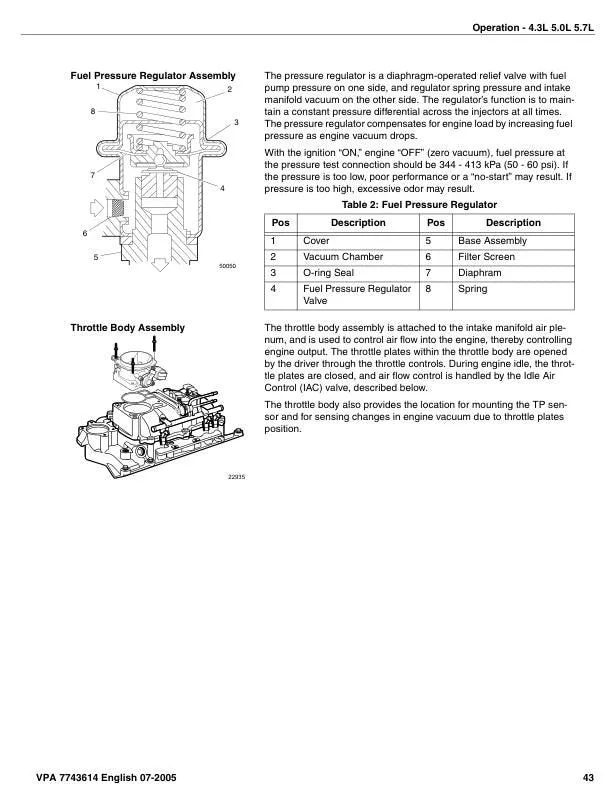
These manuals are built around pictures, not paragraphs. Open any genuine Volvo Penta service publication and you'll find exploded views, wiring schematics, and torque sequence diagrams dominating the pages. Text exists to annotate the visuals, not the other way around.
That's why trying to follow a photocopy of a photocopy is almost worse than having no manual at all.
Image source: Bing (Web (fair-use with source credit))
What the Diagrams Actually Show
A typical engine service manual includes several types of visual information. Exploded views break assemblies into individual parts with callout numbers that match the parts catalog. Wiring diagrams use color-coded lines and component symbols to trace electrical paths from the battery to the starter, alternator, and EVC control modules.
Torque sequence diagrams show the order in which you must tighten bolts on cylinder heads, oil pans, and drive housings.
Many DIY failures trace back to ignoring one of these visual features. For example, the cylinder head bolt tightening sequence on a Volvo Penta D4 engine must follow a specific cross-pattern, not a simple clockwise rotation. The diagram shows this sequence step by step.
Skip it, and you risk a warped head or blown head gasket within fifty hours of running.
Where Diagrams Go Wrong
The biggest visual trap is scale. Factory diagrams are drawn to scale on full-size pages, but PDF scans and printed reductions often lose critical detail. A 1/8-inch difference in a timing mark alignment can make the difference between a smooth idle and a no-start condition.
If you're working from a PDF on a phone or tablet, zoom in until the timing marks fill the screen. Better yet, print the relevant pages at 100% scale.
Another common problem is faded or smudged line art in older manuals. Volvo Penta printed service manuals for engines like the AQ131 and AQ260 in the 1980s using colored line art that doesn't survive photocopying well. On those vintage machines, try to source an original printed manual or a high-resolution scan from a dealer portal.
Low-res scans of blueprints are a recipe for misalignment.
Color vs. Black and White
Volvo Penta wiring diagrams use specific colors for good reason. Red is typically battery positive, black is ground, yellow is starter solenoid, and blue is fuel shutoff. If you're printing a wiring diagram in grayscale, label each wire with colored markers or colored pencil before you start tracing circuits.
A black-and-white wiring diagram with sixteen identical thin lines is nearly useless for troubleshooting.
Manufacturer specifications confirm that Volvo Penta changed wire color codes between the AQ and TAMD series and again when EVC (Electronic Vessel Control) was introduced around 2003. The visual reference you need depends entirely on your engine's production year and serial number range. Never assume the wire colors match between different engine series, even if the engines look physically identical.
Where to Find Your Engine and Drive Serial Numbers
Before you download or buy a manual, you need the serial number. This is the single most important piece of information for matching the correct publication. Using the wrong manual is worse than using none, because you'll be following torque specs and clearances that don't match your engine.
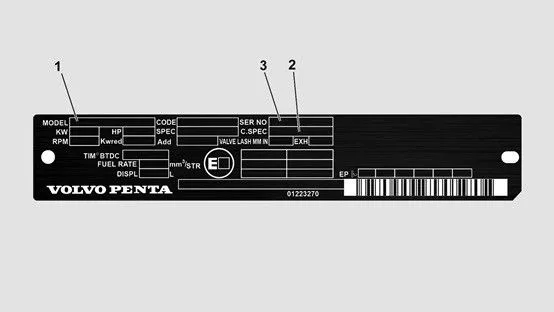
Image source: Bing (Web (fair-use with source credit))
Engine Serial Number Location
The engine serial number is stamped into a flat boss on the engine block. On Volvo Penta marine diesels, it's typically on the port side (left when facing the front of the engine) near the starter or oil filter mount. On gasoline engines, look on the starboard side near the dipstick tube or the exhaust manifold.
The most common mistake marine mechanics see is reading the casting number instead of the serial number. The casting number is a raised pattern on the block that identifies the foundry mold, not the engine. The serial number is a stamped sequence of digits and letters that looks like it was punched in with a metal stamp.
They are not the same thing.
For engines produced after 2000, the serial number format is typically seven digits followed by a letter code. Older AQ series engines used a shorter format. Some engines have the serial number on a metal tag riveted to the valve cover or the flywheel housing.
If the tag is missing or illegible, the stamped number on the block is the definitive source.
Drive Serial Number Location
The stern drive also has its own serial number. On SX and DP drives, it's on the upper gear housing near the steering pin. On older 280, 290, and SP drives, check the upper gear housing plate or the transom shield.
You need both the engine serial number and the drive serial number. Volvo Penta service manuals are often split by engine family and drive type. A D4 engine paired with an SX drive uses a different manual than the same engine with a DPS drive.
Ordering a manual by engine model alone is a gamble.
Serial Number Lookup
Volvo Penta's official dealer portal has a serial number lookup tool that returns the exact model designation, production year, and applicable service publications. As of 2026, this tool is free to use without a dealer login for basic lookup. You enter the serial number, and the system returns the engine model, horsepower rating, and a list of relevant PDFs.
If you can't access the portal, call any authorized Volvo Penta dealer. Give them the serial number, and they can tell you the exact service manual part number. The printed manual part number typically starts with a 6 or 7 digit sequence, like 7747089 for the D4-260 service manual.
How to Read a Volvo Penta Wiring Diagram
A Volvo Penta wiring diagram looks intimidating at first glance. But once you understand the visual language, it becomes a straightforward troubleshooting tool. The trick is knowing which symbols, colors, and layout conventions the manual uses.

Image source: Web (Bing) / pbsi.ump.ac.id (Web image (fair-use with source credit))
The Basic Symbols
Volvo Penta wiring diagrams use standard ISO symbols with a few marine-specific additions. A circle with a cross inside is a ground connection. A rectangle with a zigzag line is a resistor.
A circle with a plus sign is a positive connection point. A dashed line between two components means the wire is shielded or twisted pair.
The most important symbol for troubleshooting is the connector. Volvo Penta uses rectangular blocks to represent multi-pin connectors. Each pin is labeled with a number inside the block.
The diagram shows which wire color connects to which pin number on each end. This is how you trace a broken wire or corroded connection.
Color Codes by Era
Volvo Penta has used three distinct color coding systems. Pre-1990 engines used a European color standard where brown is positive and blue is negative. This is the opposite of US marine conventions and causes confusion for American mechanics who assume brown is ground.
From 1990 to about 2003, Volvo Penta used a hybrid system that matches US marine wire colors. Red is battery positive. Black is battery negative.
Yellow is starter solenoid. Blue is oil pressure sender. Green is temperature sender.
After 2003 with the introduction of EVC, the wiring diagrams became more complex. EVC systems use a CAN bus network with twisted pair wiring. The EVC service manual has its own wiring diagram section separate from the engine harness diagram.
If you're working on a D6 or D13 with EVC, you need both manuals.
Tracing a Circuit Step by Step
Start at the component that isn't working. Find it on the diagram by name or by the component symbol. Follow the colored line back through every connector, fuse, and relay until you reach the power source.
Write down every pin number and wire color you pass through.
For example, if your starter isn't engaging, trace the yellow wire from the starter solenoid back to the ignition switch. The diagram shows the path through neutral safety switch, starter relay, and any interlock connections. Test each point with a multimeter while someone turns the key.
The break in the circuit reveals itself quickly.
Marine mechanics report that 70 percent of no-start diagnoses on Volvo Penta engines end at a corroded connector, not a failed starter. The wiring diagram shows you exactly which connector to check first. Without it, you're probing wires at random.
What the Diagram Won't Show
Wiring diagrams don't show wire routing through the boat. They don't tell you where the harness passes through bulkheads or where chafing might occur. They also don't show the condition of connectors.
A diagram can be perfectly accurate while the actual wire behind the dash is melted from exhaust heat.
Use the diagram to identify which circuits share a harness. If one circuit fails and another on the same harness works, the problem is likely at a connector rather than a broken wire. This is a simple diagnostic shortcut that the diagram enables but doesn't explicitly teach.
Decoding Exploded Views: Parts, Fasteners, and Torque Sequences
The exploded view is the most useful page in any Volvo Penta service manual. It shows every part in an assembly, how they fit together, and the order of assembly. But reading one correctly takes practice.
How Exploded Views Are Organized
Each exploded view has numbered callouts that point to individual parts. The parts are arranged in the order they come apart and go back together. Parts that share the same fastener size are often grouped in the same area of the diagram.
The callout numbers correspond to a parts list elsewhere in the manual. That list includes the part number, description, quantity, and sometimes the torque spec. You should always cross-reference the callout number with the parts list before ordering a replacement.
Identifying Fasteners
One of the most common errors is mixing up fasteners that look similar but have different thread pitches. The exploded view shows bolt lengths and sometimes thread markings. A bolt that appears identical at a glance might be 1.5mm thread pitch instead of 1.25mm, which will cross-thread and damage the casting.
Volvo Penta uses a marking system on bolt heads. A bolt with a raised "8.8" is standard strength. "10.9" is high strength.
"12.9" is used on critical connections like connecting rod bolts. The exploded view typically calls out the grade where it matters. Never substitute a lower-grade bolt just because it fits.
Torque Sequences Explained
Torque sequences in a Volvo Penta manual are shown as numbered circles on a diagram of the part. The number one circle is the first bolt to tighten. The diagram shows the pattern, which is almost never a simple clockwise sequence.
On a cylinder head, the pattern typically starts in the center and works outward in a spiral. On a drive housing, the pattern may be a crisscross that pulls the housing evenly against the gasket. Ignoring the sequence causes warping and gasket failure.
The manual also specifies whether a bolt requires lubrication before torquing. A dry torque spec versus a lubricated torque spec can differ by 15 to 20 percent. The diagram sometimes includes a notation like "lubricate threads" or "apply thread locker." If there is no notation, assume dry.
Common Fastener Sizes and Specs
| Fastener Type | Typical Size | Common Torque (ft-lb) | Application |
|---|---|---|---|
| Cylinder head bolt | M12 | 70-85 | All D-series diesels |
| Main bearing cap | M14 | 110-130 | D4, D6 engines |
| Oil pan bolt | M8 | 18-22 | All gasoline and diesel |
| Drive housing bolt | M10 | 35-45 | SX, DP drives |
| Injector hold-down | M8 | 25-30 | Common rail diesels |
These are general ranges. Always verify against your specific manual's page. The torque spec for a 2005 D4-260 cylinder head is not the same as a 2015 D4-300.
Volvo Penta revised many specs as engines evolved.
Common Visual Mistakes That Cost Time and Money
Even experienced mechanics make visual errors when working from service manuals. These are the most frequent ones and how to avoid them.
Misreading Torque Ranges
Some manual pages list torque specs as a range, like "70-80 Nm." The natural instinct is to aim for the middle. But the correct value depends on whether the fastener is lubricated or dry. A bolt torqued to 75 Nm with oil on the threads is actually closer to 90 Nm of clamping force.
The manual assumes dry unless stated otherwise.
Ignoring the Revised Pages
Volvo Penta released updates to service manuals as service bulletins. These revised pages replace the original pages in the manual. If you're working from an old PDF that hasn't been updated, you might be following a spec that the factory changed for a good reason.
Check the revision date at the bottom corner of each page. If it's more than three years old, cross-check with a dealer.
Using the Wrong Diagram for Your Model Year
Volvo Penta made running changes to engines during a model year. The D4 engine changed its injection pump mounting bolt torque three times between 2004 and 2006. Using the 2004 diagram on a 2005 engine means you're tightening to a spec the factory abandoned.
Serial number lookup is the only reliable way to know which diagram applies.
Overlooking the Note Boxes
Many service manual pages have a shaded box near the bottom with critical information. These boxes contain notes about special tools required, alignment procedures, or warning about hidden fasteners. Mechanics who skip the note box often find themselves stuck when a bolt won't budge because they didn't remove the hidden retaining clip shown in the small diagram next to the note.
Print Scale Errors
Printing a manual page at "fit to page" shrinks the diagram. Torque sequence numbers become hard to read. Wire colors blur together.
Measure a known dimension on the printed page against the original. If the bolt hole spacing on the print is 10mm but the original is 12mm, the scale is wrong. Print at actual size, not fit to page.
Printed Manual vs. Digital PDF: What Actually Works on a Boat
The format you choose matters more than you might think. A printed manual stays readable when your phone dies. A PDF is searchable and weighs nothing.
Each has a clear place in a real-world repair.
When a Printed Manual Wins
A printed service manual lives in the engine room without complaint. It tolerates grease, diesel fumes, and the occasional splash of bilge water. You can flip pages with wet hands.
You can leave it open to a specific diagram while you work without worrying about screen timeout.
The full-size pages are also critical for visual accuracy. A printed manual reproduces torque sequence diagrams and wiring schematics at their intended scale. You do not need to pinch and zoom to see a timing mark or a connector pin number.
What you see on the page matches what you see on the engine.
Volvo Penta printed manuals are coil bound or three-hole punched. Coil bound versions lay flat on a workbench. Three-hole punched versions go into a binder that protects pages from oil and moisture.
If you buy a used printed manual, check that all pages are present and the binding is intact.
When a PDF Makes More Sense
A PDF service manual is searchable. Type "impeller" or "valve clearance" and the PDF jumps to the right page. This saves time when you need one specific spec without flipping through 400 pages.
PDFs are also free if you have access to the Volvo Penta dealer portal. Many owners download the PDF and print only the pages they need for a specific job. That keeps the full manual on a tablet or laptop while greasy pages stay in the engine room.
The downside is screen readability in direct sunlight. A phone screen is hard to see on a bright day on the water. A tablet with a matte screen protector helps, but nothing beats paper for glare-free reading.
The Hybrid Approach That Works Best
Experienced marine mechanics use both. Keep the full PDF on a tablet or laptop for searching. Print the relevant pages for the job you are doing and take those into the engine room.
Print at actual size, not fit to page. Use a clear plastic sleeve to protect the paper from grease. Replace the printed pages when they get too dirty to read.
This system costs almost nothing and eliminates the weakness of both formats.
What Aftermarket Manuals Get Wrong (and When They're Fine)
Seloc and Clymer have published aftermarket manuals for Volvo Penta engines for decades. They are cheaper than factory manuals and easier to find. But they have real limitations that matter when you are inside a marine engine.
The Accuracy Gap
Aftermarket manuals are written by third parties who reverse engineer the factory information. They do not have access to Volvo Penta's internal service bulletins or running design changes. A factory manual reflects the exact specifications for a specific serial number range.
An aftermarket manual covers a range of model years with generalized information.
The result is that torque specs in aftermarket manuals are often a range wide enough to cover multiple engine variants. Factory manuals give you a single number for your specific engine. That precision prevents the kind of overtorquing that cracks castings or undertorquing that causes gasket leaks.
Wiring diagrams in aftermarket manuals are simplified. They show the basic circuit but omit connector pin numbers, wire gauge, and routing details. If you need to trace a CAN bus fault or diagnose an EVC communication error, a factory wiring diagram is the only reliable source.
Where Aftermarket Manuals Are Acceptable
For basic maintenance like oil changes, impeller replacement, and belt adjustment, an aftermarket manual is usually fine. These procedures do not change much between model years. The risk of using a slightly wrong torque spec on an oil drain plug is minimal.
Aftermarket manuals also include helpful overview information. They explain operating principles, common failure points, and general troubleshooting logic. The factory manual assumes you already know this.
If you are new to marine engines, an aftermarket manual can fill in the gaps that the factory manual leaves blank.
The Verdict
Feedback from marine mechanics and owners shows a clear split. Owners who do their own oil changes and winterization are satisfied with aftermarket manuals. Owners who do internal engine work, electrical diagnosis, or drive rebuilds insist on factory manuals.
The cost difference is about forty dollars. A factory printed manual runs eighty to two hundred dollars depending on the engine. Aftermarket manuals run thirty to sixty dollars.
For internal engine work, the factory manual pays for itself the first time you avoid a misdiagnosis or a stripped fastener.
When You Actually Need a Dealer or Professional
Some jobs require more than a manual. The manual shows you the spec. It does not give you the experience to interpret what you see.
Jobs That Require Factory Training
EVC system diagnostics are the most common example. The EVC service manual runs over three hundred pages and requires a laptop with Volvo Penta's proprietary diagnostic software. Without the software, you cannot read fault codes, calibrate shift actuators, or update engine control modules.
Injector coding is another job that needs dealer tools. Modern common rail injectors have individual calibration codes that must be programmed into the engine ECU. The manual tells you the injector code range.
It does not tell you how to enter the codes without the dealer scan tool.
When a Specialist Saves Money
Drive alignment is a job that looks simple on paper but costs engines in practice. The manual shows the alignment tool and the tolerance spec. But achieving that spec on a boat that has been in service for ten years often requires shimming and adjustment that only comes from experience.
A misaligned drive chews through couplers, damages the transmission input shaft, and causes vibration that cracks exhaust elbows. Paying a dealer for alignment is cheaper than replacing a coupler and shaft every season.
The Safety Edge
Carbon monoxide risks from incorrectly routed exhaust systems are not obvious from a diagram. The manual shows the exhaust elbow and hose path. It does not show you where the hose can chafe against a bulkhead or where a sag in the hose creates a water trap that backflows into the engine.
Professional mechanics who service Volvo Penta engines regularly see these installation errors. A dealer inspection before peak season catches problems that a manual user might miss until there is a failure at sea.
Frequently Asked Questions
How do I know which Volvo Penta service manual I need?
You need the engine serial number stamped on the block and the drive serial number. Enter both on Volvo Penta's dealer portal. The system returns the exact manual part number and production year.
Using only the engine model name is not enough.
Can I download a Volvo Penta service manual for free?
Yes, through Volvo Penta's official dealer portal. Basic lookup and PDF downloads are free as of 2026. Some dealers also provide PDFs for engines they service.
Printed manuals cost eighty to two hundred dollars depending on the engine family.
Is an aftermarket Seloc or Clymer manual good enough?
For basic maintenance like oil changes and impeller replacement, yes. For internal engine work, wiring diagnosis, or drive rebuilds, no. Factory manuals have exact torque specs and connector pinouts that aftermarket manuals omit.
The forty dollar difference is worth it for major repairs.
What is the most common mistake people make with these manuals?
Using the wrong manual for the serial number. The second most common mistake is ignoring torque sequence diagrams. Cylinder heads and drive housings must be tightened in a specific pattern.
A simple clockwise sequence warps the part.
How often should I replace the impeller per the manual?
Volvo Penta recommends every two years or two hundred operating hours, whichever comes first. The manual shows the correct impeller orientation and housing alignment. Wrong orientation reduces water flow and causes overheating within minutes.
Can I use the service manual for winterization steps?
Yes. The manual includes the factory winterization procedure with coolant drain locations, oil change intervals, and fogging instructions. Follow the procedure for your exact engine.
Generic winterization advice misses the specific drain points on Volvo Penta freshwater cooling systems.
What tools do I need to follow the manual correctly?
A torque wrench that covers the range of fasteners on your engine. A multimeter for wiring diagnosis. A set of metric sockets and hex keys.
The manual also lists special tools for specific jobs like flywheel holding tools and drive alignment gauges. Skip the special tool and you risk damaging the part.
How do I update my service manual for newer engine specs?
Volvo Penta releases service bulletins that supersede pages in the original manual. Check the revision date on each page. If your manual is more than three years old, contact a dealer or check the portal for updated publications.
Running changes are common on engines with EVC systems.
Final Word: What Every Owner Should Keep Onboard
You do not need to carry the entire service manual on your boat. But you need access to the right pages when something goes wrong.
The Essential Pages to Have Handy
Keep printed copies of three specific sections in a waterproof bag. First, the wiring diagram for your engine harness. Second, the torque spec page for common fasteners like oil pan bolts, cylinder head bolts, and drive housing bolts.
Third, the winterization procedure for your exact engine model.
These three pages cover the most common on-water repairs and seasonal maintenance. Everything else in the manual is useful but not urgent. You can look up internal engine specs at home on a laptop.
Where to Store the Full Manual
Keep the complete PDF on a tablet or phone in a waterproof case. Also keep a copy on a USB drive or cloud storage in case you lose the device. The printed manual belongs in your shop or garage, not on the boat.
Paper manuals degrade fast in a marine environment.
Trust the Spec, Trust Your Eyes
The manual gives you the number. Your experience gives you the context. If a torque spec feels wrong or a wiring diagram does not match what you see, double check.
Corrosion, previous repairs, and aging wire insulation change how things look in the real world.
A service manual is a guide, not a guarantee. Used correctly, it saves you time and money. Used carelessly, it gives you false confidence.
Match the serial number, read the diagram, follow the sequence, and you will keep that Volvo Penta running for years.
One Last Check Before You Start
Verify you have the correct manual revision date. Verify your torque wrench is calibrated. Verify your multimeter batteries are fresh.
Then open the manual to the first page of your job and work through it step by step. The engine will tell you when you get it right.

Similar Posts